
Jaguar vs. Mercedes: The hottest Group C rivalry
The first target for TWR Jaguar during the halcyon Group C era of the 1980s was to depose mighty Porsche and its 962 at both Le Mans and in sportscar racing’s world series. That was achieved across twin World Championships in 1987 and ’88, and most notably with a headline-grabbing Le Mans win at the third time of asking.
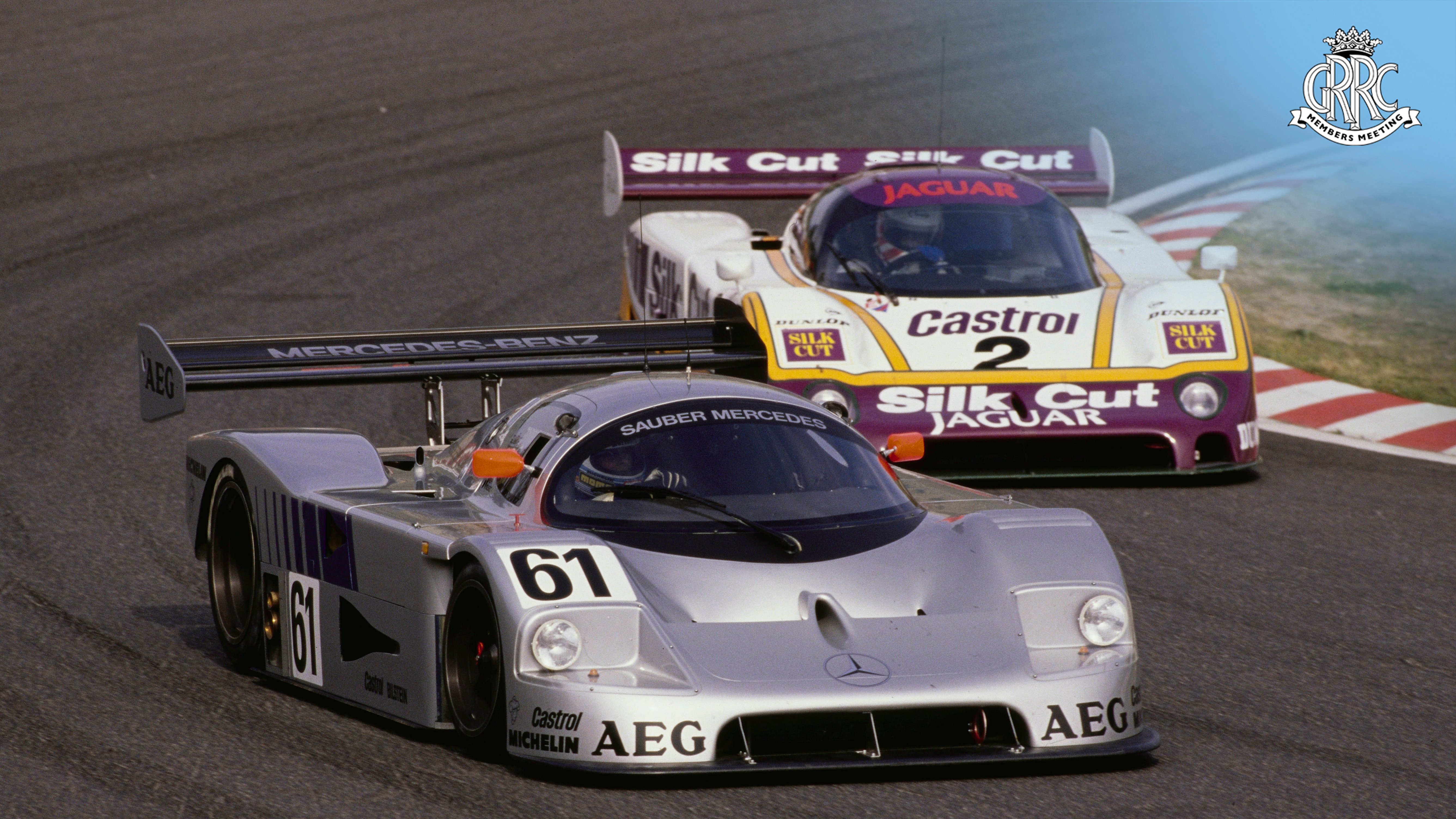
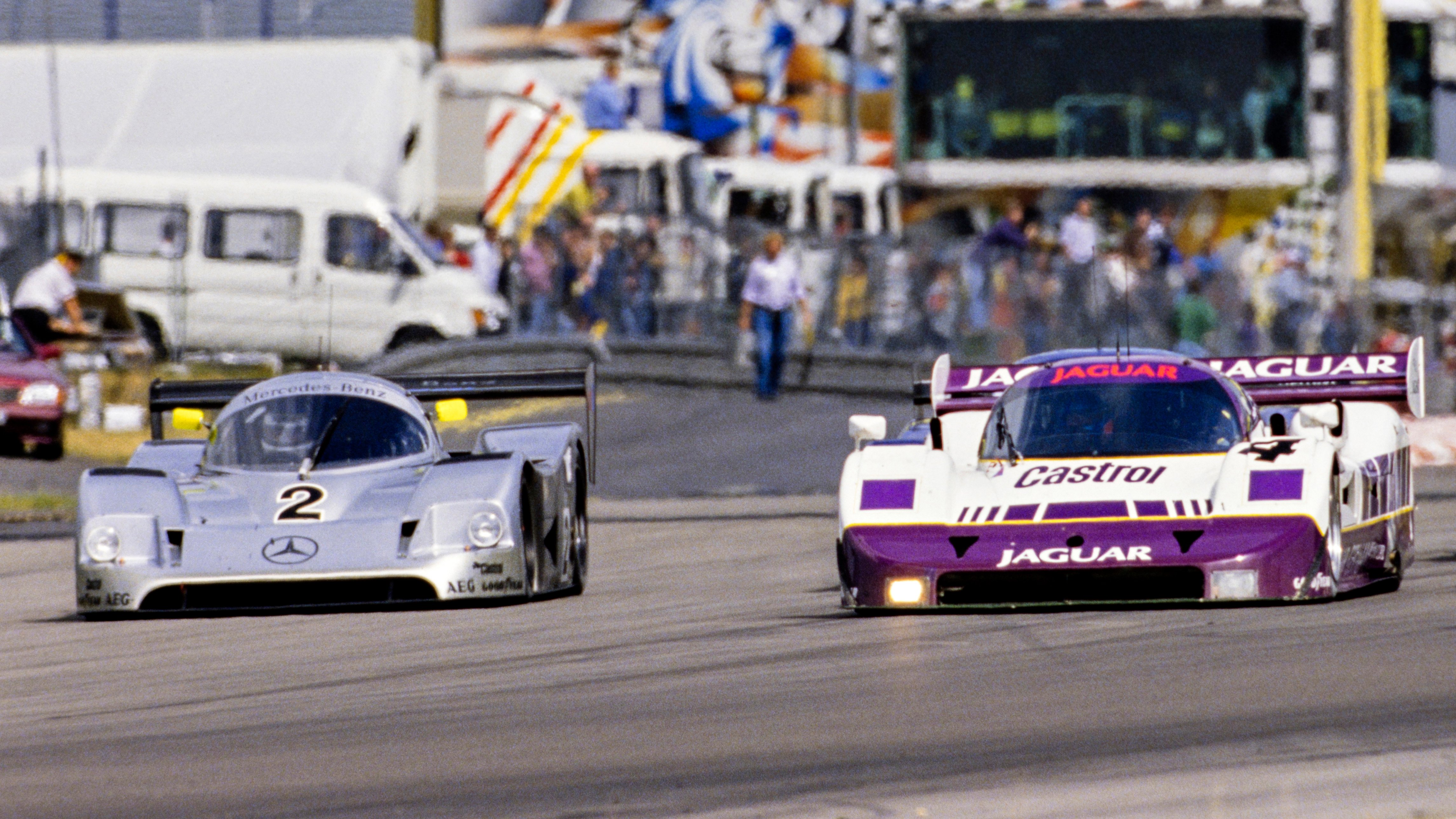
But, as we gear up to celebrate TWR Jaguar at the 84th Members’ Meeting presented by Audrain Motorsport, let’s recall Tom Walkinshaw’s next and arguably even tougher challenge: to repel the growing threat of a sleeping giant that was awakening from its long slumber. Jaguar vs. Mercedes-Benz was the rivalry that lit up the final years of Group C, as the fabled Silver Arrows returned to revive past glories.
A stealthy return
The long, dark shadow of the Le Mans disaster of 1955, when Pierre Levegh’s 300 SLR was launched into the crowd on the pit straight and killed more than 80 people, consumed Mercedes-Benz for decades. The Three-Pointed Star remained conspicuous by its absence from topline motorsport, and no wonder. But that didn’t mean its frustrated engineers and executives lacked ambition to fire up a third age of the Silver Arrows and attempt to dominate again, just as it had so emphatically during first the 1930s and then once more in the mid-50s.
The shadow resulted in a cautious and cloaked return, via the Swiss Sauber team which was looking for an alternative source to straight-six BMW power for its Group C contenders. Mercedes’ 5.0-litre M117 in turbo form was deemed the perfect choice, and the first Merc-engined Sauber, the C8, appeared in 1985 — at first without a hint of branding to indicate the German giant’s involvement. But it’s said most of the engines came direct from Mercedes’ Untertürkheim engine facility, not from specialist tuner Mader as was thought at the time. There was an element of smokescreen, for now.
Eventually, Mercedes lifted the veil as its alliance with Sauber began to emerge. Merc badges first appeared in 1986 amid the livery of aftershave brand Kouros. That was a breakthrough year in more ways than one, with Sauber claiming a victory in the World Championship at the Nürburgring and another in the German Supercup at the same circuit in 1987. Then in January 1988, the Mercedes board finally took a deep breath and committed. Mercedes was officially back as a factory entity on motorsport’s frontline.
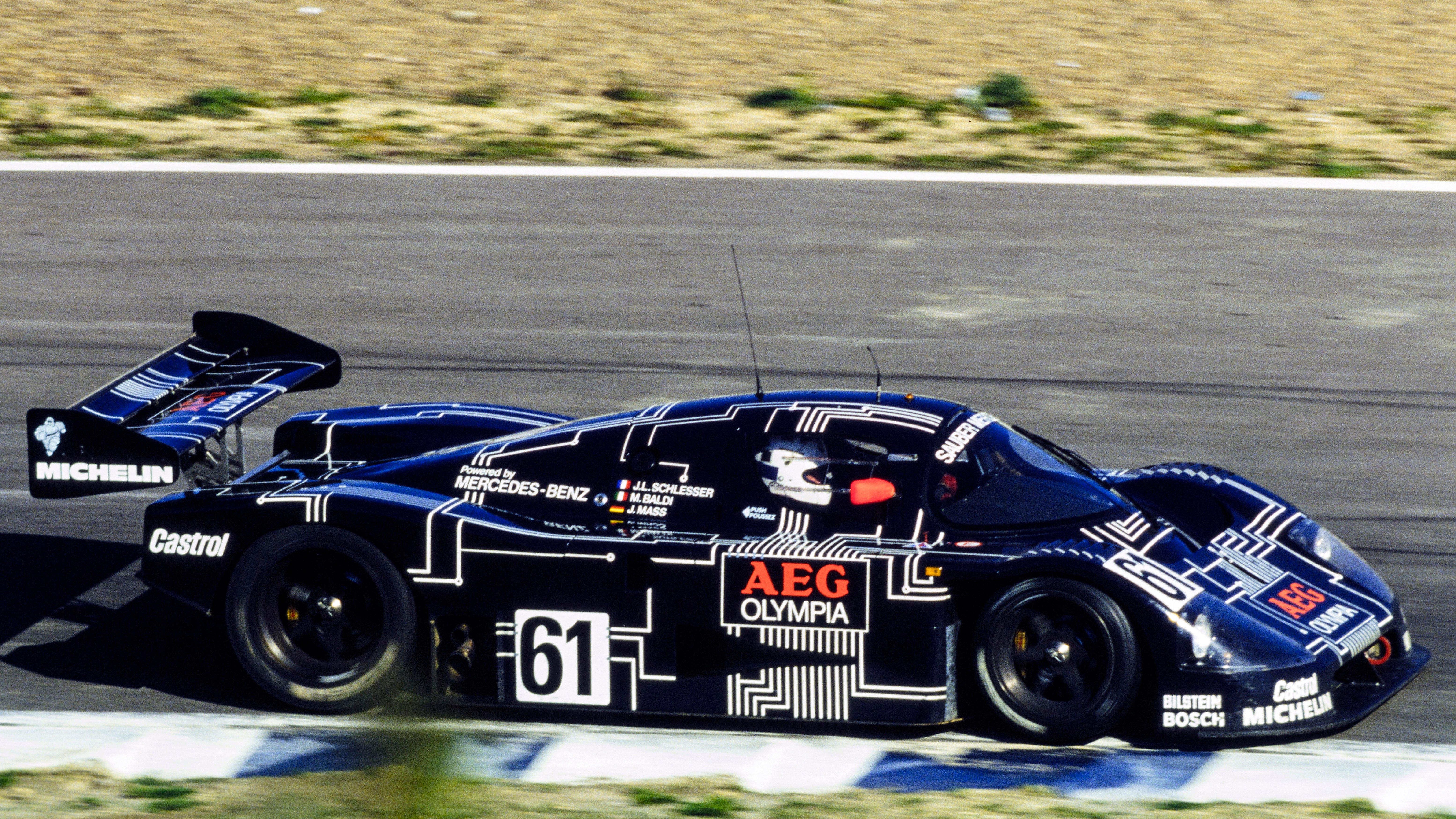
The Sauber C9 of Schlesser, Baldi and Mass won the opening round of the 1988 World Sportscar Championship, the Jerez 800km. Sauber-Mercedes finished runners-up to Jaguar in that year’s Teams’ standings, winning five of 11 rounds.
Image credit: LAT Images/Stringer via Getty Images1988: Jaguar spots the threat
Following its first world titles in 1987, TWR delivered Jaguar its greatest season since the 1950s in 1988, with a historic victory at Le Mans, a Manufacturers’ Championship and the Drivers’ Championship for Martin Brundle. But even during this peak, Tom Walkinshaw was alive to the threat that was brewing from the Swiss-German alliance.
Running in the colours of electrical goods firm AEG, Jean-Louis Schlesser and Mauro Baldi struck early with victory in the World Championship opener at Jerez, only for Mercedes’ first Le Mans campaign since 1955 to become unstitched before it had really begun. A tyre blowout for Klaus Niedzwiedz on the Mulsanne in practice spooked the team, and when Michelin couldn’t guarantee it wouldn’t happen again the entries were withdrawn. Again, in the bigger-picture context of history — and at Le Mans of all places — it was an entirely understandable and probably correct call.
Still, after Le Mans Sauber-Mercedes properly hit its stride, winning four of the final six races. Despite the clean sweep of titles, Walkinshaw knew he had to react if Jaguar was to remain on top. That’s when he commissioned the V6 turbo car that would become the XJR-10 in IMSA and the XJR-11 in the World Championship. TWR was rattled — and for good reason.
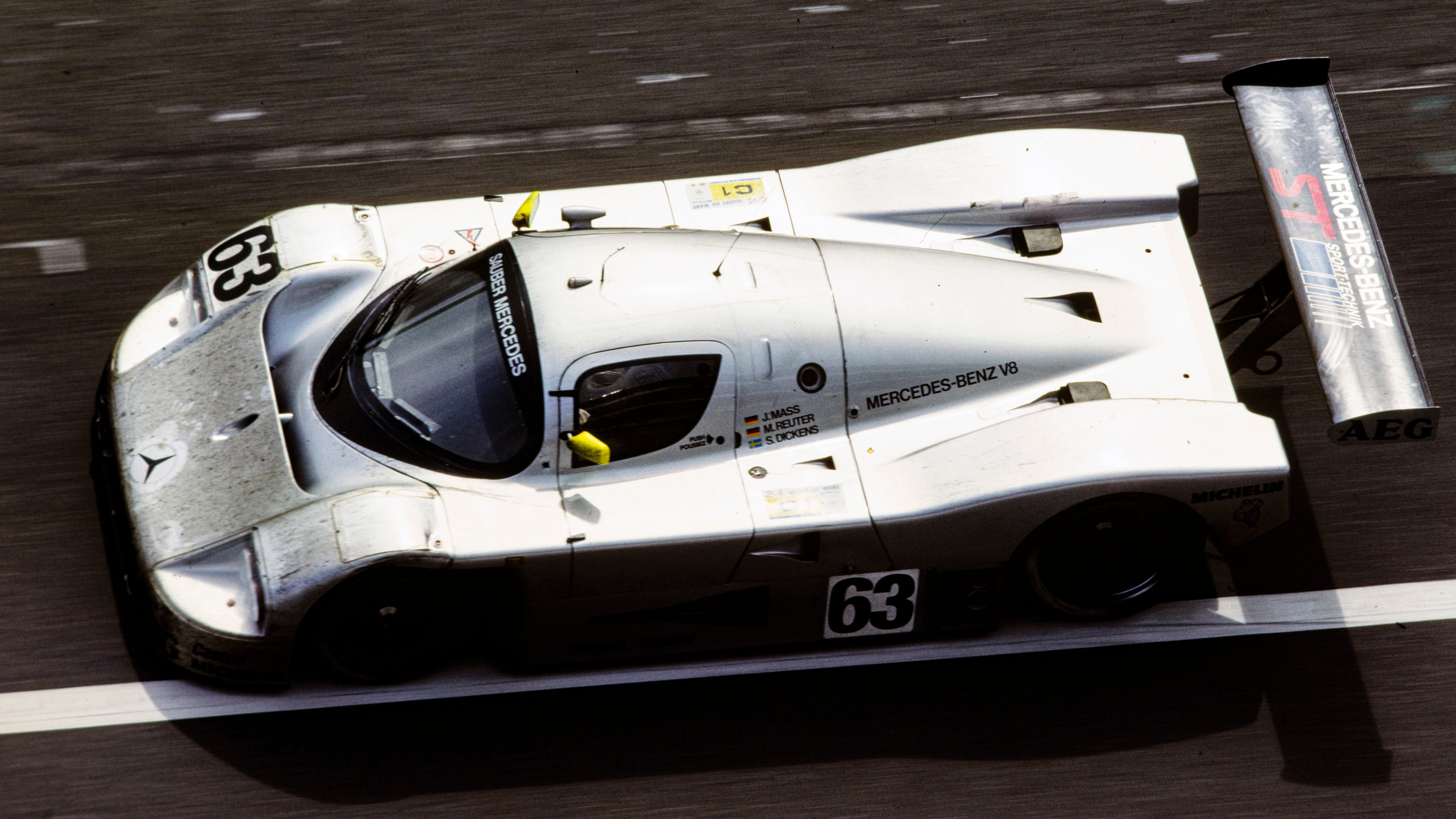
Jochen Mass won the Le Mans 24 Hours at his tenth appearance, teaming with Manuel Reuter and Stanley Dickens in the Sauber C9 in 1989.
Image credit: Rainer Schlegelmilch and Stringer via Getty Images1989: Silver Arrows turns back the clock
The Big Cats had their claws properly clipped in 1989 as Sauber-Mercedes, now casting aside its disguise to run in plain sight as the new-born Silver Arrows, struck with its own clean sweep. The C9, powered by a new four-valve V8, won seven of the eight counting rounds of the championship, only losing out at Dijon where hot weather killed Michelin’s tyres and allowed Joest Porsche to grab a surprise win. At season’s end, Schlesser was World Champion, ahead of team-mates Jochen Mass, Baldi and Kenny Acheson, while Jaguar didn’t get a look-in.
Then at Le Mans, which this year was not part of the World Sports Prototype Championship, Mercedes finally banished the demons of 1955 with a landmark victory helmed by Mass, who gained the victory at La Sarthe his fine career deserved, sharing with Manuel Reuter and Stanley Dickens.
1990: Mercedes doubles down
TWR Jaguar at least scooped its second Le Mans win the V12-powered XJR-12 in the first year of the new decade, but it has to be noted Mercedes didn’t even return to defend its crown from 1989, because once again Le Mans wasn’t part of the World Championship. Everywhere else, the Silver Arrows were again more or less unstoppable.
This time, the all-new C11 doubled down and picked up from where the C9 had left off. Considered the first true Mercedes Group C (given that, for the first time, Sauber had full access to the manufacturer’s resources), the beautifully conceived and presented C11 featured a carbon-fibre chassis made by Dave Price’s DPS Composites firm in Surrey, new pull-rod suspension and a bespoke gearbox developed by Mercedes. Again, the Silver Arrows won every round bar one. A rare engine failure while Schlesser and Baldi were leading at Silverstone handed Jaguar’s XJR-11 what would be its only victory in the World Championship, in the hands of Brundle and Alain Ferté.
Sauber-Mercedes dominated the 1990 World Sports Prototype Championship, including at the Nürburgring with Mass and Michael Schumacher. The season was marred only by retirement at Silverstone, which handed Jaguar its sole win of the campaign.
Image credit: LAT Images/Stringer via Getty ImagesIn the final season of Group C’s fuel consumption formula, Jaguar had been routed by a car that was more efficient thanks to its big capacity, single cam, lightly turbocharged V8 — and simply quicker. It must be said, the drivers weren’t half bad either. While Schlesser and Baldi claimed the title with six victories together, this was the season Mass played mentor to a trio of Mercedes juniors, all of whom showed a bit of potential. Famously, they were Heinz-Harald Frentzen, Karl Wendlinger, and a young fellow called Michael Schumacher. Mass and Wendlinger won at Spa, with Schumacher joining the veteran in victory at the final round in Mexico.
1991: Last laugh to Jaguar
But at least TWR gained the final word when the new ‘atmo’ era began in 1991, as sportscar racing was forced into the folly of running F1-style engines. While Ross Brawn nailed the brief with his wondrous XJR-14 for Jaguar to regain the upper hand and the World Championship, the Mercedes C291 proved to be an uncharacteristic disaster. It suffered engine, gearbox and basic performance problems as the team fell back on the C11 that now carried a 100kg ballast penalty under the new regulations.
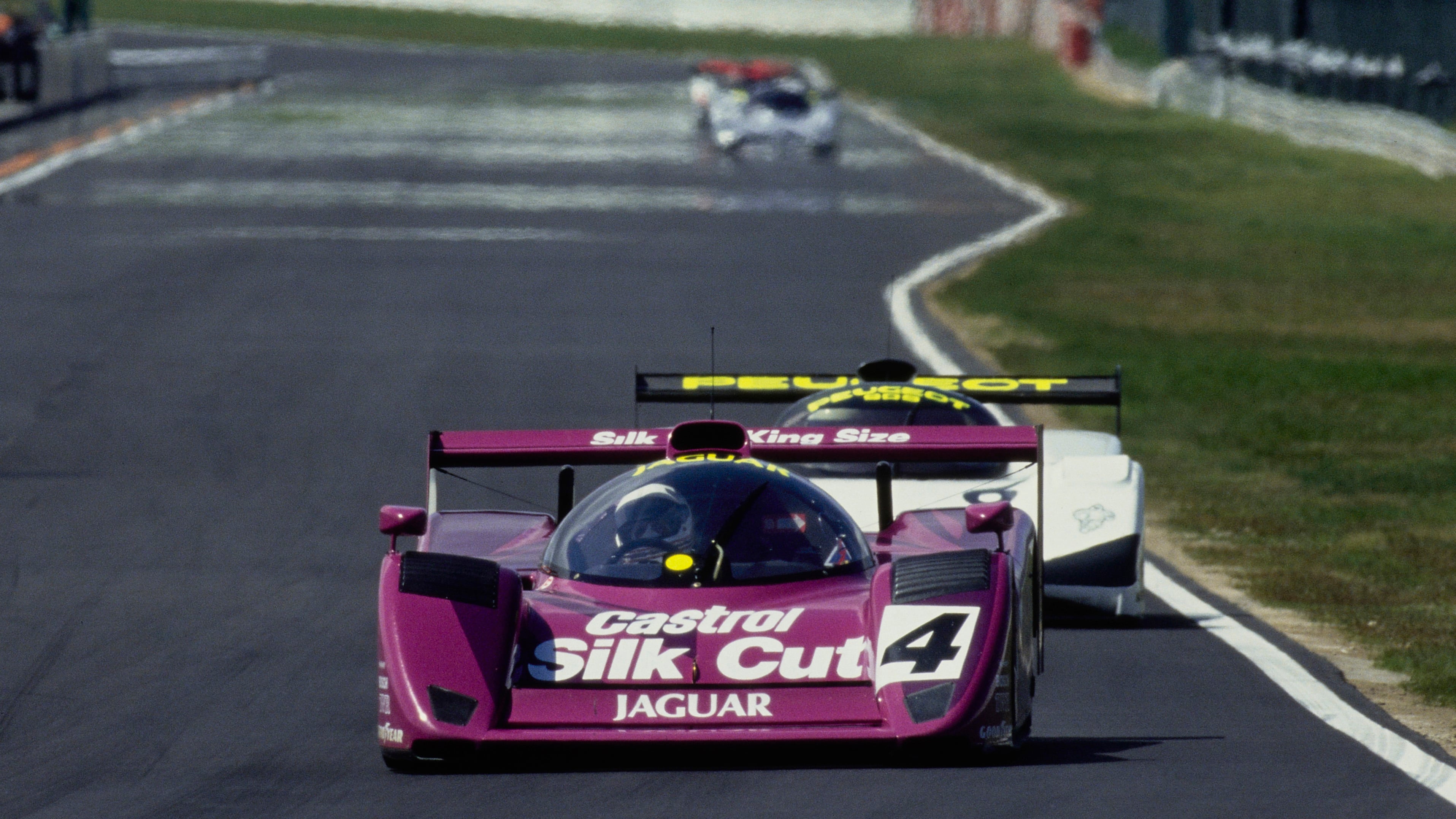
Martin Brundle drives the Jaguar XJR-14 at the 1991 World Sportscar Championship Fuji Film Cup. Jaguar won the Teams’ Championship that year ahead of Peugeot and Sauber, and the Drivers’ title with Teo Fabi.
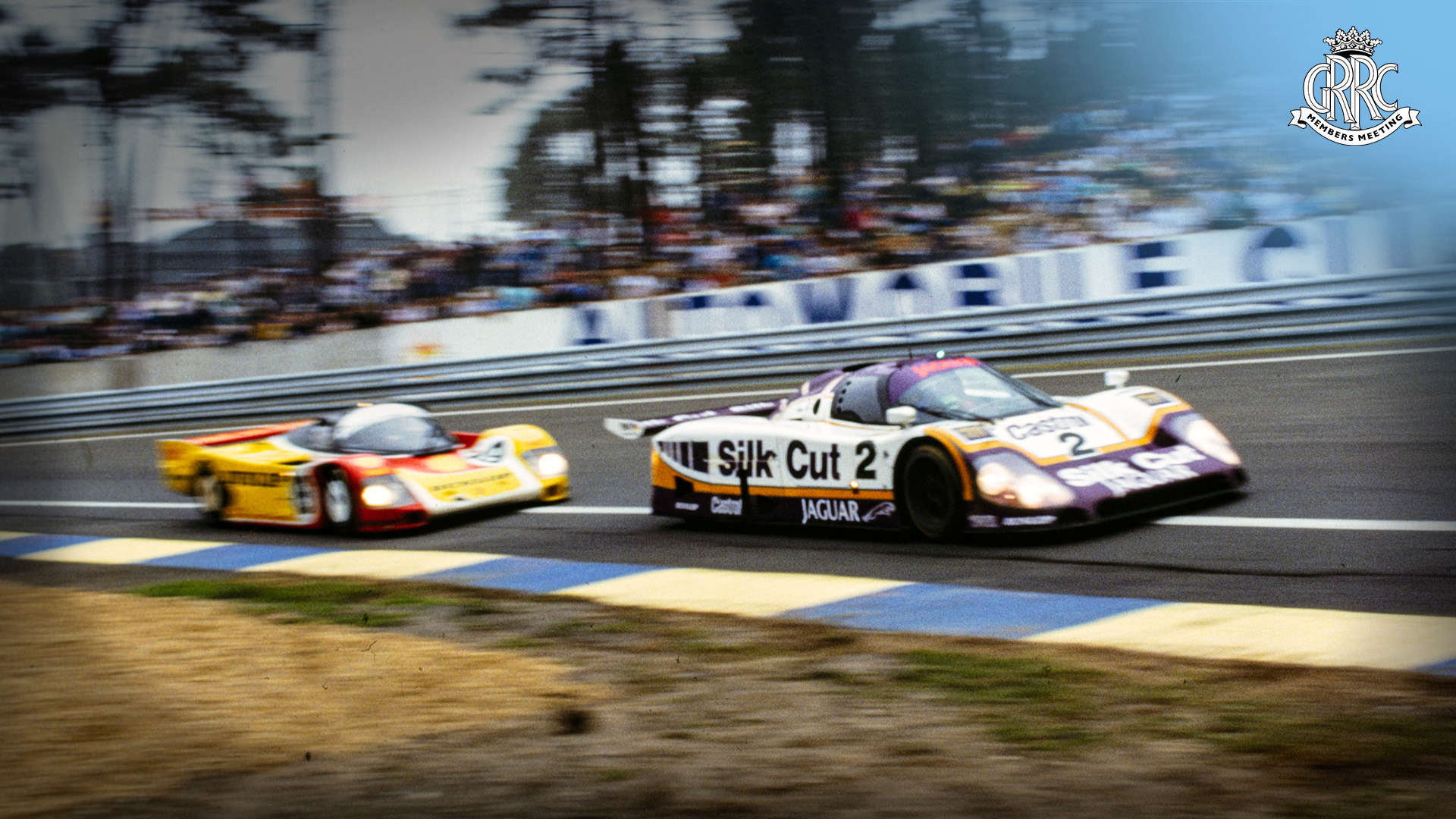
Image credit: Sutton Images/Stringer via Getty ImagesBoth Jaguar and Mercedes missed out at Le Mans, where Mazda’s screaming rotary-engined 787B stole the show. Jaguar lost a Le Mans Group C hat-trick with a frustrating 2-3-4 result, while another uncharacteristic weak point blighted the C11’s chances of a valedictory victory. An alternator bracket fault kept the Silver Arrows out of contention, having returned to a race that was back on the World Championship schedule for this year. Leading figures at the team have since claimed this missed chance was their biggest regret from the Group C years.
Big legacy for Mercedes
As Jaguar stepped away from sportscar racing (and has yet to return, favouring electric-powered Formula E over the modern-day Hypercars), the Sauber-run campaigns were just the start for Mercedes-Benz. In tandem with its success in the German DTM touring car series, it seemed the Group C victories might lead the German giant to take the next logical step and dive back into F1 for the first time since 1955. But the world recession frustrated those ambitions, for the time being.
Instead, Sauber took the plunge in 1993 and again Mercedes joined it, but via a cautious approach, badging the team’s Ilmor-built V10s with the smart, black C12 carrying subtle Three-Pointed Star branding on its engine cover. This time, the toe in the water didn’t lead to a full takeover of the team. Instead, Mercedes forged a new partnership with McLaren from 1995 which, following the recruitment of Adrian Newey, allowed Mika Häkkinen to gazump old Mercedes protégé Schumacher not once but twice across 1998 and 1999.
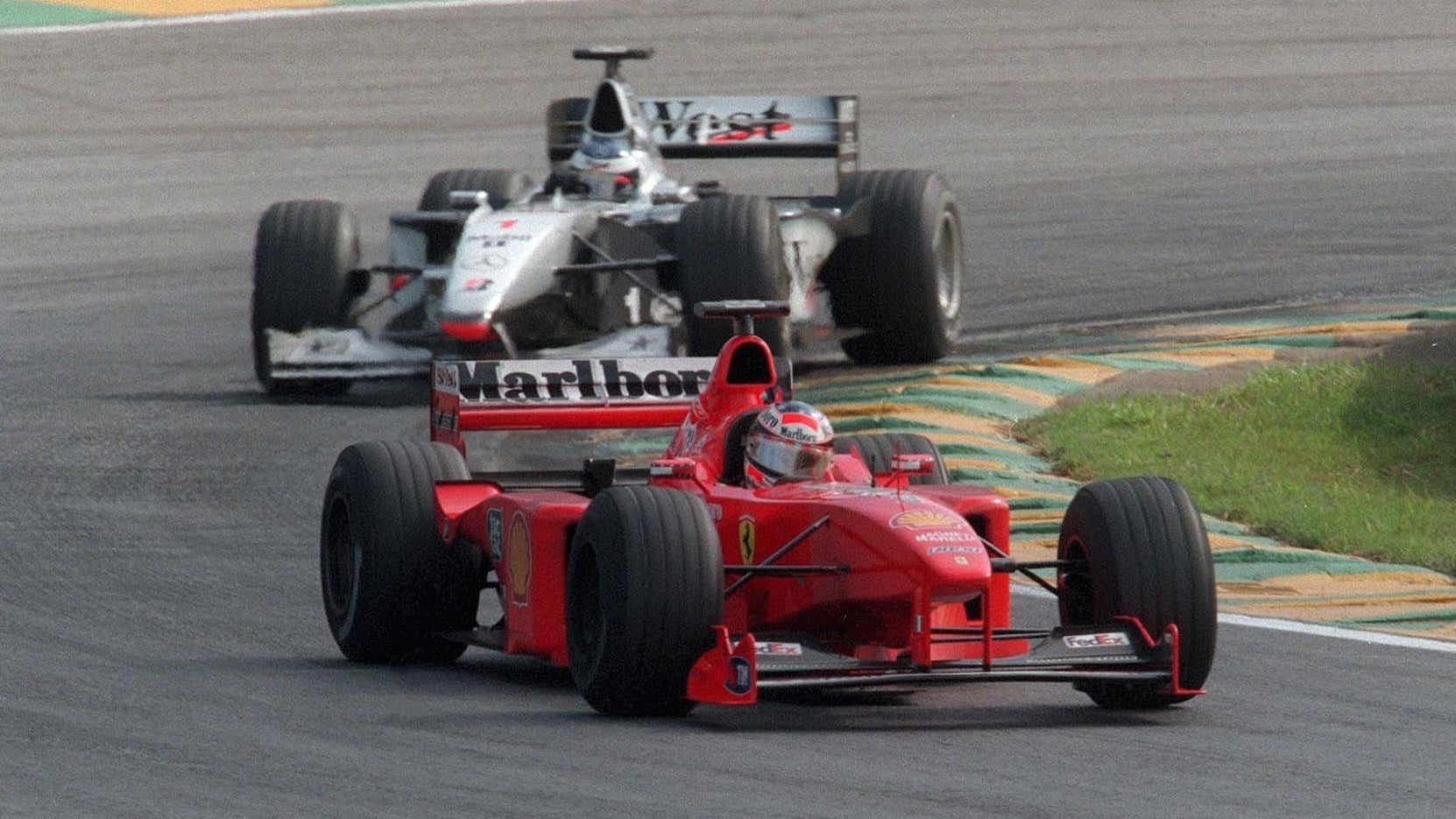
After a year in the World Sportscar Championship with Sauber-Mercedes, Michael Schumacher debuted in Formula 1 in 1991 with Jordan, and would go on to become a thorn in Mercedes’ side up against McLaren's Mika Häkkinen.
Image credit: Tobias Heyer via Getty ImagesThe fourth era of the Silver Arrows had to wait until 2010, when the manufacturer bought up the Formula 1 World Championship-winning Brawn GP team to begin what would ultimately turn into a new record-breaking era of domination.
Lewis Hamilton, Nico Rosberg and now Kimi Antonelli have become champions thanks to the power and competitive ambition of Mercedes. The link is old and tenuous at first glance, but nevertheless the seeds for it all were sewn long ago, in those far-off days of Group C.
Main image courtesy of Sutton Images/Stringer via Getty Images.
The 84th Members' Meeting takes place on 10th and 11th April 2027. Tickets are now on sale to GRRC Members and Fellowship Members at the early bird price.
If you’re not already part of the GRRC, you can sign up to the Fellowship today to save ten per cent on your 2027 tickets and grandstand passes, as well as enjoying a whole host of other on-event perks.
members' meeting
84th members' meeting
84mm
event coverage
TWR Jaguar
TWR celebration
Mercedes
group c
The Rivals
Subscribe to Goodwood Road & Racing
Thank you, you’re now subscribed

How many hay bales are used at FOS?
For the last two years, 5,800 bales have been recylced into the biomass energy centre to be used for energy generation