The 8 best Maserati racing cars
Maserati is a name for many that is inseparable from motorsport, with an iron-clad reputation for beauty and speed on track. As we look forward to celebrating 100 years since the marque’s first motorsport success at the 2026 Goodwood Revival presented by Dunlop, here’s our pick of Maserati's best ever racing cars.
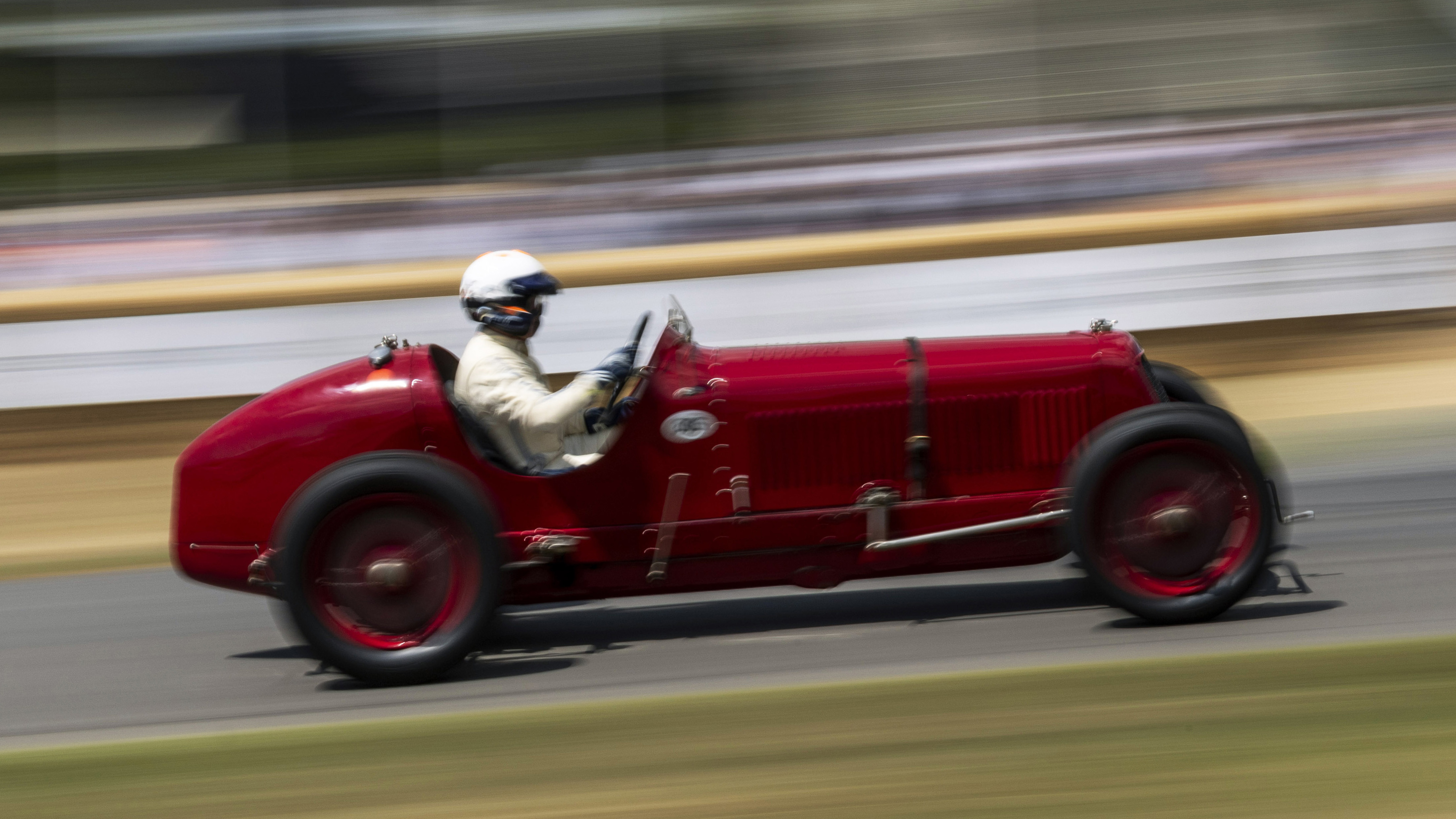
1926 Tipo 26
The first car Maserati built, the Tipo 26 was the start of the marque’s legend, securing its first motorsport triumph with victory in the Grand Prix class of the 1926 Targa Florio, one of the great Italian road races of the 20th century.
Alfieri Maserati’s Diatto-intended design formed the base of the Tipo 26. It featured a steel ladder-frame, two-seats and an aluminium body by Medardo Fantuzzi. Powered by a twin-overhead camshaft 1.5-litre supercharged inline eight-cylinder, it immediately set the Maserati template for stylish Grand Prix cars. Between 1926 and 1932 only 11 examples were built, though a Mille Miglia edition, the Tipo 26 MM, was developed in 1928.
At the 1926 Targa Florio it was Alfieri who was at the wheel for his namesake marque’s debut win, joined by Guerino Bertocchi as a riding mechanic. Their Tipo 26 featured a shortened tail fitted with two spare wheels to see them through the five laps of the 67-mile circuit that became known as the Targa’s Mezzo (or Medio) layout.
In a race running to Formula Libre rules the pair were always outgunned, but apart from a little carburation trouble in the closing stages Maserati and his Maserati crossed the finish line in eight hours 37 minutes and 11 seconds. Officially they were classified eighth overall, but crucially were first in their class. The Tipo 26 had delivered a maiden victory for the Maserati family under their own name.
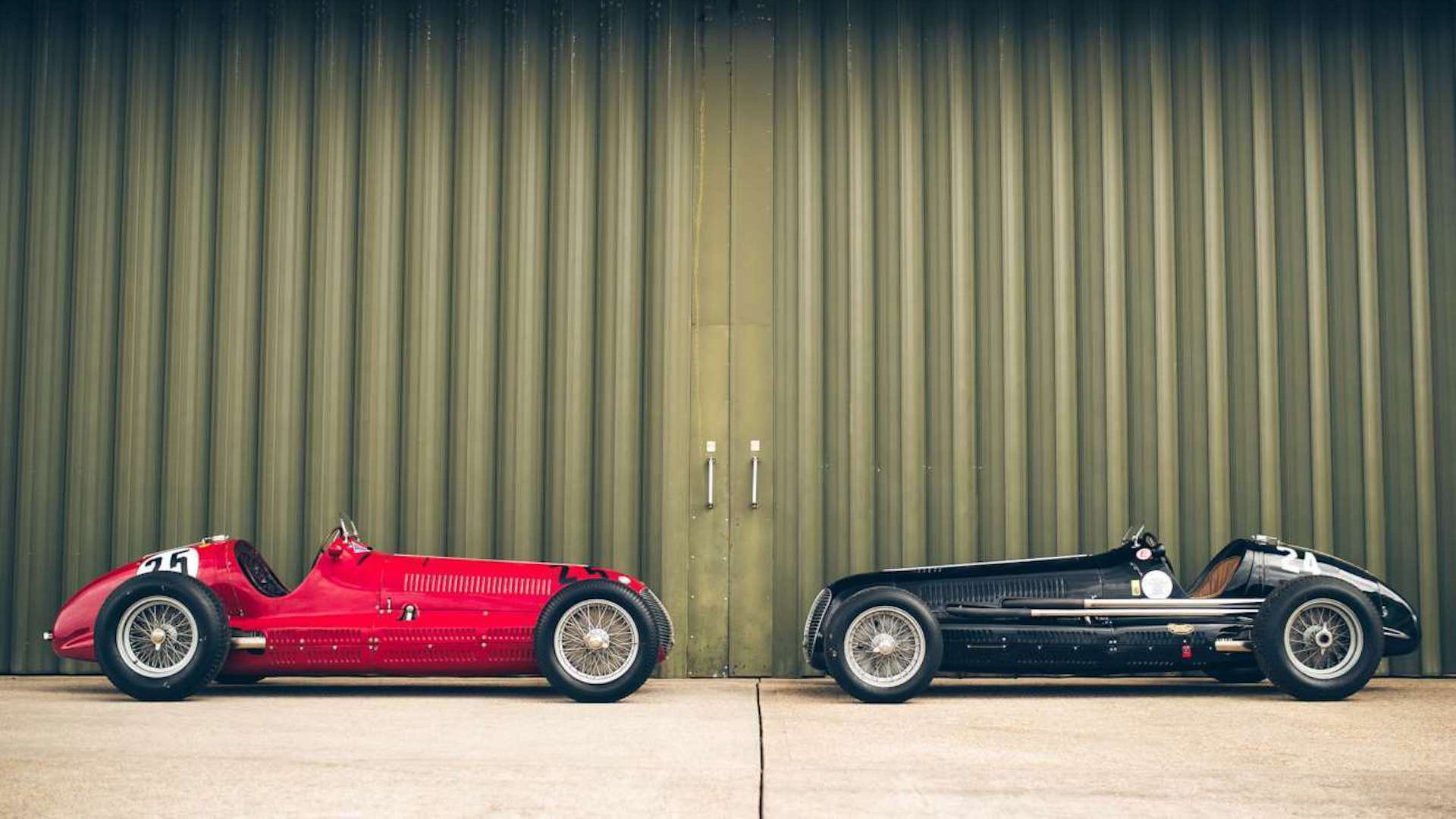
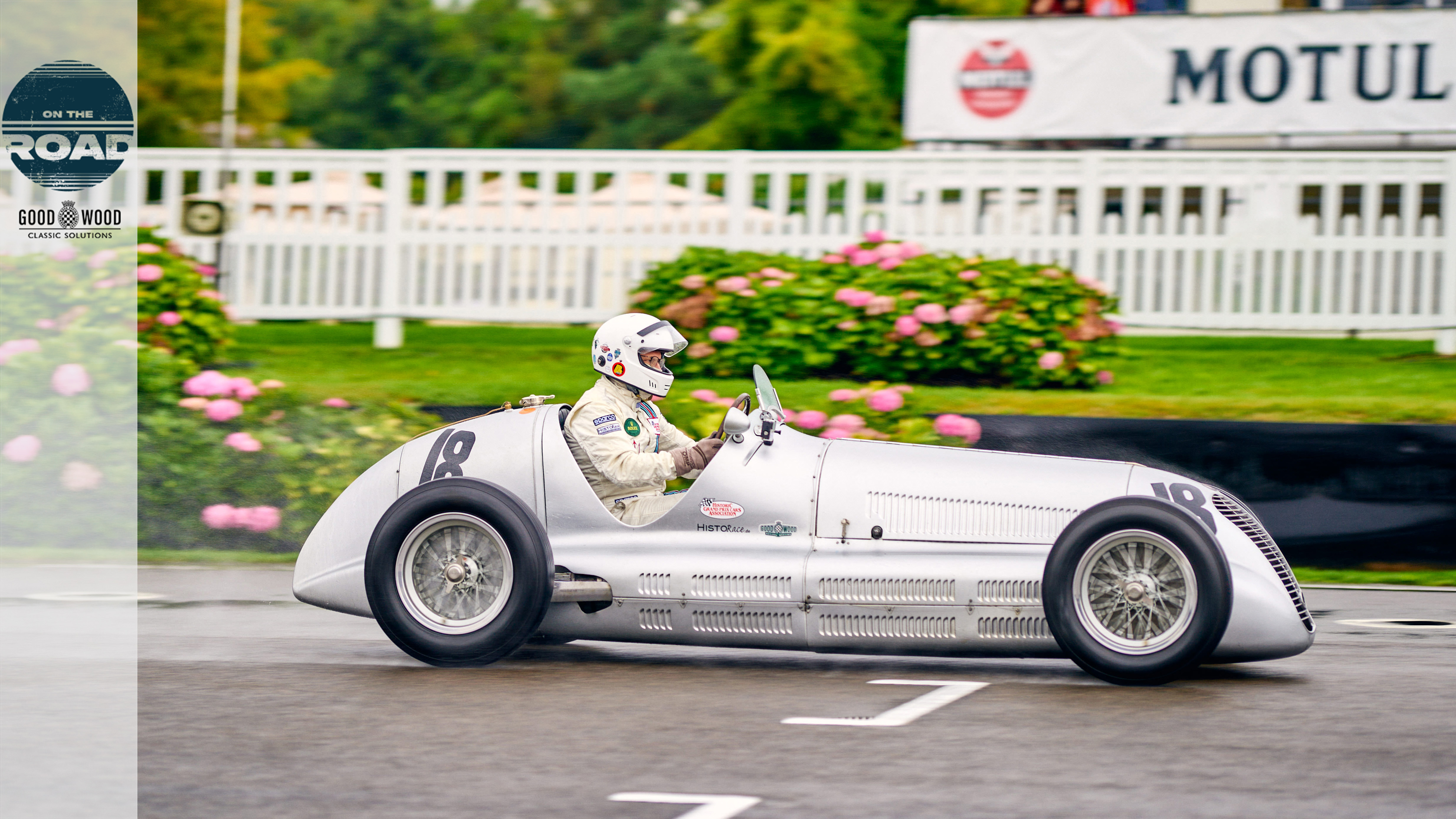
1938 8CTF
The Maserati 8CTF has an impressive, albeit slightly chequered record, faced with the dominance of Mercedes-Benz and Auto Union, who between them had secured all but three victories in official championship races between 1935 and ’39.
By 1937, Maserati was now owned by the Orsi Group that brought with them new money and organisational improvements. The reinvigorated team produced the 3.0-litre supercharged Maserati 8CTF, and throughout the 1938 season it took the fight to the Germans, securing multiple pole positions, high scoring finishes and fastest laps.
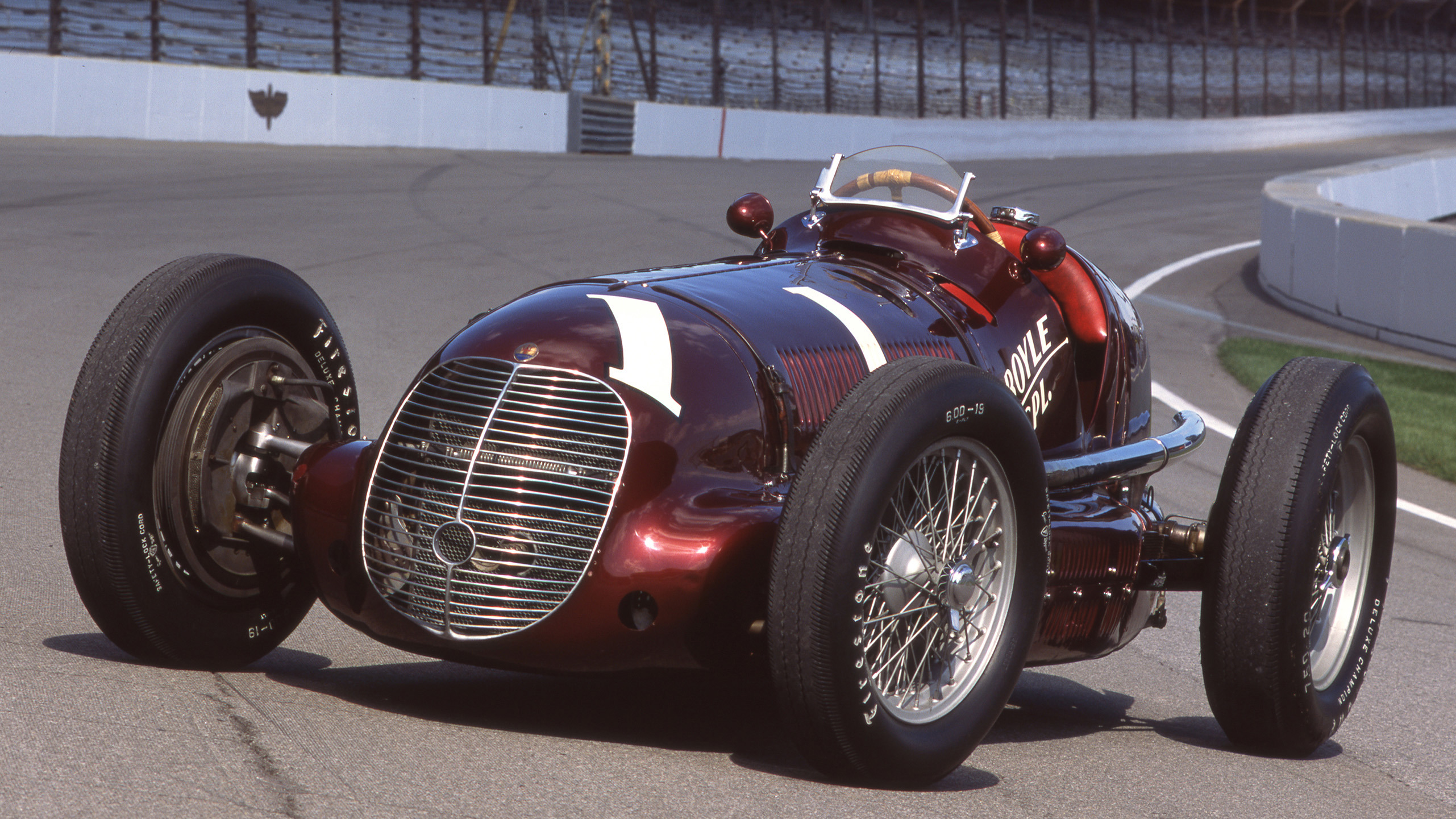
It was America where the 8CTF really made its name, where in hands of Wilbur Shaw, the “Boyle Special” won the Indianapolis 500 consecutively in 1939 and 1940, making Maserati the first and still only Italian manufacturer to win the race.
The 8CTF has one of the longest and most successful careers of any single-seater in American motorsport history, competing into the post-war years with a final appearance on American ovals coming in 1950, while Louis Unser showcased its versatility, challenging the 8CTF at the merciless dirt tracks of Pikes Peak and winning back-to-back in 1946 and ‘47.
Though it never quite held a candle to the competition in Europe, the 8CTF forged Maserati’s enduring legacy across the pond.
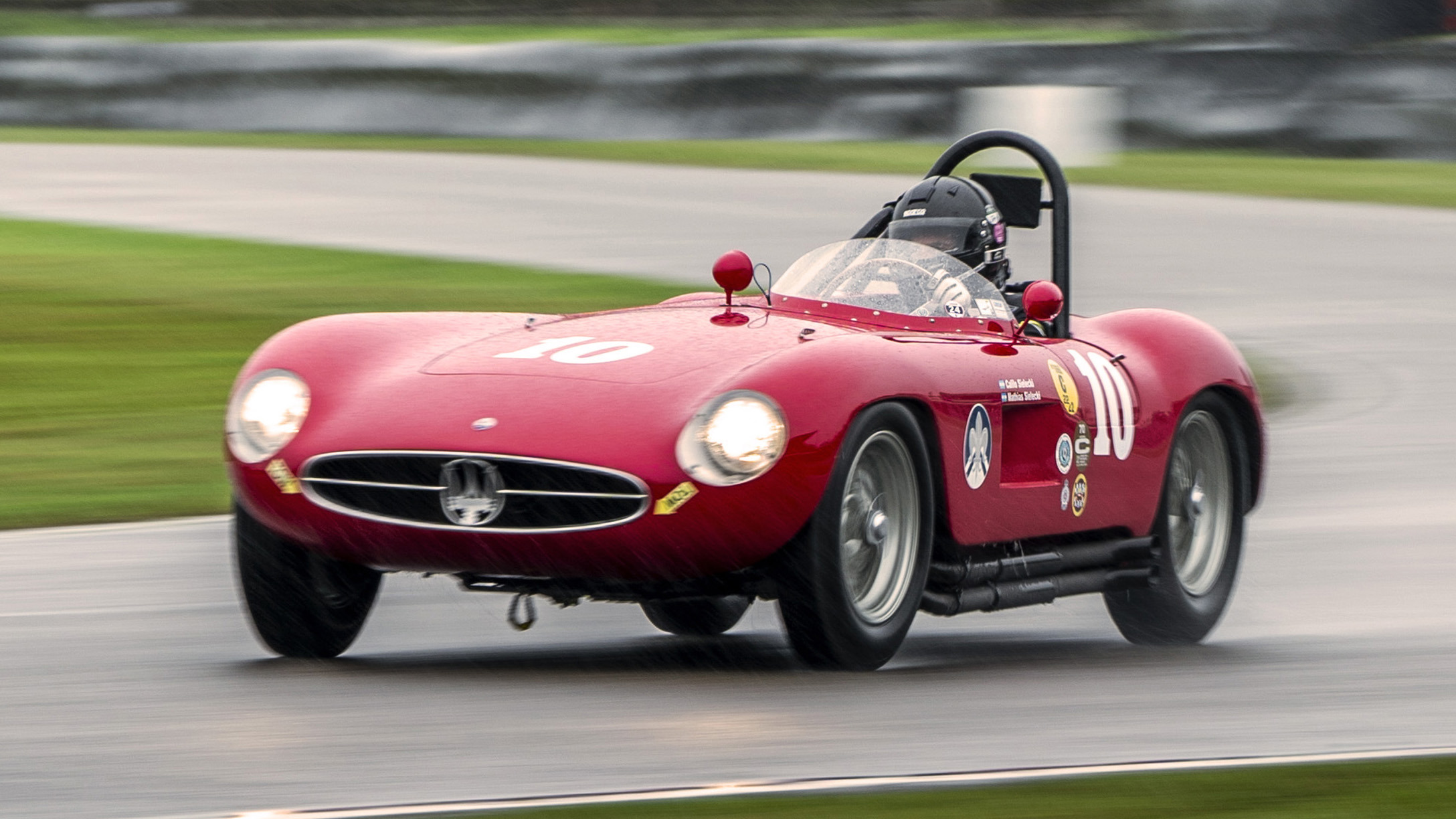
1947 A6GCS
Maserati was an entrant during the very first season of the World Sportscar Championship in 1953, when the Mille Miglia was included as a Championship round. Emilio Giletti and Guerino Bertocchi won the Sports 2000 class at the wheel of a Fantuzzi-bodied
The two-seater was developed in 1947 with the name derived from the cast iron engine block (‘Ghisa’) and its purpose as a sportscar (‘Corsa Sport’). The 2.0-litre engine produced 122PS (89kW) and only 15 cars were ever produced in a six-year period.
Another A6GCS/53 in the hands of Luigi Musso and Augusto Zocca claimed third in the in 1955 Mille Miglia, as Maserati expanded its involvement to two further races — one in Argentina, the other the RAC TT at Dundrod in the UK.
In a strange twist of fate, the Maserati name found itself in direct competition with O.S.C.A, the company the Maserati brothers had gone on to found after leaving their namesake marque.
Despite consistent development, the A6GCS was never quite able to compete against the strength of established sportscar makers Ferrari, Mercedes and Jaguar, and was replaced by the 300S during 1955 season with relatively little fanfare.
1954 250F
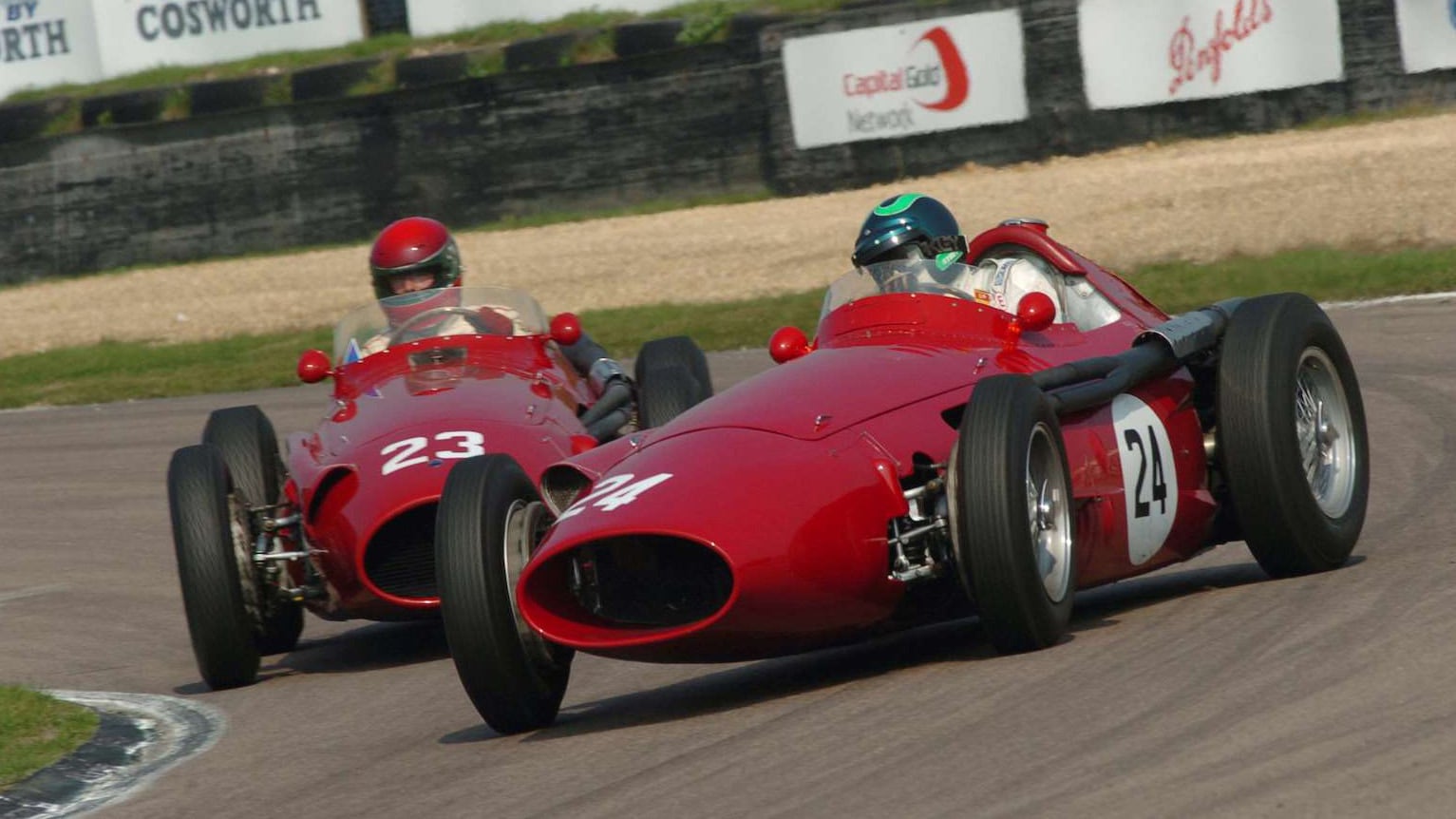
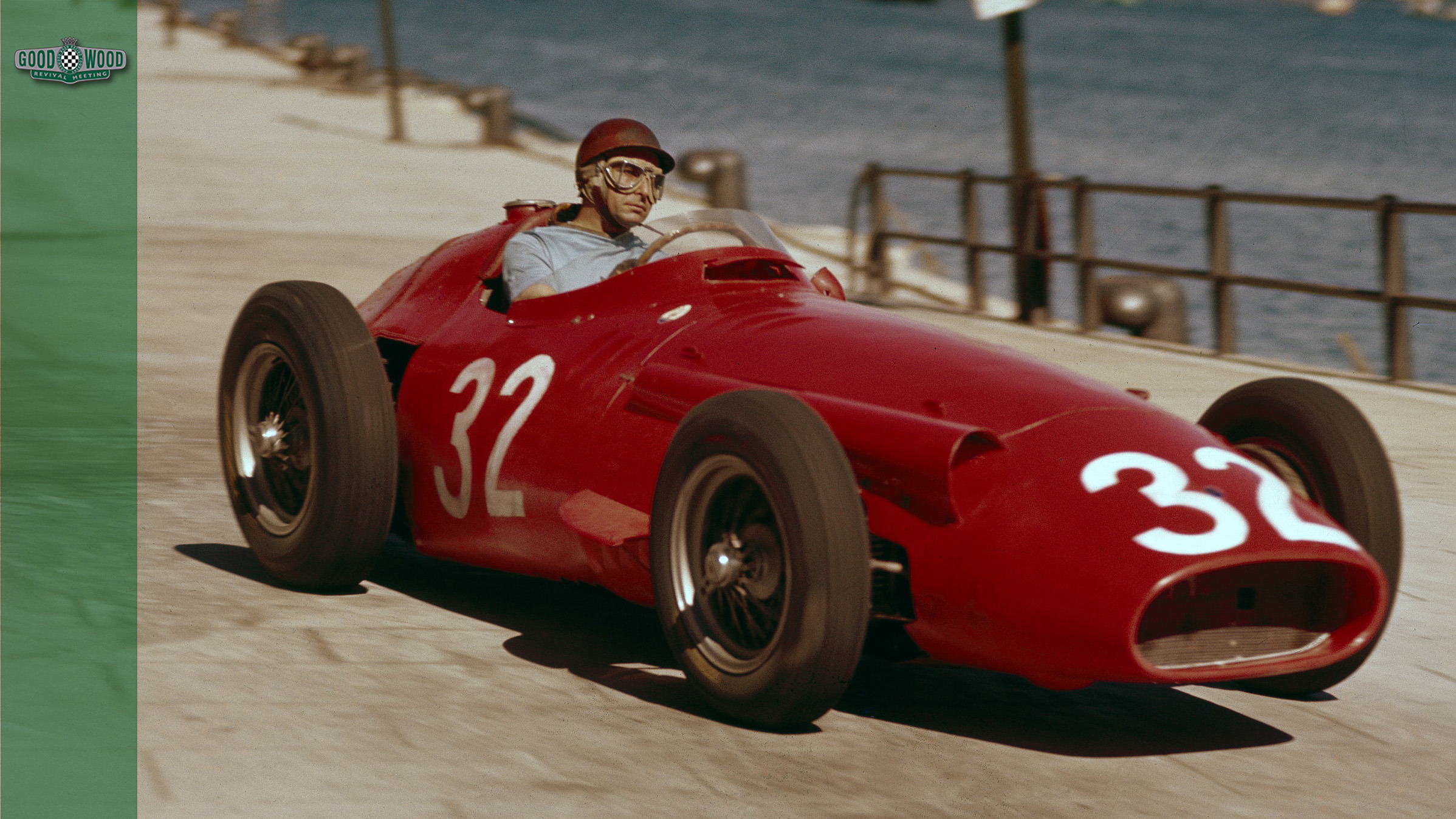
Conjure an image of 1950s Formula 1 and you might well picture the Maserati 250F. Elegant yet functional, the 250F was built to the new, naturally-aspirated 2.5-litre Grand Prix regulation of 1954, and proved fast straight out of the box in the hands of Juan Manuel Fangio.
His two wins in Argentina and Belgium (before switching to Mercedes) helped secure his second Drivers’ Championship, and whilst the 250F lived in the shadow of the Silver Arrows and Ferrari over the next three years, championship grids filled with Maseratis was a common sight — privateers even managed wins in non-championship races.
Among the successful 250F drivers of this period was Stirling Moss, who described the car as the best of any front-engined F1 cars of the period.
By 1956, Moss’ partnership with Maserati yielded a revered win at Monaco in what proved a slight halt to the charge of Fangio and Ferrari. The season’s spoils were ultimately taken by the two, but not before Maserati and Moss gave them another run for their money at Ferrari’s home Grand Prix at Monza.
Maserati’s final season in F1 came the following year, by which time Fangio had returned and the 250F had been overhauled with a new V12 engine and a stiffer chassis. The Argentine won his fifth and final World Championship in a hard-fought three-way battle between Maserati, Ferrari and Vanwall, his last hurrah being a legendary win at the 1957 German Grand Prix.
It was a glorious end to the Maserati factory team, though privateers continued running the 250F until 1960, when the rise of rear-engined racers finally rendered it obsolete.
1955 300S
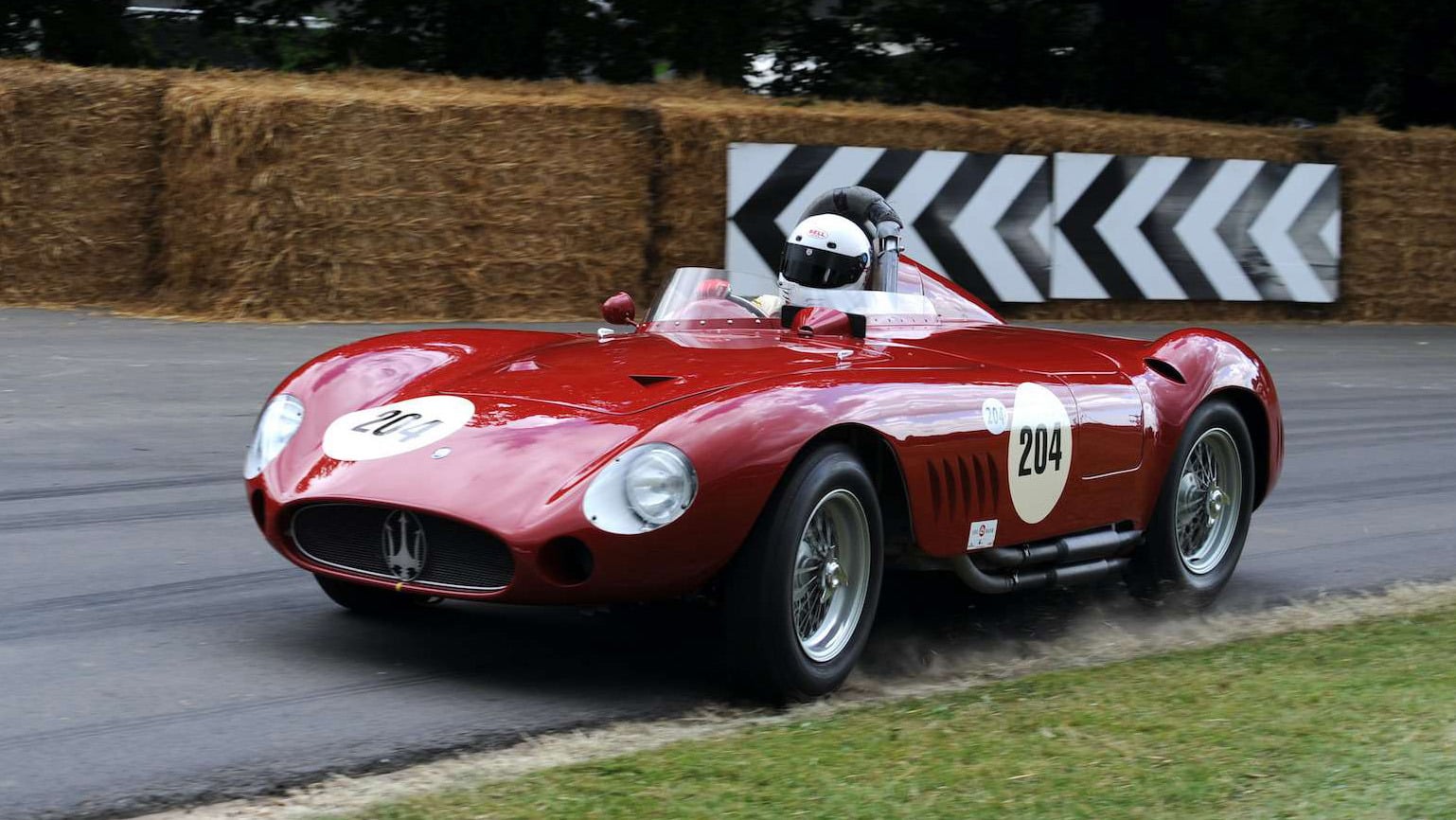
The 1955 World Sportscar Champions Mercedes-Benz had pulled their motorsport operations permanently, leaving Maserati as Ferrari’s only real challengers for the 1956 campaign. That was an opportunity was too good to miss.
While the bored and stroked six-cylinder, 250F-engined was good for 264PS (194kW) in full race trim and had experience competing in 1955, Maserati had been once again overwhelmed with retirements. With only one win in ’55, with Fangio at the wheel, it was clear modifications were necessary to keep up with the more powerful competition.
A longer and more streamlined nose was designed to reduce drag on the 300S, and that contributed to a better season for the car in 1956. Stirling Moss and local Argentine hero Carlos Menditeguy won the season opener, and Moss repeated the feat with Jean Behra at the Nürburgring. The team were however, unable to keep up with Ferrari for the final three rounds and ultimately had to settle for second in the Championship.
Nevertheless, the 300S was a commercial success for Maserati, which managed to sell over two dozen to customers. Today, the 300S is remembered as one of the finest handling front-engined sportscars ever made, and remains one of the most desirable cars from the period.
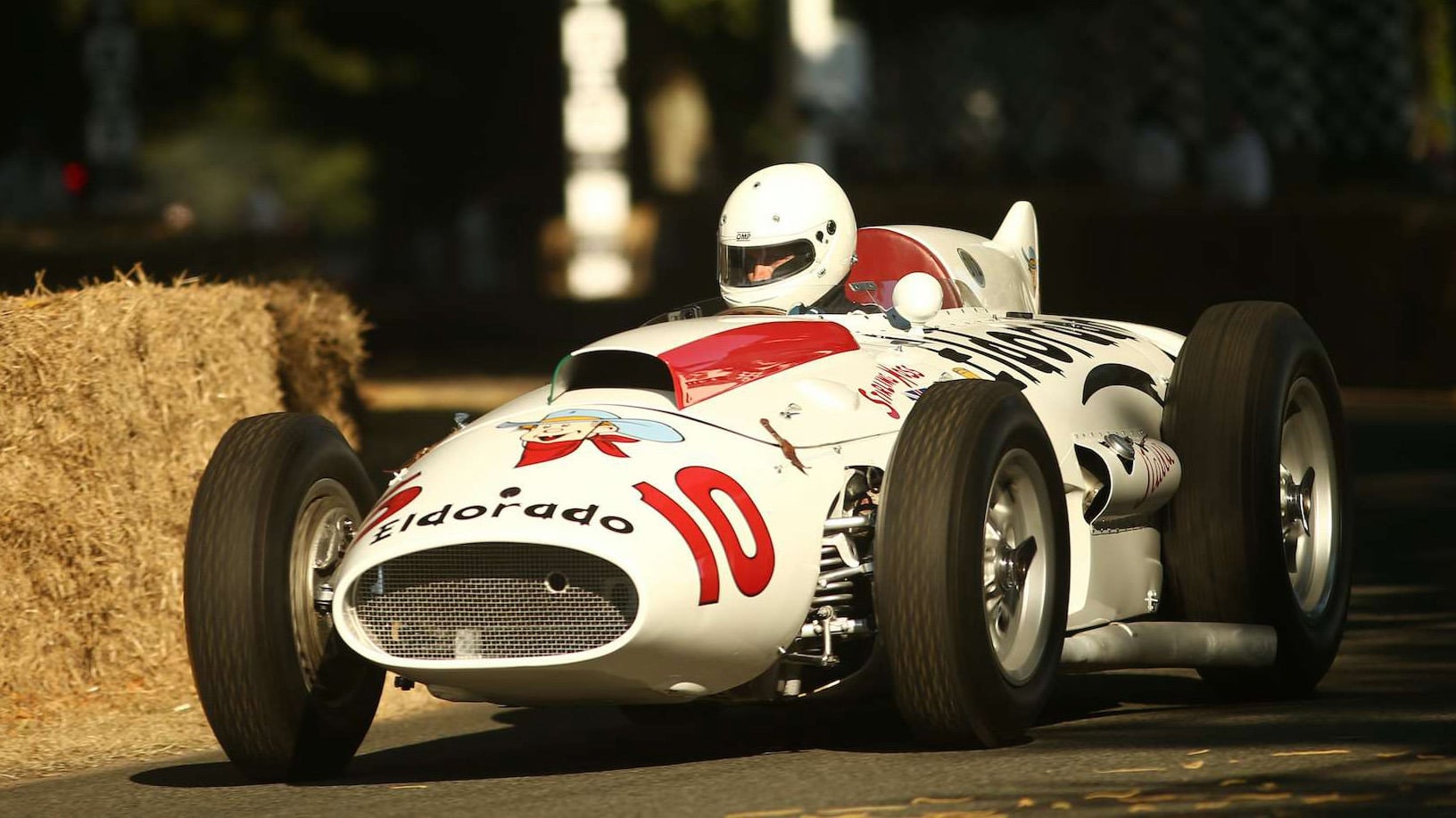
1958 420M/58 (Eldorado)
The Maserati 420M/58 became a veritable icon due to its unique conception and its influence on the world of motorsport sponsorship.
Officially without a factory team after 1957, Maserati were commissioned by ice cream company Eldorado to run in the second and final edition of Race of Two Worlds at Monza in 1958. In what was the first example of a modern sponsorship deal in motorsport, the 420M/58 was painted in the colours of the partner company rather than traditional national racing colours.
The Eldorado’s chassis was derived from the 250F, making Stirling Moss the obvious driver choice for the race. The modified 4.2-litre 450S motor kicked out so much power and torque that a two-speed gearbox was all that was needed.
Moss managed fourth in the first race, while reliability issues saw him drop to fifth in race two. He then suffered what he called the scariest crash of his career in the third heat, when the 420M/58 crashed into the guard rails at the top of the banking. Maserati still managed seventh overall, bettering the Jaguar D-Types that had taken Le Mans by storm, and even the bespoke Ferrari entries.
But it was the Eldorado sponsorship and livery that was the real revolution, inspiring a stream of external investment into motorsport and hundreds of iconic sponsor liveries.
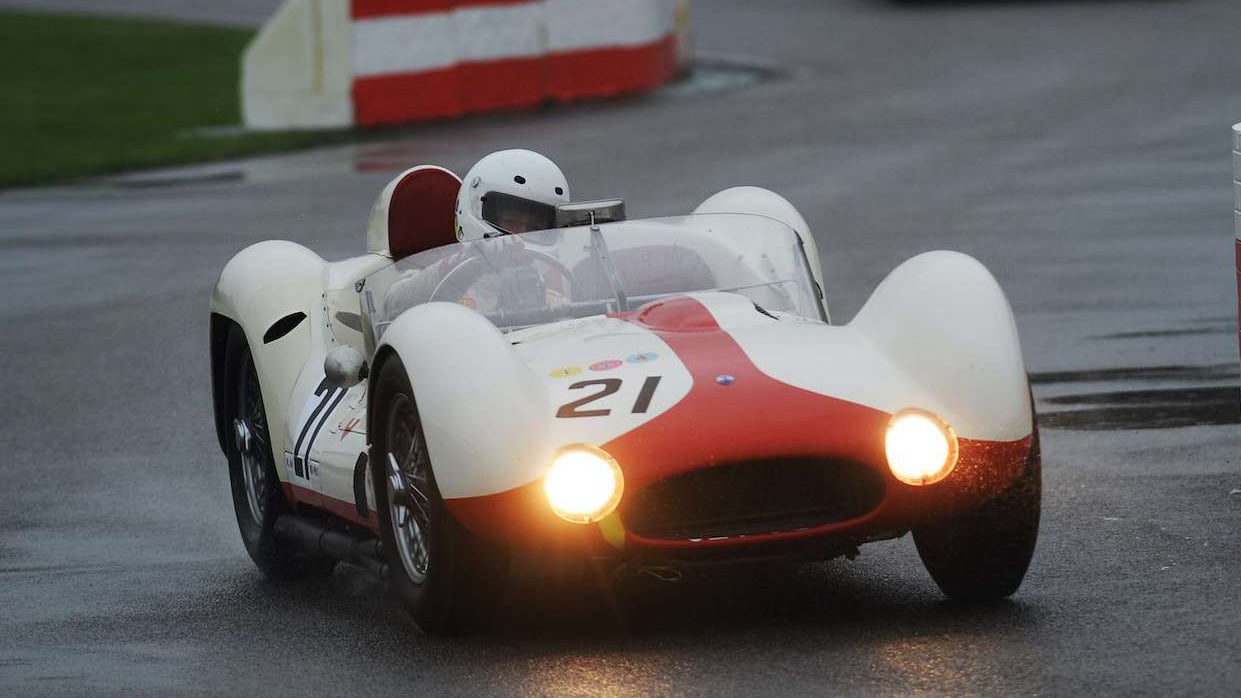
1960 Tipo 61 ‘Birdcage’
Not good-looking in the traditional sense, though strangely evocative with its voluptuous curves, Maserati’s Tipo 61 was hugely sophisticated for the time.
Nicknamed ‘Birdcage’ due to the elaborate triangulated lattice of tubes that enveloped the driver, its complex spaceframe was revolutionary. The design was extremely lightweight, strong and stiff; the 253PS (186kW), four-cylinder, 2.8-litre motor was mounted well behind the front axle to improve weight distribution and tilted at a 45-degree angle to reduce the centre of gravity. This all translated to the dream-like handling, for which it is revered.
Tipo 61 proved effective even on the most technical of courses, evidenced by back-to-back victories at the merciless Nürburgring 1,000 km in 1960 and 1961. The list of drivers only inflates the Birdcage’s mystique: Jim Hall, Carroll Shelby, Walt Hansgen, Dan Gurney, Masten Gregory and Stirling Moss all found success in the car.
Though, as is the pattern with fast Maseratis, they were plagued with technical issues that ultimately prevented them from winning some of the more glorified races including Le Mans. The adage ‘to finish first, one must first finish’ was as true as ever, and once again Maserati’s cars proved too fragile to push for the highest racing accolades.
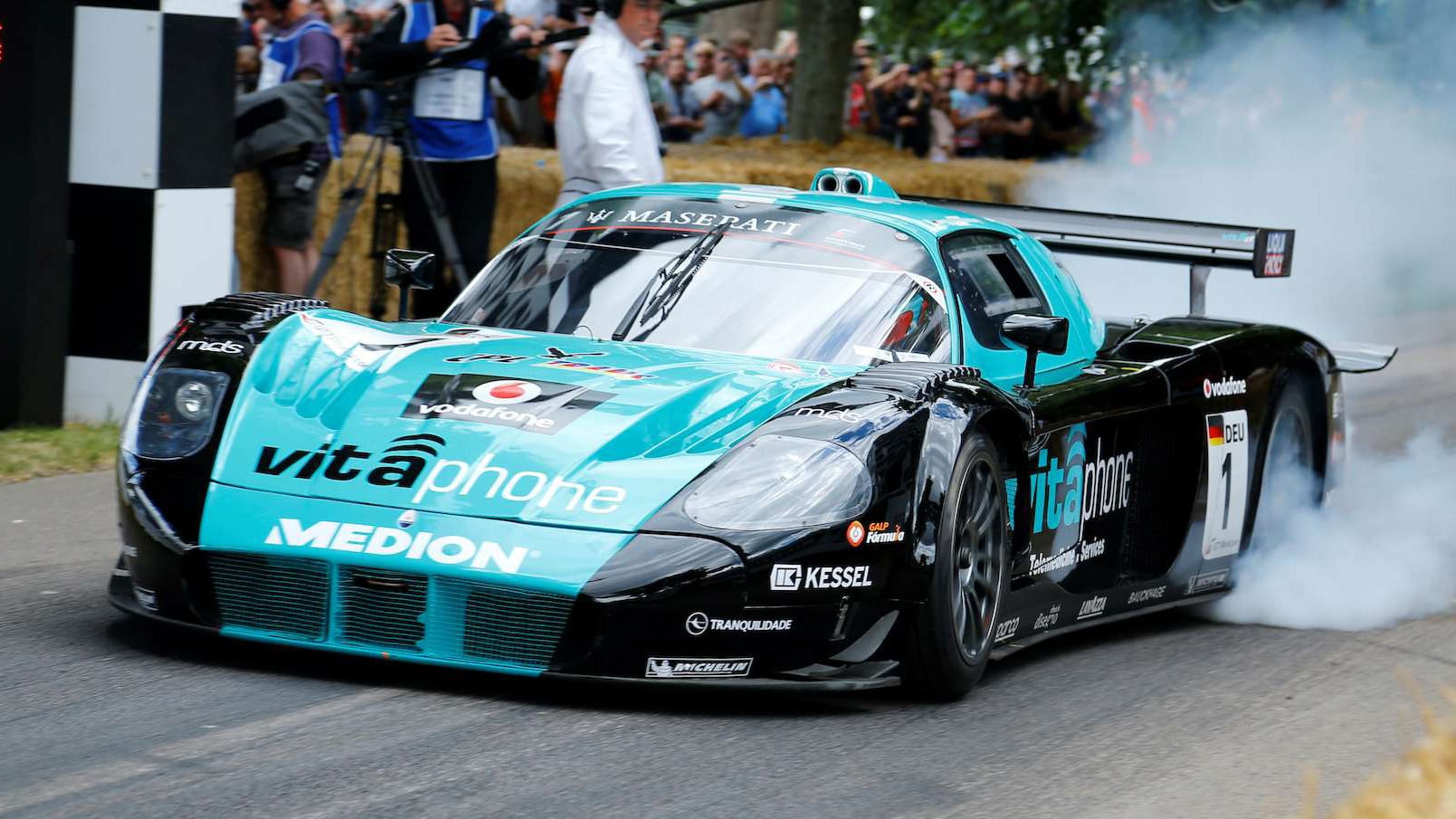
2004 MC12
After almost four decades away and multiple troubled ownerships, Maserati returned to motorsport in 2004. Now owned by old rival Ferrari, it was offered an Enzo chassis and 6.0-litre V12 for the basis of their its new GT1 racer, the MC12.
Maserati had to build at least 25 cars to homologate the MC12 for racing, though a few design and publicity hiccups put them in the hot seat. The elongated body had a much lower drag-coefficient than the Enzo, and the Maserati had less reliance on underbody aerodynamics. It was, however, deemed too wide by racing authorities. Worse still, images released of the car months before the road version further convinced the FIA that the MC12 was not built in the spirit of the regulations.
A compromise on a smaller rear wing and a weight penalty allowed it to run in the 2004 FIA GT Championship, but the MC12 was refused any points for the AF Corse squad’s second and third places at its debut in Imola and again for a win at Oschersleben. It was only after the MC12 took victory at the season finale that the FIA allowed it to be homologated and for the teams to earn points
From 2005 the Vitaphone Racing Team took the MC12 to five consecutive FIA GT Team Championships and four Drivers’ Championships, before its seven-year reign in GT1 ended in 2011. No doubt one of the greatest GT racers of its era.
The 2027 Goodwood Revival will take place on 17th-19th September 2027. Sign up for ticket alerts to make sure you don’t miss out.
If you’re not already part of the GRRC, you can sign up to the Fellowship today to save ten per cent on your 2027 tickets and grandstand passes, as well as enjoying a whole host of other on-event perks.
Maserati
MC12
250F
8CTF
300S
420M/58
Tipo 61
Birdcage
Stirling Moss
Juan Manuel Fangio
Maserati Celebration