
Why we love Gerhard Berger
He was a swashbuckling hero who raced with a twinkle in his eye, among the ‘big beasts’ of 1980s and ’90s Formula 1, winning Grands Prix for Benetton, Ferrari and McLaren. Of course we love Gerhard Berger! How could we not?
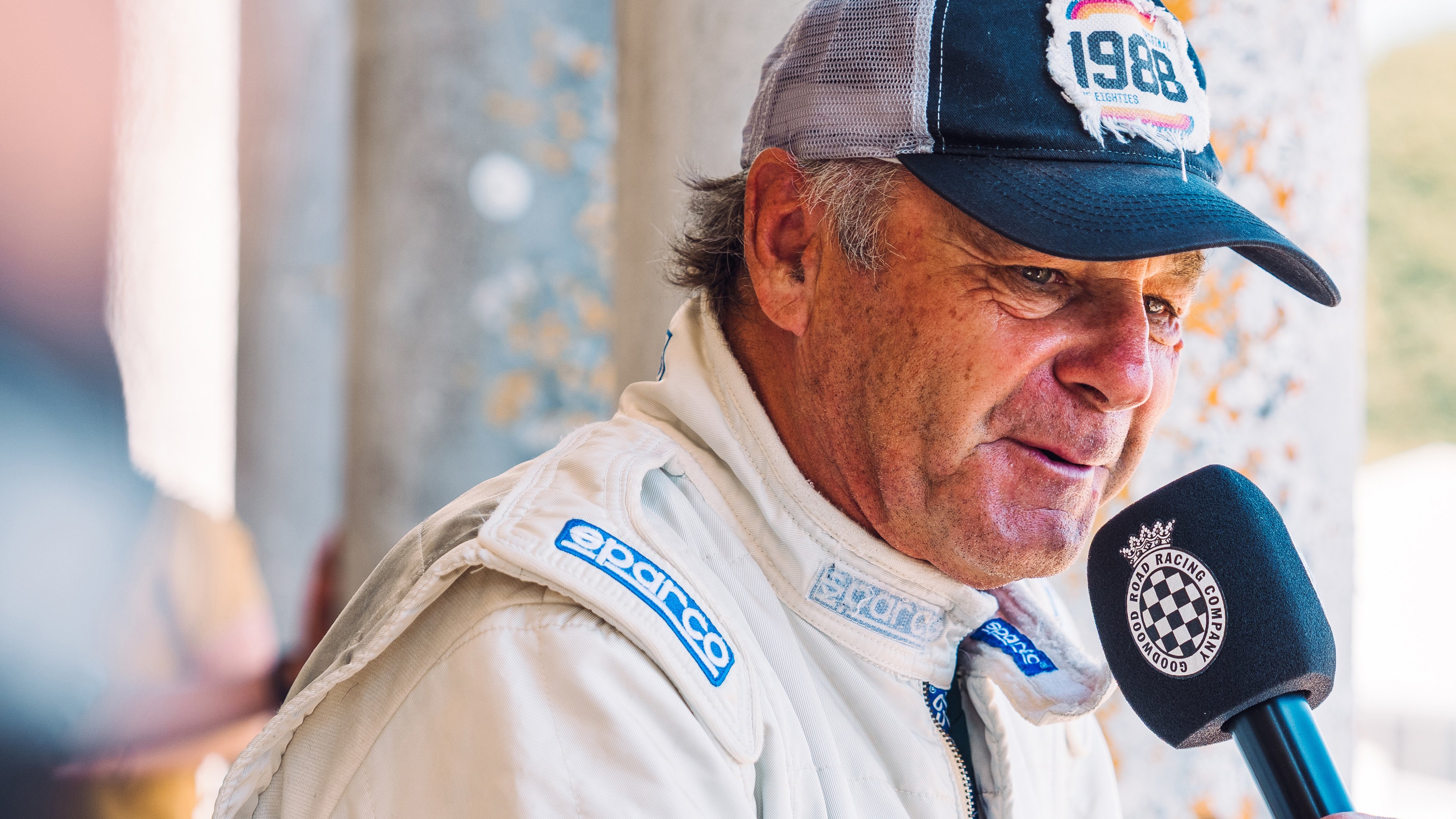
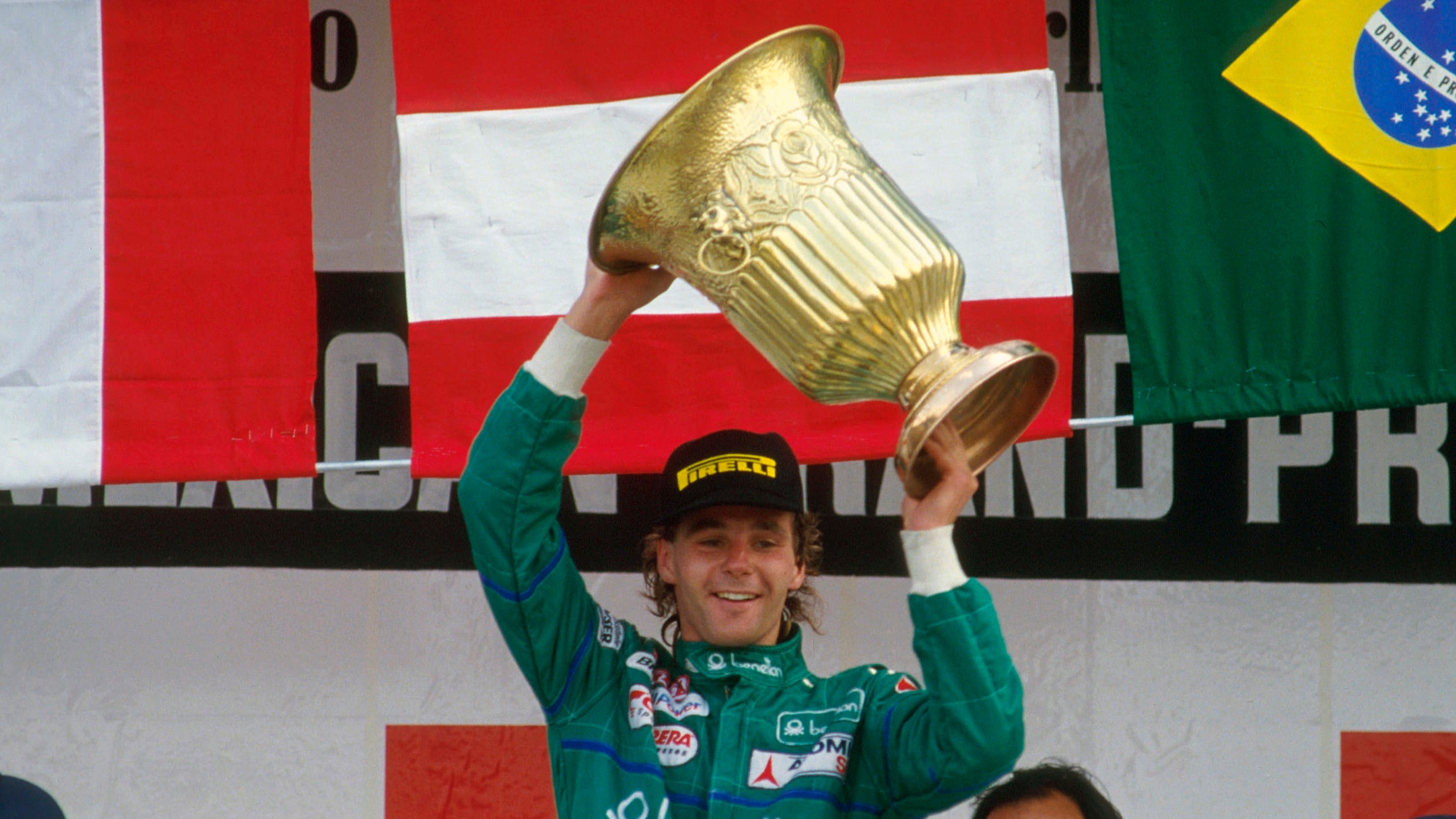
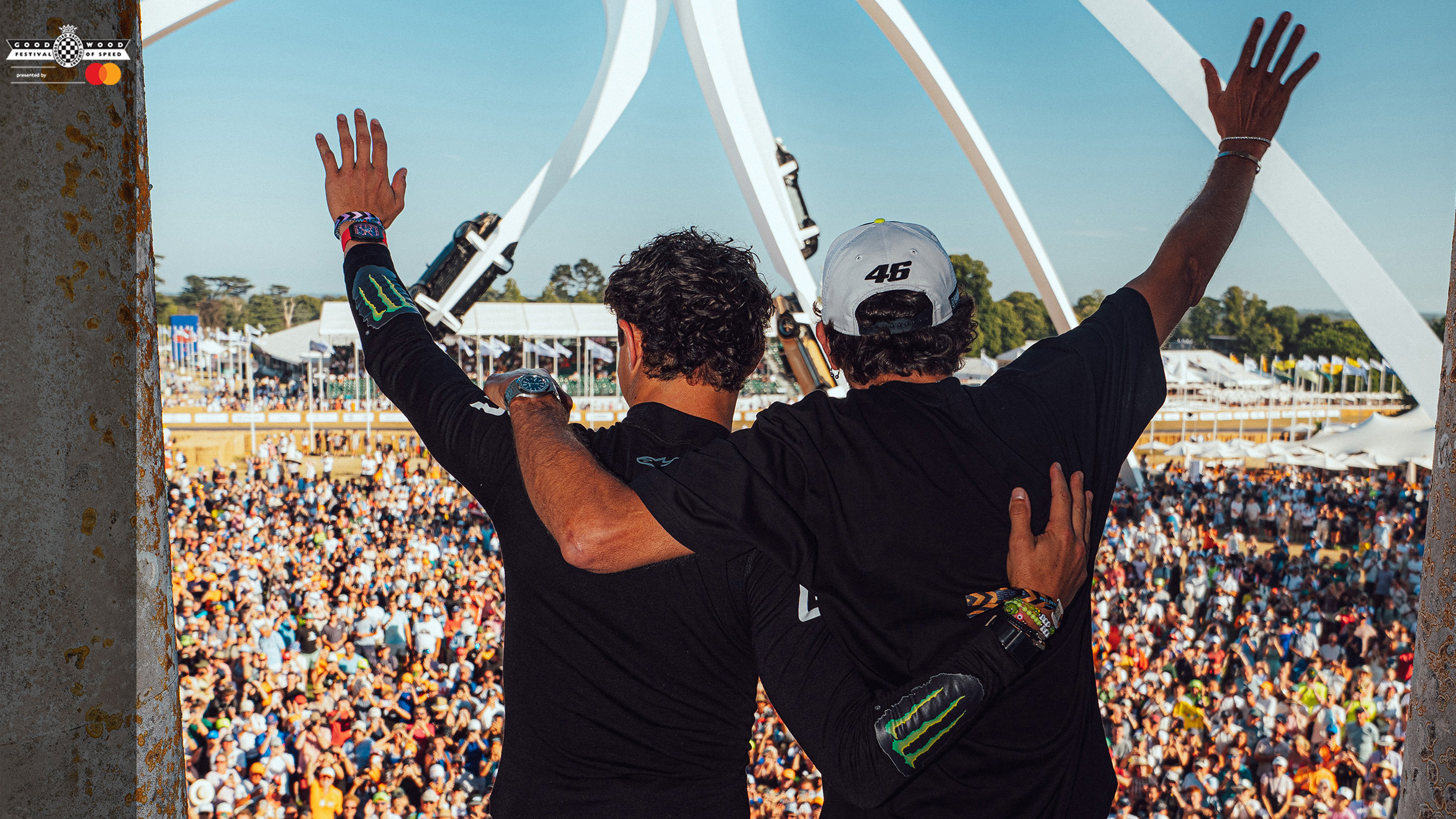
As his Balcony Moment reminded us at the Goodwood Festival of Speed presented by Mastercard last weekend, the Austrian remains as popular as he ever was during an F1 career that spanned 1984 to 1997, for a total of 210 Grand Prix starts, ten wins and 12 pole positions. Let’s remind ourselves why.
A racer with ‘big balls’
That’s why Benetton team manager Peter Collins said he rated Berger when he signed him for 1986. Gerhard was brave, committed and just the sort of character who could tame the turbo-powered F1 monsters of the mid-1980s.
But it was only luck that prevented Berger from being lost not only to F1 but to the world at large. He’d already scored a World Championship point for sixth place at Monza in only his second Grand Prix for ATS in 1984 when during the off-season he survived a serious road accident. His BMW cartwheeled off a cliff, with Berger — who wasn’t wearing a safety belt — thrown clear of the wreck. He escaped with broken vertebrae.
Berger was fit enough to return to F1 in 1985, now for Arrows-BMW for whom he scored points at the end of the season, before Collins plucked him to race beside Teo Fabi for the newly-named Benetton team that had previously existed as Toleman.
Berger claimed his first F1 victory at the 1986 Mexican Grand Prix, with Benetton. Alain Prost and Ayrton Senna joined him on the podium.
Image credit: Getty ImagesFirst win — then Ferrari
Berger made an immediate impact at Benetton, finishing sixth in his first two races for the team, then scoring a podium third at Imola. On the back of that performance, Ferrari instigated talks about a move for 1987. Berger has recalled how he met team chief Marco Piccinini at a petrol station outside of Maranello, then was covered with a blanket in the back seat of a car to be taken to meet the Old Man himself, Enzo Ferrari. Clandestine stuff.
The BMW turbo in the back of the Benetton that year was the F1 equivalent of a hand grenade — literally in Fabi’s case at Monza, where it is thought to have hit over 1,300PS (969kW) in qualifying before blowing itself to pieces. But when the engine did hold together, Berger continued to show his speed.
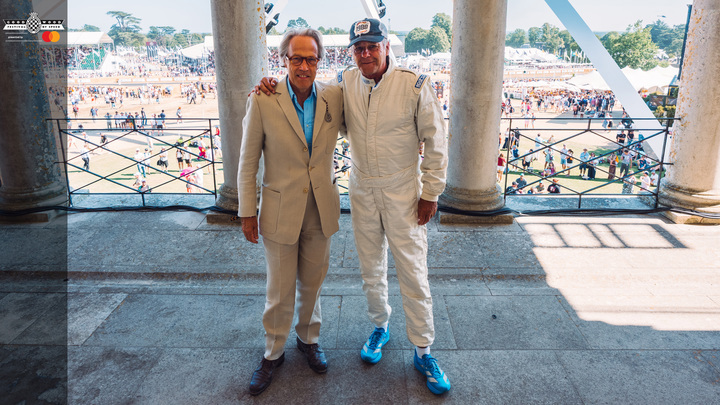
Then in Mexico City for the penultimate race of the season, the team’s Pirelli tyres for once proved an advantage. At altitude, the Italian rubber worked a treat, and while the likes of Ayrton Senna and Alain Prost were forced to pit multiple times to change their Goodyears, Berger ran all the way through on one set to score his and Benetton’s breakthrough victory. In only his second full season, Gerhard was an F1 winner.
A fiery escape
Berger joined a Ferrari team running at a low ebb in 1987. But he knew with John Barnard having switched from McLaren the great team would soon be on the rise. Shading Michele Alboreto for pace, Gerhard enjoyed a late-season purple patch with back-to-back wins at Suzuka and Adelaide to finish his first season on a high.
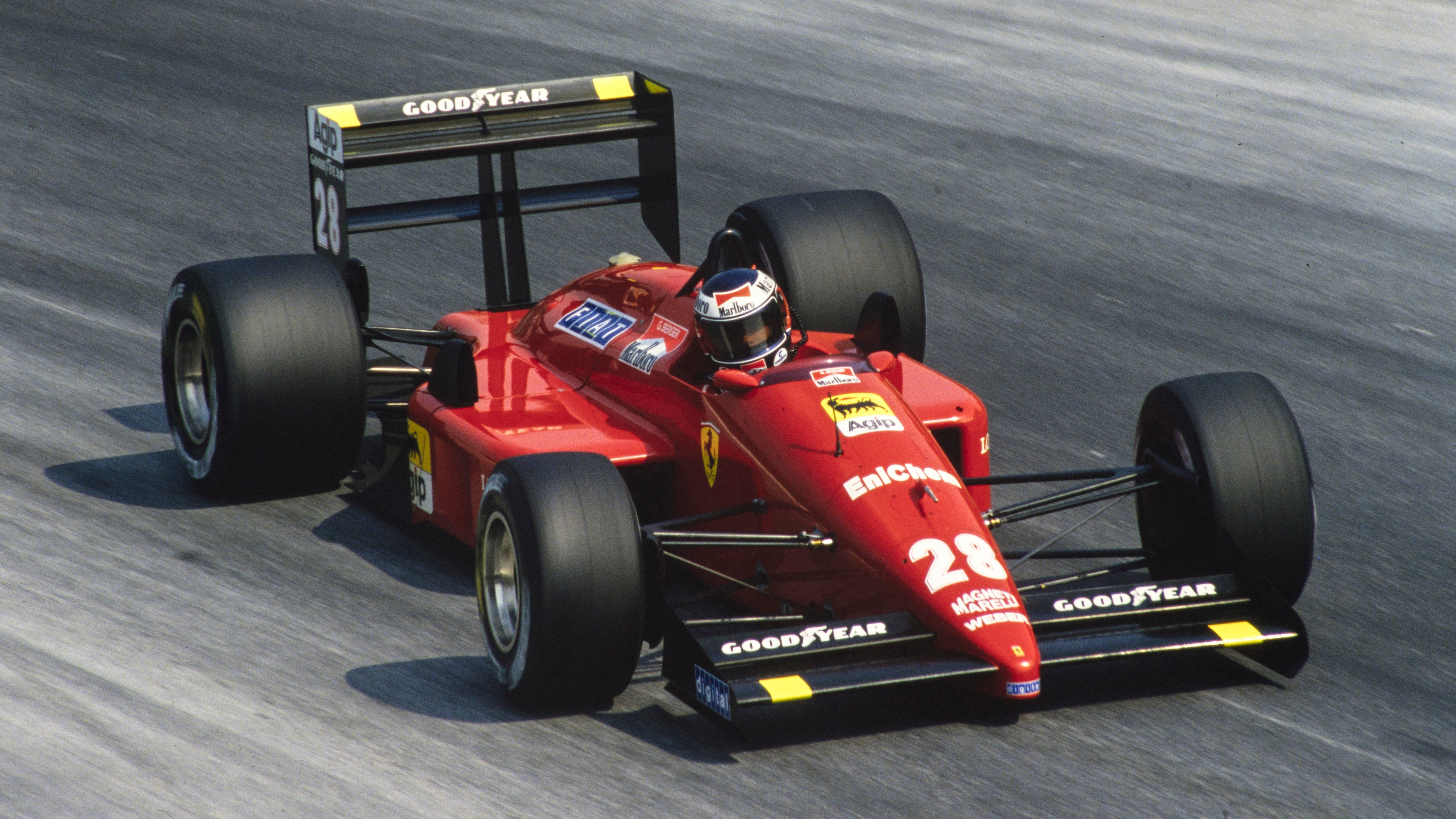
Berger, driving his Ferrari F187/88C, at the Italian Grand Prix at Monza, September 1988. Ferrari took a poignant 1-2 finish at its home race.
Image credit: Getty ImagesBut the promise of keeping that run going into 1988 was swept away by the dominance of Senna and Prost in the marvel that was the McLaren-Honda MP4/4. Still, thanks to Senna’s backmarker trip-up at Monza, Berger at least inherited one of Ferrari’s most emotional victories. Just a matter of weeks after Enzo’s death at the age of 90, Berger led Alboreto to an unexpected 1-2 in front of the tifosi. That afternoon, his place in Ferrari folklore was enshrined forever.
But what turned out to be Berger’s first of two spells at Ferrari didn’t push on from there. In Barnard’s pioneering semi-automatic 640 in 1989, new team-mate Nigel Mansell hogged the limelight, winning first time out in Rio — before Berger suffered his worst F1 crash at Imola. Upon hitting the wall at Tamburello, his Ferrari burst into flames. He was lucky to escape with burns to his hands and broken ribs, but Berger being Berger he soon returned to racing. They made them tough back then.
A win in Portugal offered some late season cheer, but Berger was on his way for 1990 — as Alain Prost joined Ferrari and Gerhard travelled in the other direction, to McLaren.
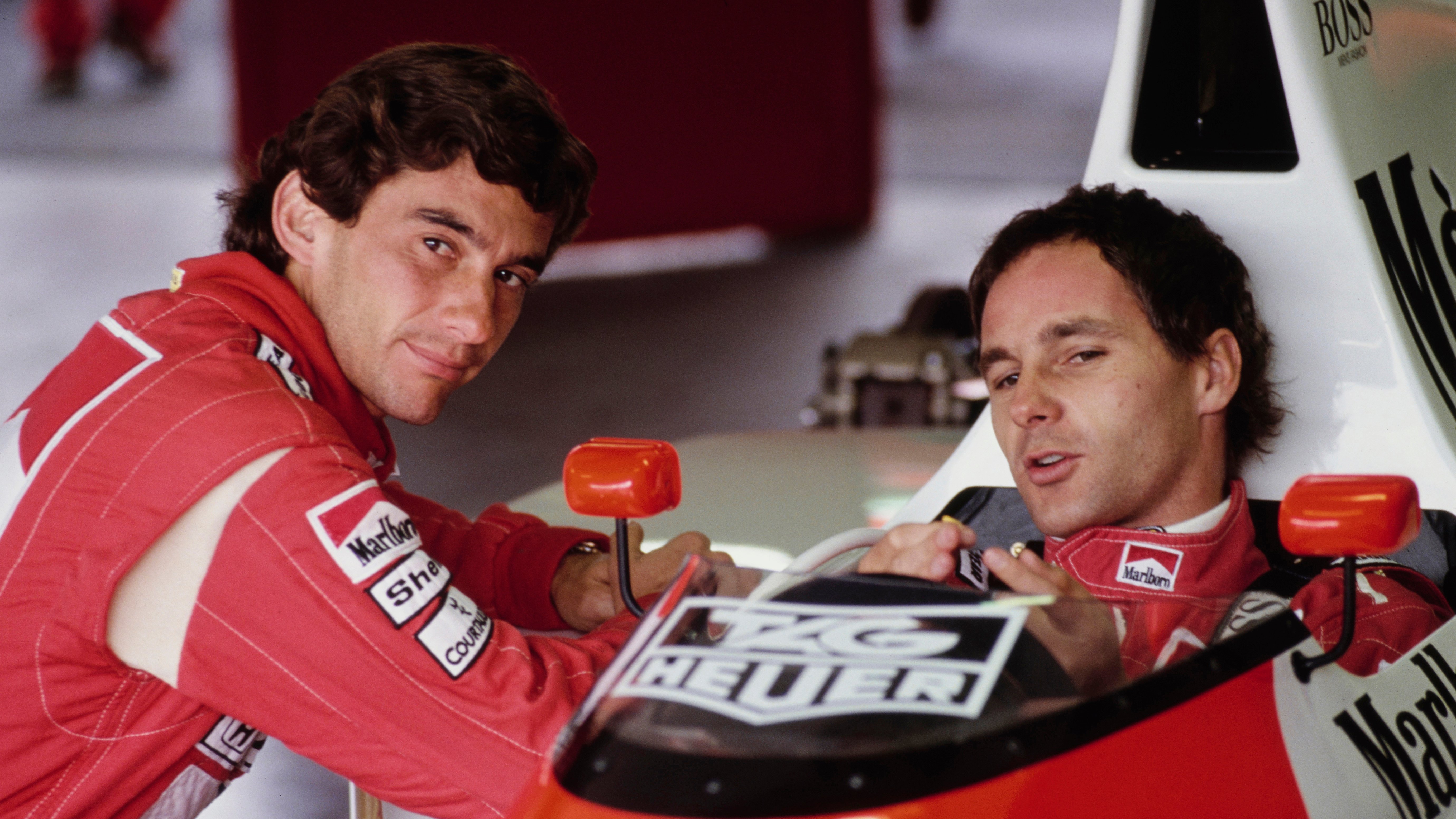
Berger sits in the McLaren MP4-5B with team-mate Senna in 1990. The Brazilian was the target of many of Berger’s famous pranks.
Image credit: Getty ImagesMission impossible
In hindsight, Berger would admit that facing Senna in the same team wasn’t really the best career move. During their three years together at McLaren across 1990 to ’92, there was little contest as Senna won his second and third titles in the first two seasons.
As Berger was forced to accept his place as a number two, he did at least bring out a lighter side in his team-mate’s character. In the wake of the toxicity of the Senna/Prost years, McLaren was suddenly a happier place as Berger’s penchant for mischief and pranks left Senna with little choice but to smile. The pair became great friends.
But no wonder that after three years Berger welcomed the call back from Ferrari. Honda was pulling out, leaving McLaren with little choice but to run a customer Cosworth V8. He was on a hiding to nothing up against Senna anyway — and the size of the Ferrari pay check sweetened the deal.
Hockenheim glory #1
The Ferrari he returned to was arguably in a worse state than the version he joined in 1987. But Barnard too was returning for his second spell in red, and now Jean Todt was at the helm as the team began what would be a drawn-out return to the top.
The 1993 season, as Ferrari struggled to master traction control in the last season before it was banned, offered few highlights. But armed with Barnard’s 412T1 in 1994 green shoots finally began to sprout in Maranello. And at Hockenheim, a circuit where Berger often tended to shine, he ended the team’s four-year victory drought.
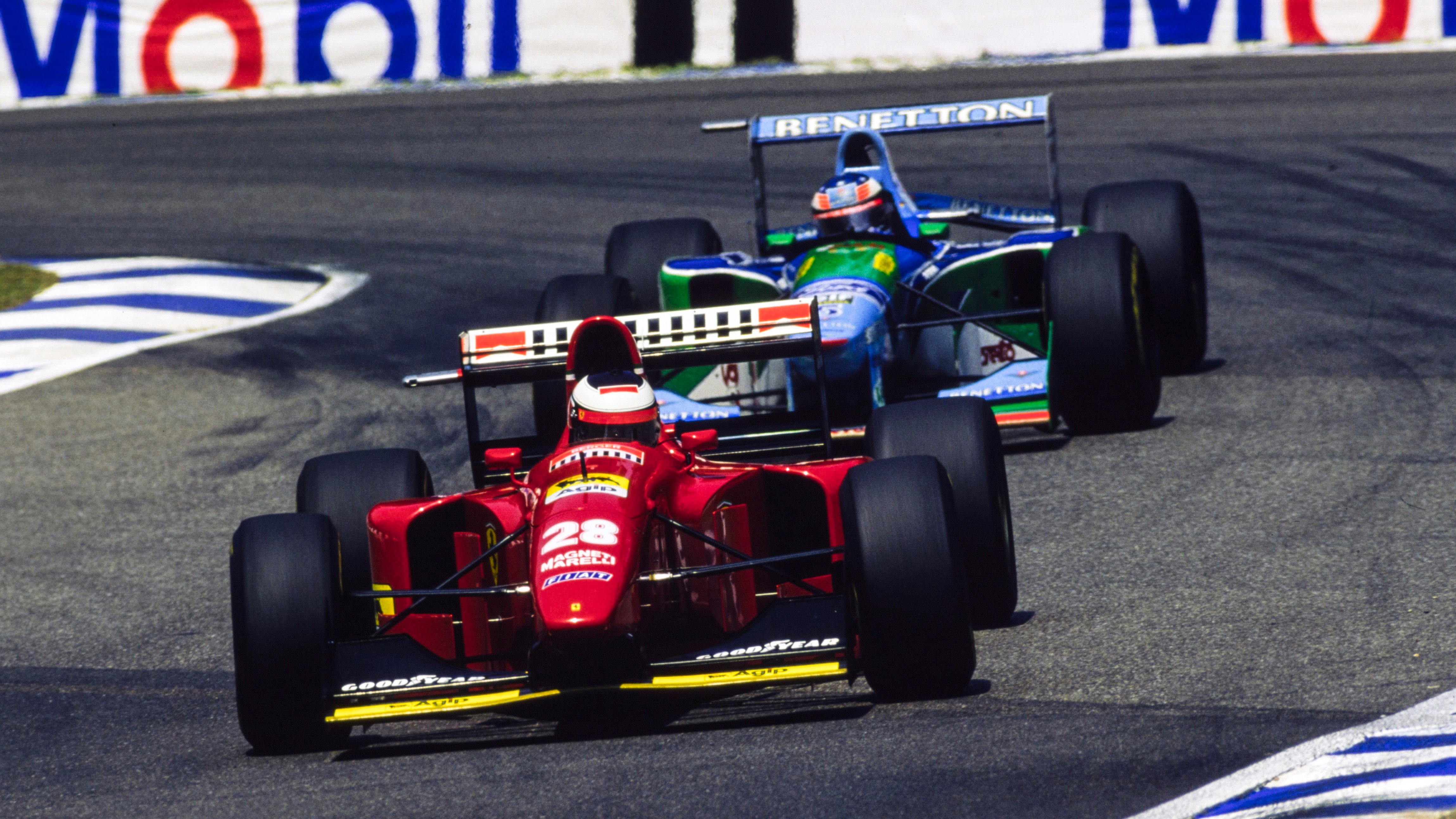
The Ferrari 412T1B of Berger leads Michael Schumacher’s Benetton B194 during the German Grand Prix at Hockenheim, July 1994.
Image credit: Getty ImagesBut 1994 was a tough time for Berger — and for the whole of F1. The loss of his countryman Roland Ratzenberger and good friend Senna on the same weekend at Imola cast a long pall and left Berger questioning his vocation. That he pressed on, mindful of how F1 had been shaken from its complacency on safety, was another perhaps less obvious example of his extreme brand of bravery.
Hockenheim glory #2
At the end of 1995, after three years back in red, Berger jumped one last time. Sensibly unwilling to partner an incoming Michael Schumacher, he and team-mate Jean Alesi both switched to the reigning World Champion team Benetton for 1996.
This was a very different Benetton to the one Berger left at the end of 1987. Now honed into a tightly operating title winner, expectations were high — and the truth is, neither Alesi nor Berger met them. From dominant title-winning glory the year earlier, Benetton failed to record a single victory in 1996, and tensions between Berger and famously hard-nosed team chief Flavio Briatore began to stew.
In 1997, Berger missed three races with a sinus problem, as Briatore’s patience with the veteran grew thin. But then at Hockenheim once again, he rolled back the years to score what would prove the last of his ten F1 wins. The first had been with Benetton, and so would be this final one. Emotions were high, especially in the wake of his father’s tragic death in a light aircraft accident.
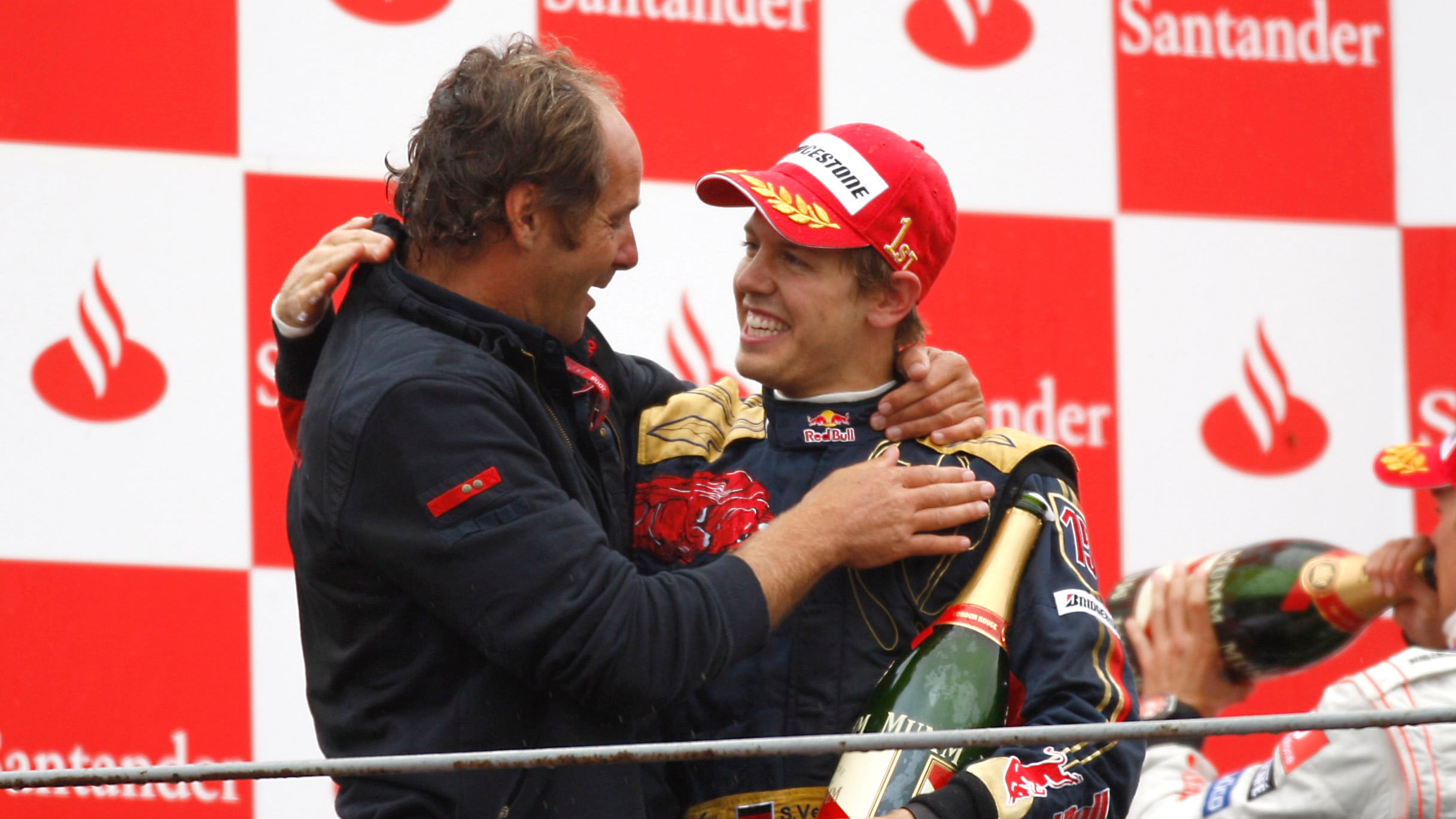
Toro Rosso co-owner Berger joins Sebastian Vettel after the German claims his and the team’s first F1 victory at the Italian Grand Prix, September 2008.
Image credit: Getty ImagesBy season’s end, and at the age of 38, Berger hung up his helmet. He’d raced among the greats of his era — Prost, Senna, Mansell, Nelson Piquet and Schumacher. Perhaps he hadn’t quite matched them, but F1 would miss his press-on attitude to racing and life.
But not for long. Berger would be back for management spells with first BMW, then Red Bull, as a shareholder in the team that was then known as Scuderia Toro Rosso. When a young Sebastian Vettel sensationally won the 2008 Italian Grand Prix for the team that had formerly been known as Minardi, Berger tasted that old winning feeling once again.
Today, at 66, he’s fully earned his place as a much-loved F1 elder statesman, and as we experienced at Goodwood, he’s far from forgotten.
The 2027 Festival of Speed will take place on 15th-18th July 2027, sign up for ticket alerts to make sure you don't miss out. Tickets are available for GRRC Members and Fellows, you can join the Fellowship today.
Main image photography by Charlie Brenninmeijer
formula 1
f1
festival of speed
fos
fos 2026
gerhard berger

Subscribe to Goodwood Road & Racing
Thank you, you’re now subscribed

How many hay bales are used at FOS?
For the last two years, 5,800 bales have been recylced into the biomass energy centre to be used for energy generation