
Alonso vs. Schumacher: A generational duel
It’s been 20 years since Fernando Alonso won the second of his back-to-back Formula 1 World Championships, and yet the Spanish warrior is still tilting at F1 windmills all these years later! He’ll be 45 by the end of this month.
Two decades ago, Alonso was a phenomenon at the other end of the scale, setting new youngest-ever records in a Renault team that was just reaching its peak. There were times back then when we wondered whether Michael Schumacher and Ferrari would ever stop winning, amid a streak that carried the German to five World Championships on the bounce from 2000, for seven in total.
How fitting that it was his old team, formerly known as Benetton, which would end the era, in alliance with a new talent destined to join Schumacher in the roll-call of the sport’s greats. But there was little love lost between these two maestros as they eyed each other warily over the span of a generation gap.
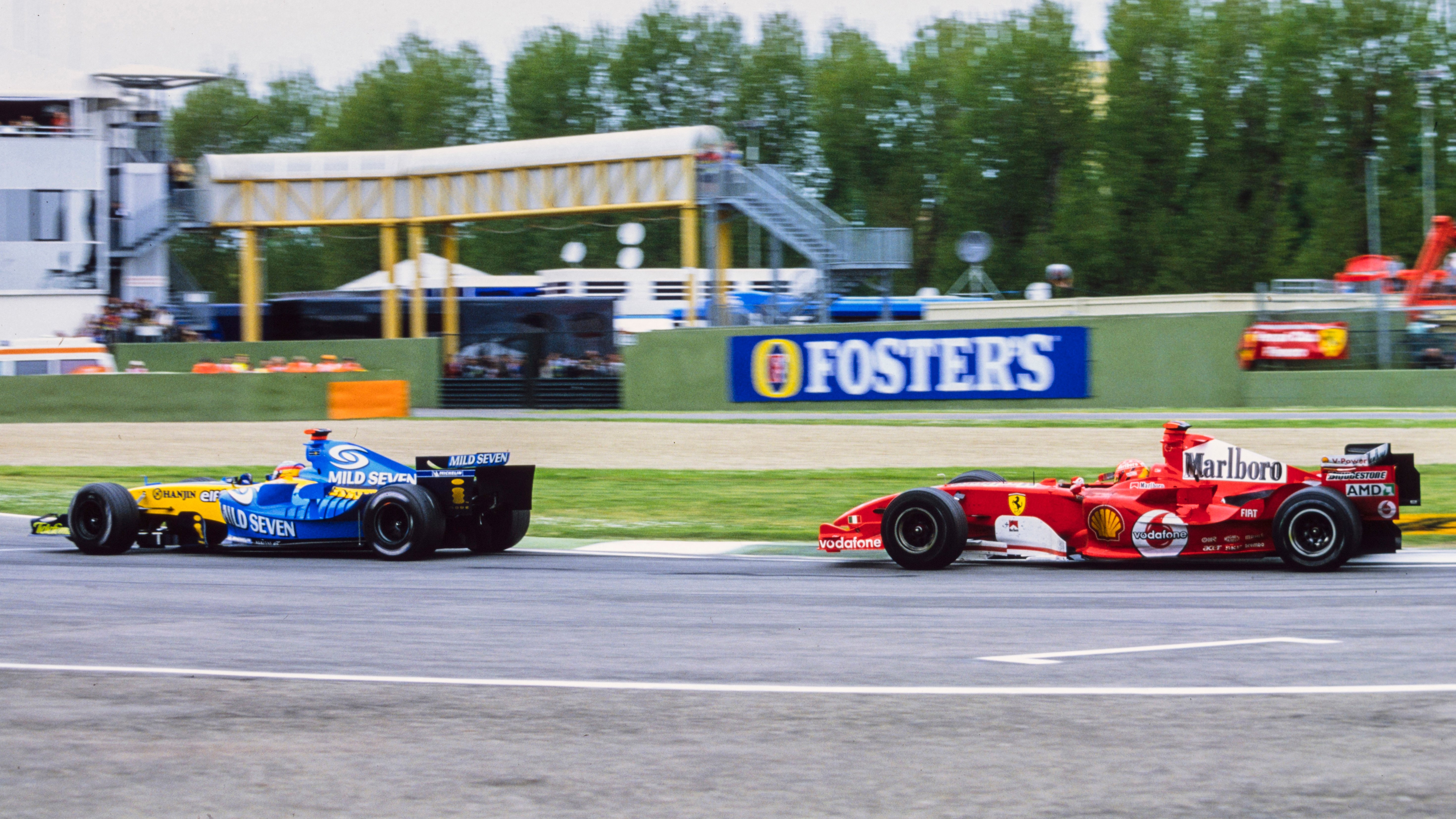
As we count down the hours to the 2026 Festival of Speed presented by Mastercard, let’s delve back into the past one last time for another of the great F1 battles, as we celebrate our theme of ‘The Rivals — Epic Racing Duels’.
A rapid rise
Alonso claimed his first championship racing cars in the same year Schumacher was breaking a leg at Silverstone in his quest to end Ferrari’s 20-year World Drivers’ title drought. Following the inevitable childhood years spent in karts, Alonso wasted no time getting to grips with slicks and wings in Formula Nissan in 1999.
The following year, as Schumacher ended his and Ferrari’s increasing desperation, Alonso quietly progressed into Formula 3000 with Belgium-based Team Astromega. He didn’t speak English back then, but already had the charisma, and by season’s end he was a race winner.
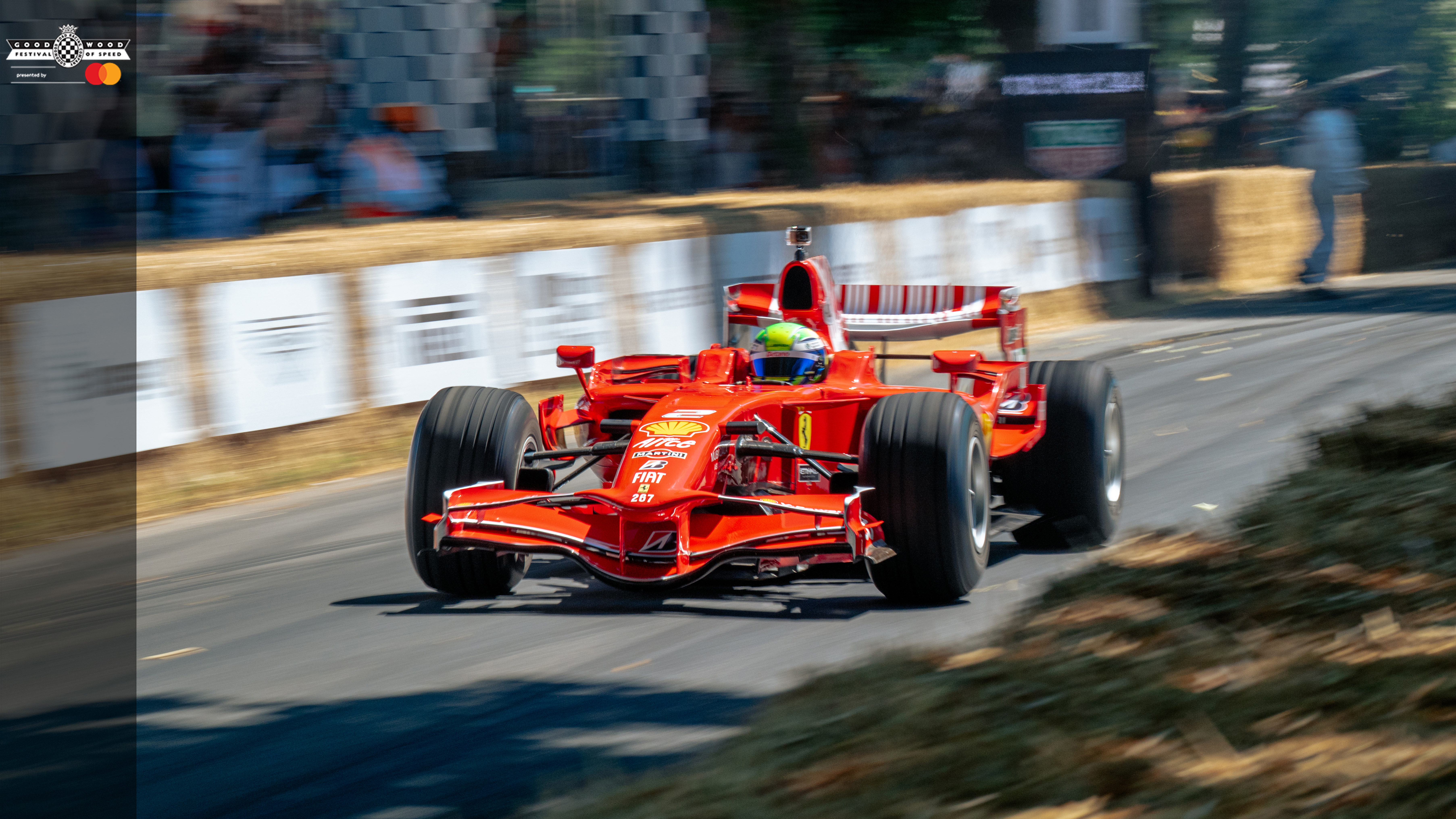
As Schumacher’s Ferrari streak got into its stride, Alonso graduated to the back of the F1 grid with Minardi and, after signing a management contract with Flavio Briatore, he joined Renault as a test driver for 2002. The gamble to step back from racing paid off when in 2003 he replaced Jenson Button in the race line-up, and in Hungary broke Bruce McLaren’s record from 1959 as F1’s youngest race winner.
Here was clearly a major talent. It was just a matter of time before he’d be ready to take on Schumacher.
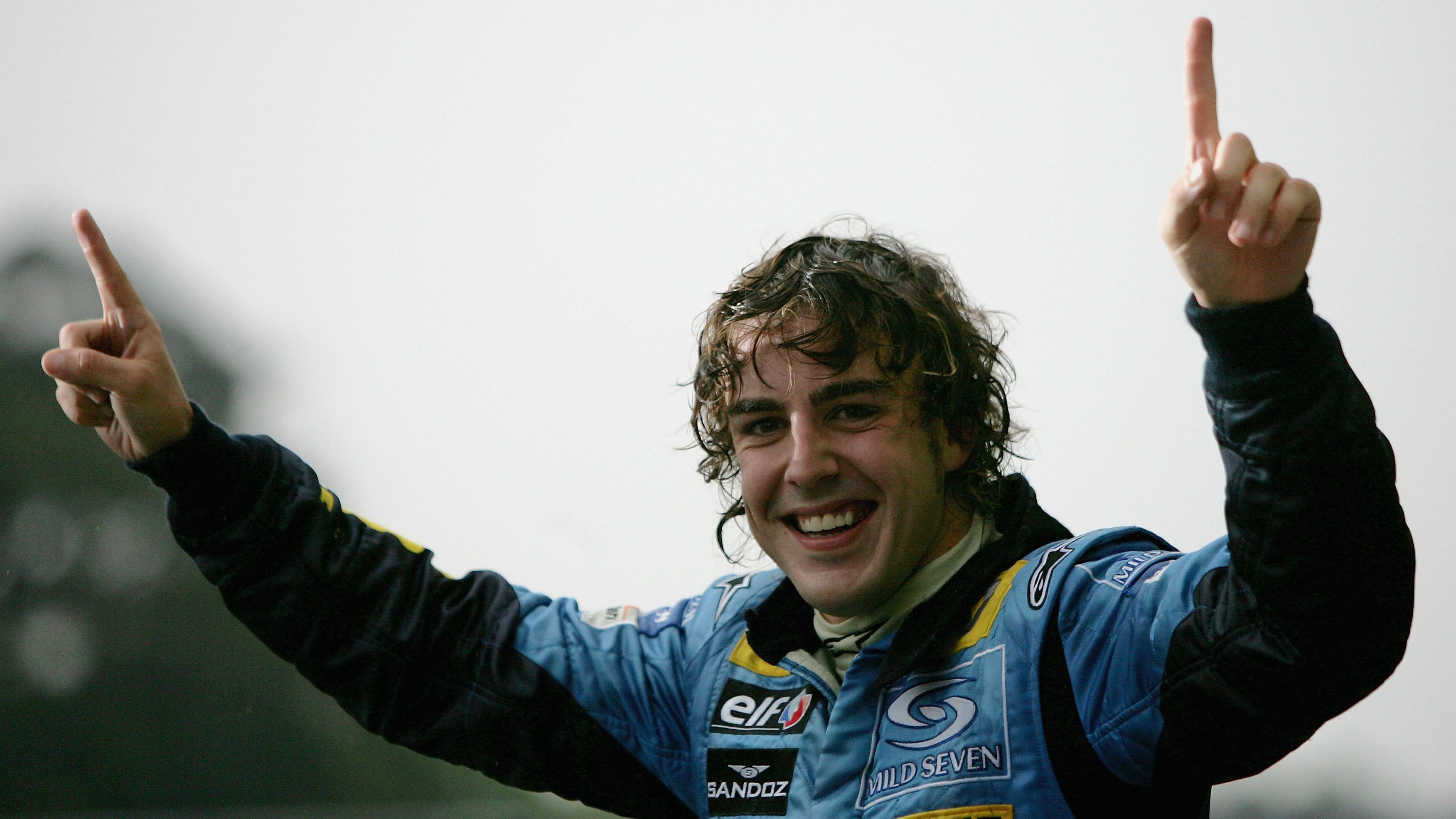
Fernando Alonso celebrates winning his first F1 World Championship after finishing third at the 2005 Brazilian Grand Prix.
Image credit: Getty ImagesThe duel’s false start
Alonso didn’t add to his F1 victory tally in 2004 — although team-mate Jarno Trulli claimed what would be his only one, in Monaco. But by 2005 Renault had matured into a potential title-winning force, five years after buying out the Benetton family to take ownership of the team based in Enstone, Oxfordshire.
New team-mate Giancarlo Fisichella confused the script by winning the opening race of the season in Australia, but thereafter Alonso began to hit his stride, winning three Grands Prix on the bounce. But what of Schumacher? Suddenly, the seven-time Champion was off the pace as Ferrari found itself scuppered by a rule change.
This was the one-off season when F1 experimented with a ban on in-race tactical tyre changes, and Ferrari’s supplier Bridgestone was badly caught out. For years, Ferrari and Bridgestone had perfected the sprint-stop-sprint style of F1 racing, but now the Japanese brand found itself unable to make a tyre that would remain competitive for the whole duration of a Grand Prix. Michelin managed it, however, leaving Renault and a reviving McLaren perfectly placed to fight for the title.
Suddenly, Schumacher found himself in an unfamiliar supporting role as Alonso just about saw off a late-season charge from Kimi Räikkönen to become F1’s then-youngest World Champion, deposing Emerson Fittipaldi from 1972.
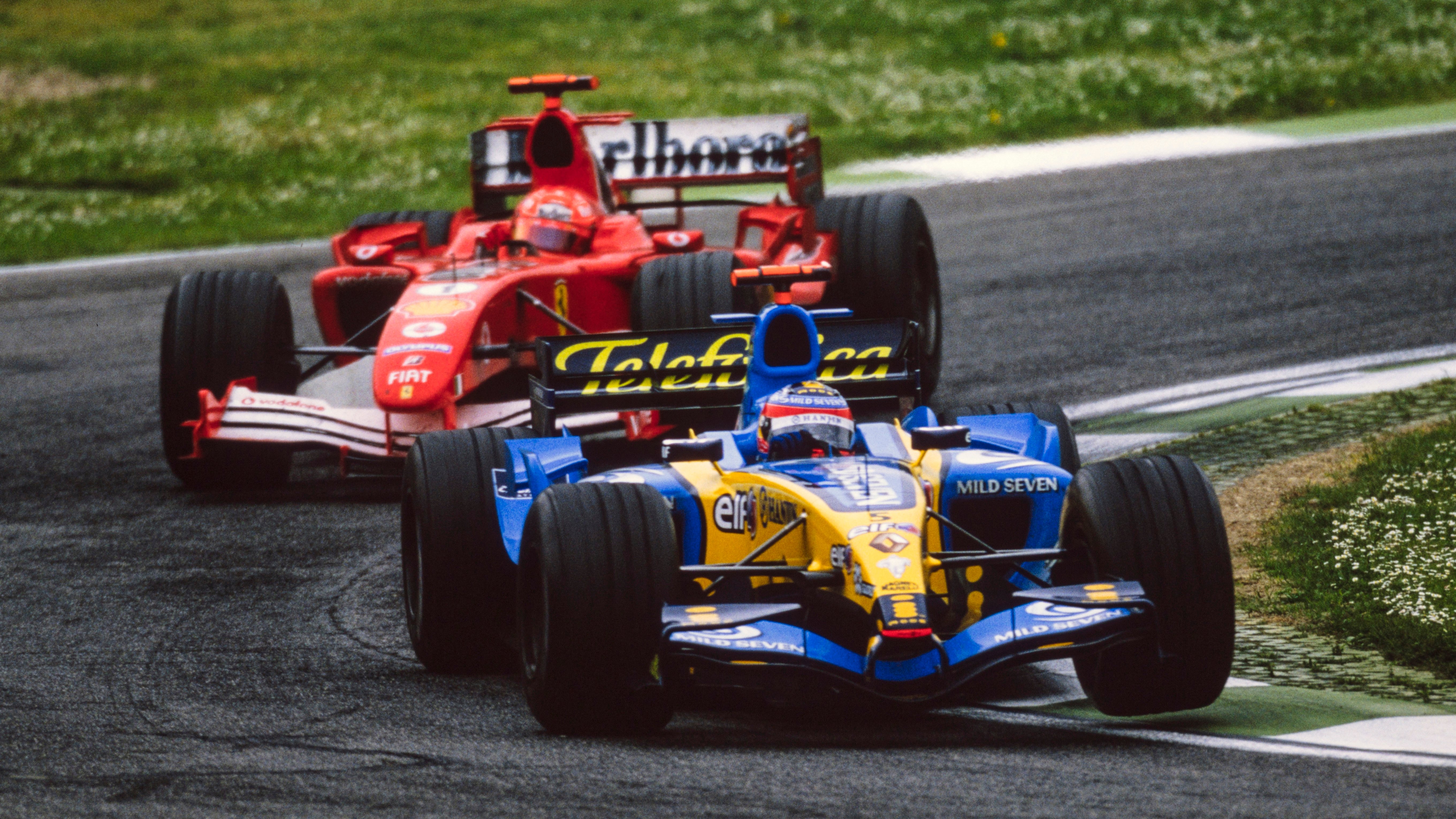
Alonso leads Schumacher to a 1-2 finish at the San Marino Grand Prix, April 2005.
Image credit: Getty ImagesThe battle of Imola
Schumacher scored just a single victory in 2005, at the shameful US Grand Prix at Indianapolis, when Michelin was caught out by an anomaly that left its tyres unsafe for racing and with just the six Bridgestone-tyred cars took the start.
But the race we’d all prefer to remember from that year was the San Marino Grand Prix. It was at Imola where the Schumacher/Alonso rivalry properly burst into life, on a day when cooler than expected temperatures gave Bridgestone’s tyres a brief burst of competitiveness.
Schumacher had only qualified 13th after a mistake on Saturday and at first he made little progress in traffic. Räikkönen led from pole, until lap nine when a driveshaft failed on his McLaren. Alonso was sitting comfortably — until a familiar helmet in a red Ferrari loomed in his mirrors.
Following a late first stop which lifted him up the order, Schumacher suddenly found himself able to lap 1.5sec faster than the rest. Having leapt past Jenson Button’s BAR for second during the second round of stops, he now closed in on Alonso. The final 11 laps were thrilling as Schumacher’s Ferrari crawled all over the back of Alonso’s Renault. But Imola is tough when it comes to overtaking; there was no way for Schumacher to breach Alonso’s defences and the Renault ace cooly claimed the spoils.
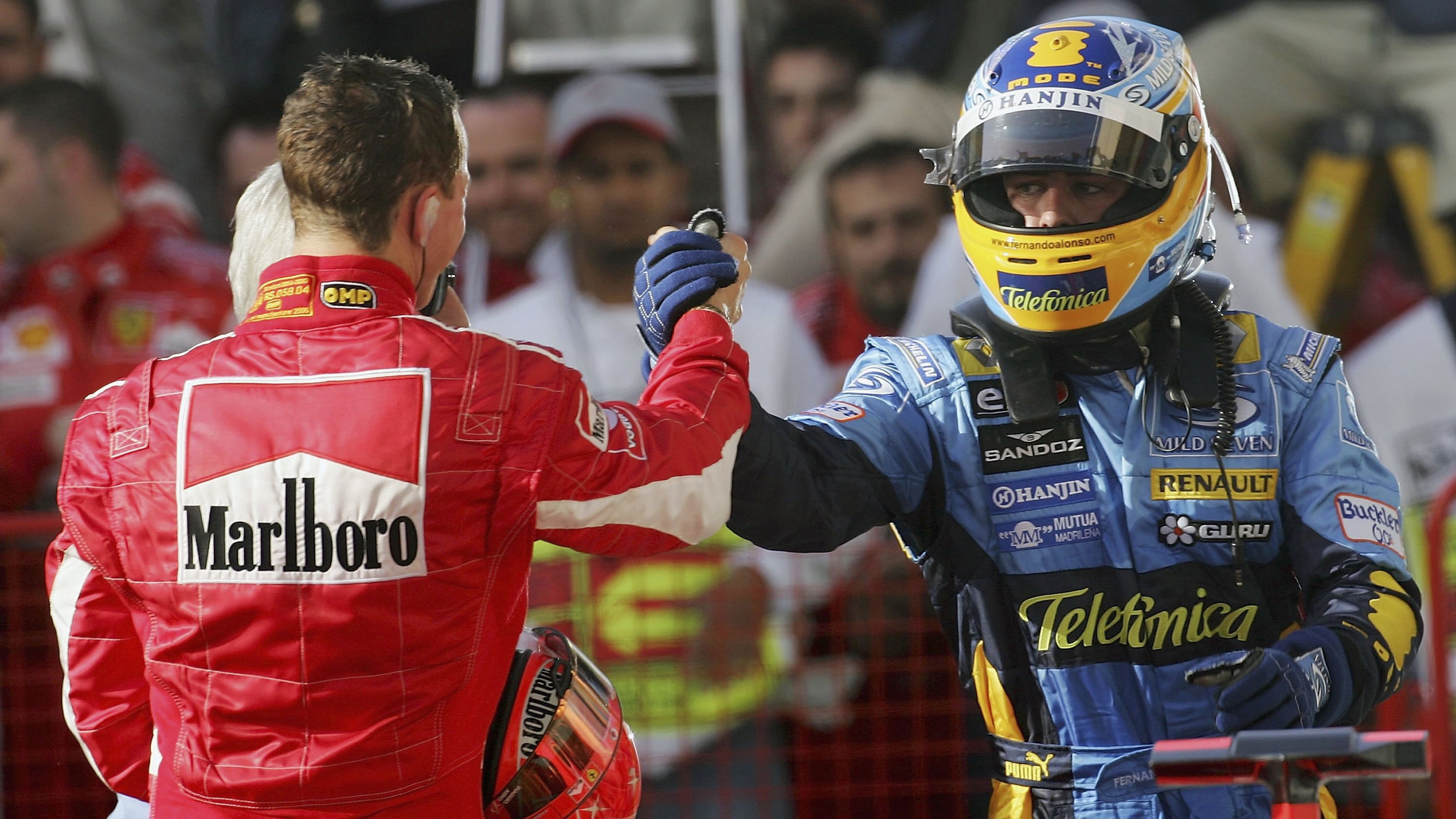
After winning the 2006 Bahrain Grand Prix, Alonso shakes hands with runner-up Schumacher.
Image credit: Getty ImagesThe rivalry explodes
A reverse on the tyre-change rules for 2006, when new 2.4-litre V8s were introduced, catapulted Ferrari and Schumacher back into contention. Now the Alonso vs. Schumacher rivalry was properly free to flourish.
Looking back, what an odd and dramatic year for F1. First off, in the winter Alonso shocked everyone — particularly Renault — by signing for McLaren. But he wouldn’t be switching teams until 2007, leaving him in what looked a cringe-inducing situation: driving for a full season with team he clearly didn’t believe could give him what he needed for the long-term future.
As it was, the crew at Renault admirably pressed on regardless, and Alonso found himself perfectly armed to defend his 2005 title.
The scene was set from the first round in Bahrain, as Alonso and Schumacher engaged in an enthralling but tense duel. Alonso held on through the pitstops as Schumacher charged and the Renault edged it by just 1.2sec.
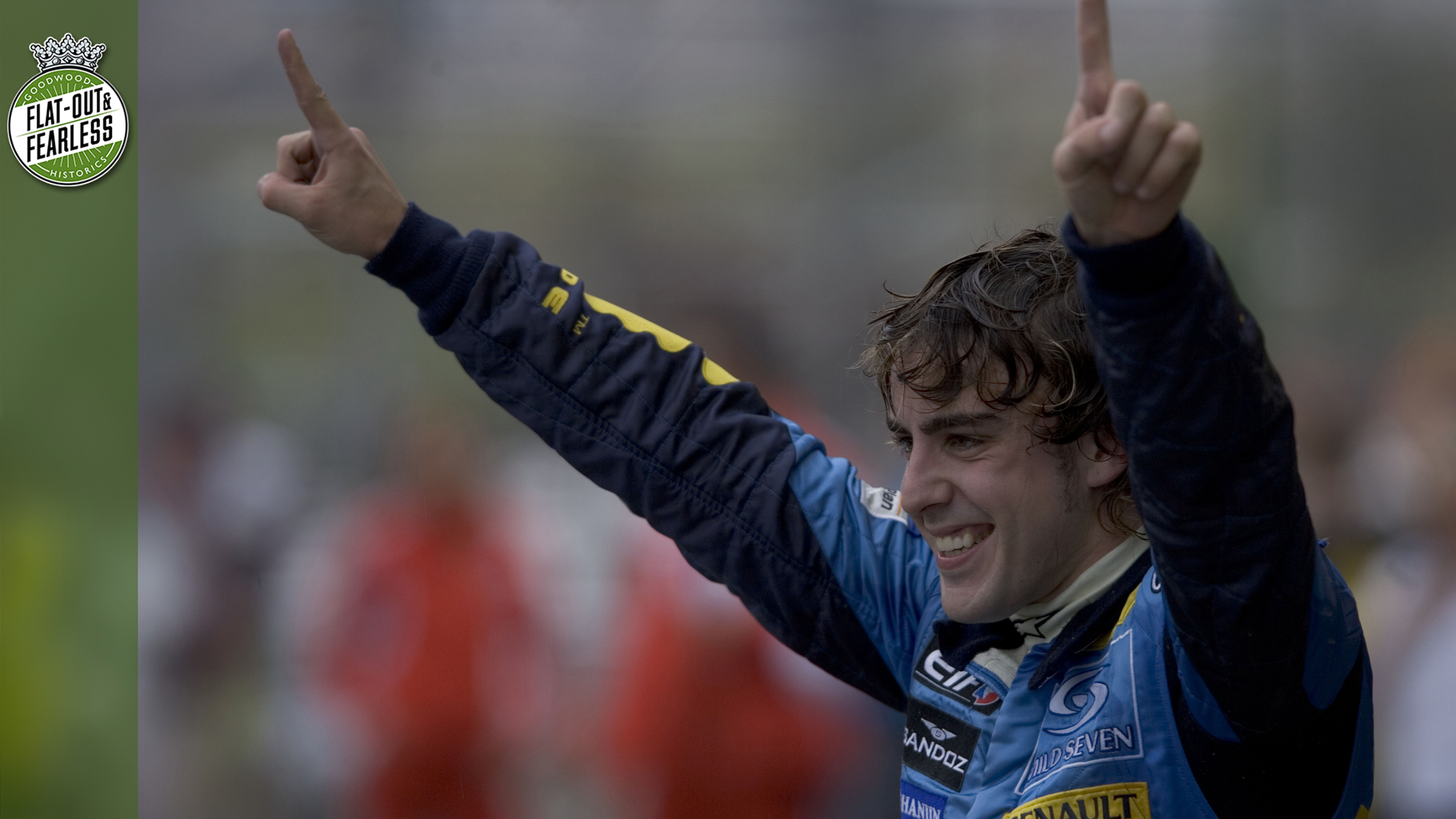
Fisichella scored the last F1 win of his career next time out in Malaysia, but as Alonso took victory in Melbourne and Schumacher crashed out you might have been forgiven for thinking this was a title race that would never spark. Then momentum swung this way and that, across a fascinating season.
Schumacher hit back with consecutive wins at Imola and the Nürburgring, with Alonso keeping his score ticking over with runner-up finishes in both. Then the Renault driver scored four on the bounce: Barcelona, in front of a rabid 131,000-strong home crowd, Monaco, Silverstone and Canada. At this point, Schumacher lagged 25 points down.
But again the complexion of the season changed. Schumacher won at Indianapolis, Magny-Cours and Hockenheim, where a dark shadow that seemed to be cast by politics threatened to consume the season in controversy.
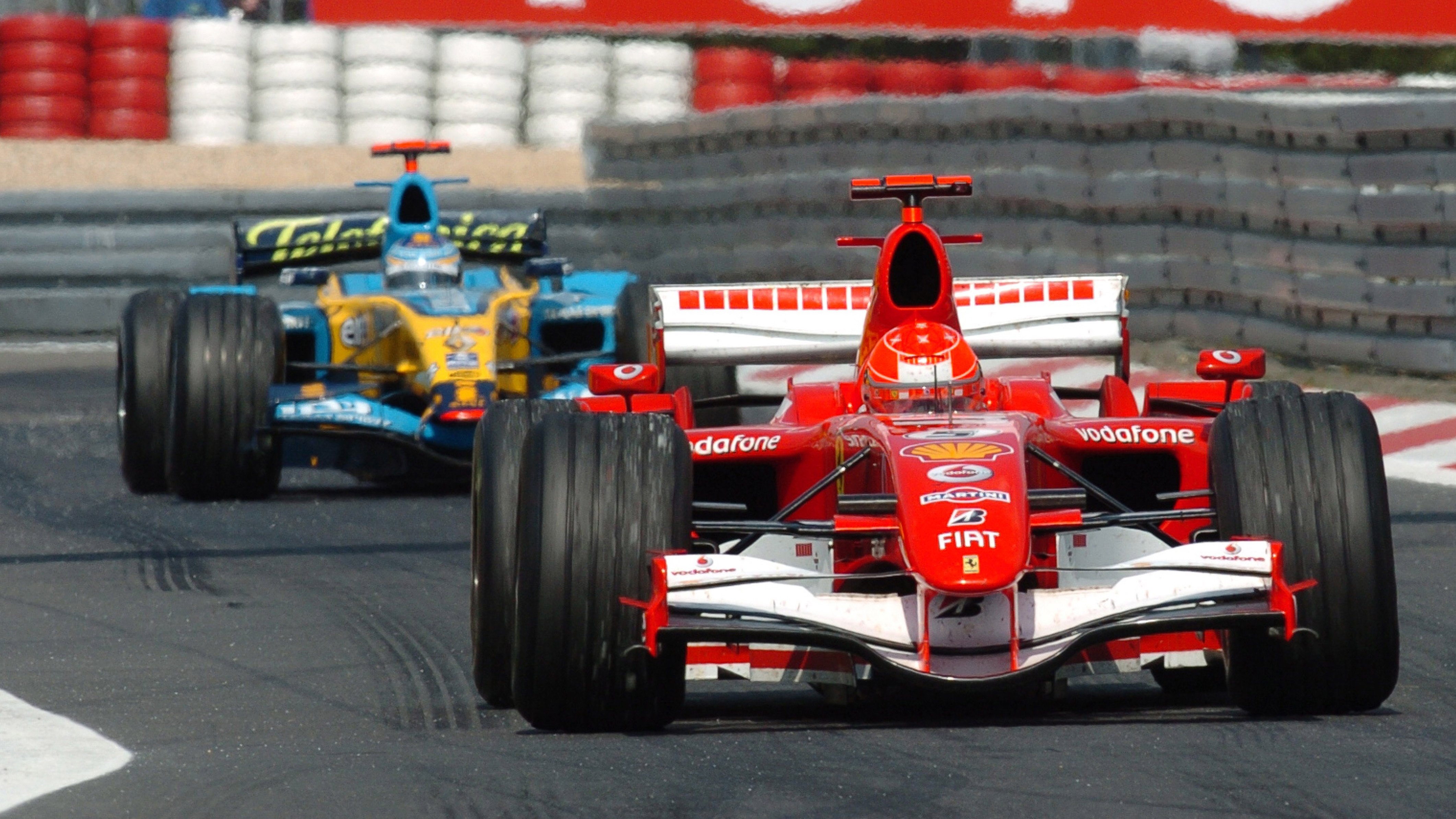
Schumacher leads Alonso on his way to victory at the 2006 European Grand Prix at the Nürburgring — his second win of the season.
Image credit: Getty ImagesMid-season regs changes and penalties
Why did the governing body feel compelled to make a major regulation change mid-season in 2006? Renault had been using its mass damper — a means to neutralise vertical chassis movement to keep the tyres planted for grip — all season.
But ahead of the German race, suddenly the FIA outlawed it, on the basis it was now deemed a moveable aerodynamic device. The media smelt a rat. Was this bias at play towards Ferrari, or perhaps an example of a slap-down to Renault team chief Briatore? After all, there was plenty of history between the Italian and FIA president Max Mosley.
The team raced with the mass damper under appeal in Germany, where Alonso could finish only fifth.
In rain-affected Hungary, BAR-Honda’s Jenson Button pulled off his magical first F1 victory, while Felipe Massa headed Alonso in Turkey. Then there was another bout of controversy as the season reached Ferrari’s blessed home ground at Monza.
Alonso was demoted five places on the grid after a judgement that he’d held up Massa in qualifying, despite what appeared to be a sizeable gap between the Renault and Ferrari. Again, cynics questioned whether other agendas were at work.
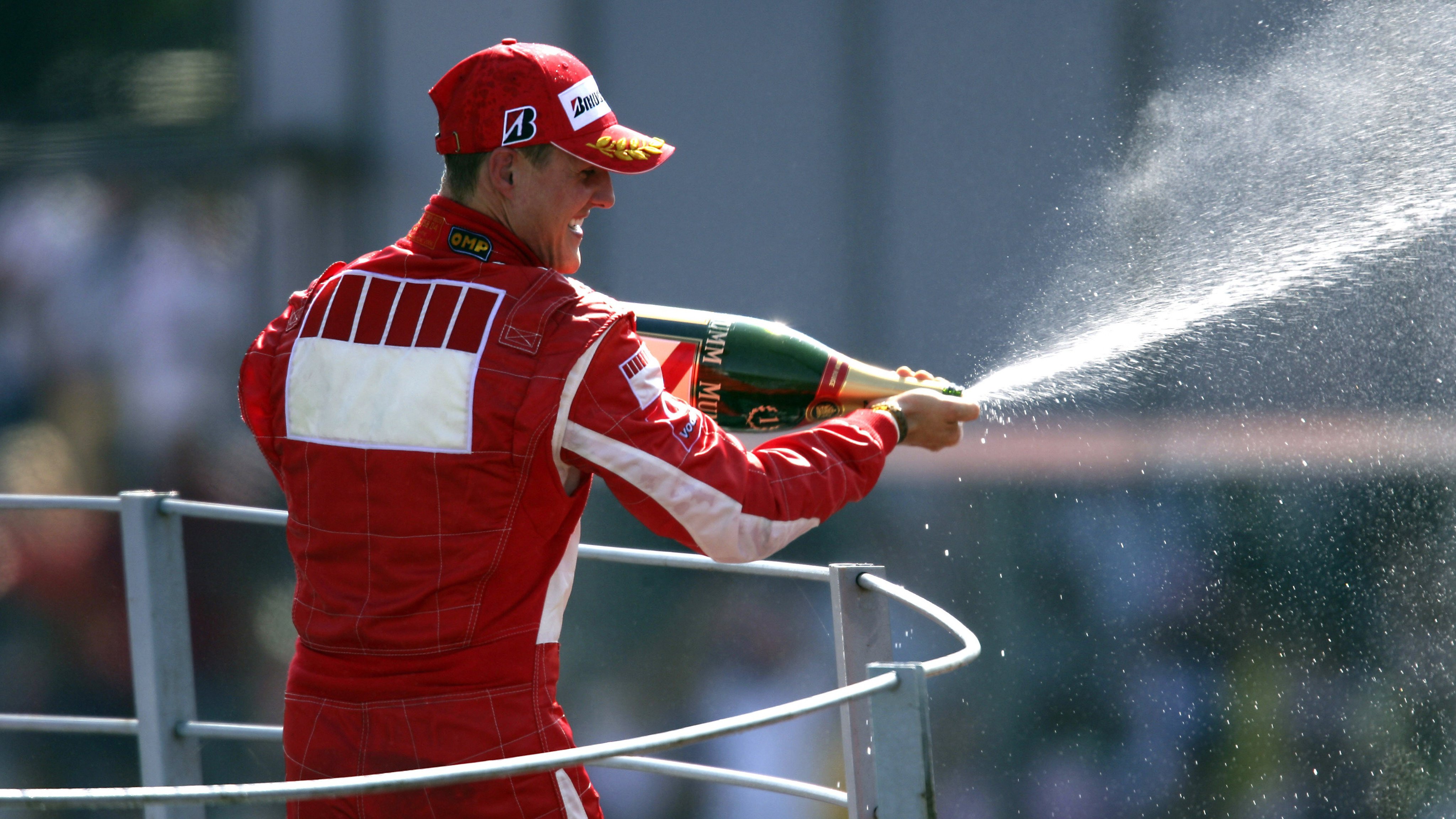
Schumacher celebrates winning the 2006 Italian Grand Prix at Monza, his seventh win of the campaign in a championship charge.
Image credit: Getty ImagesBut while Schumacher won in Italy, the bigger picture at Ferrari was changing. Technical director Ross Brawn had already announced he was going on sabbatical the following year (he would actually end up joining Honda for 2008), and now it was announced Schumacher would be retiring at season’s end to be replaced by Räikkönen.
Had he chosen this fate, or was he pushed by president Luca di Montezemolo? The greatest F1 superteam (at least up to this point) was beginning to unravel.
No fairy-tale ending for Schumacher
On track, the drama continued as Schumacher drew level with Alonso for the first time. Victory in Shanghai — his 91st and what turned out to be last — gave him the momentum. Alonso had led on Michelin’s intermediate tyres early on, but Schumacher made gains as the track dried, and a botched second stop for Alonso sealed the deal. Was an incredible ten years at Ferrari about to finish on a perfect note?
No. At Suzuka, a rare Ferrari engine failure forced Schumacher out as Alonso returned to the top step of the podium for the first time since the Canadian Grand Prix in June. Suddenly, he led Schumacher by a clear ten points with a single round to go. In Brazil, Schumacher had to win, but Alonso needed just one point to be Champion.
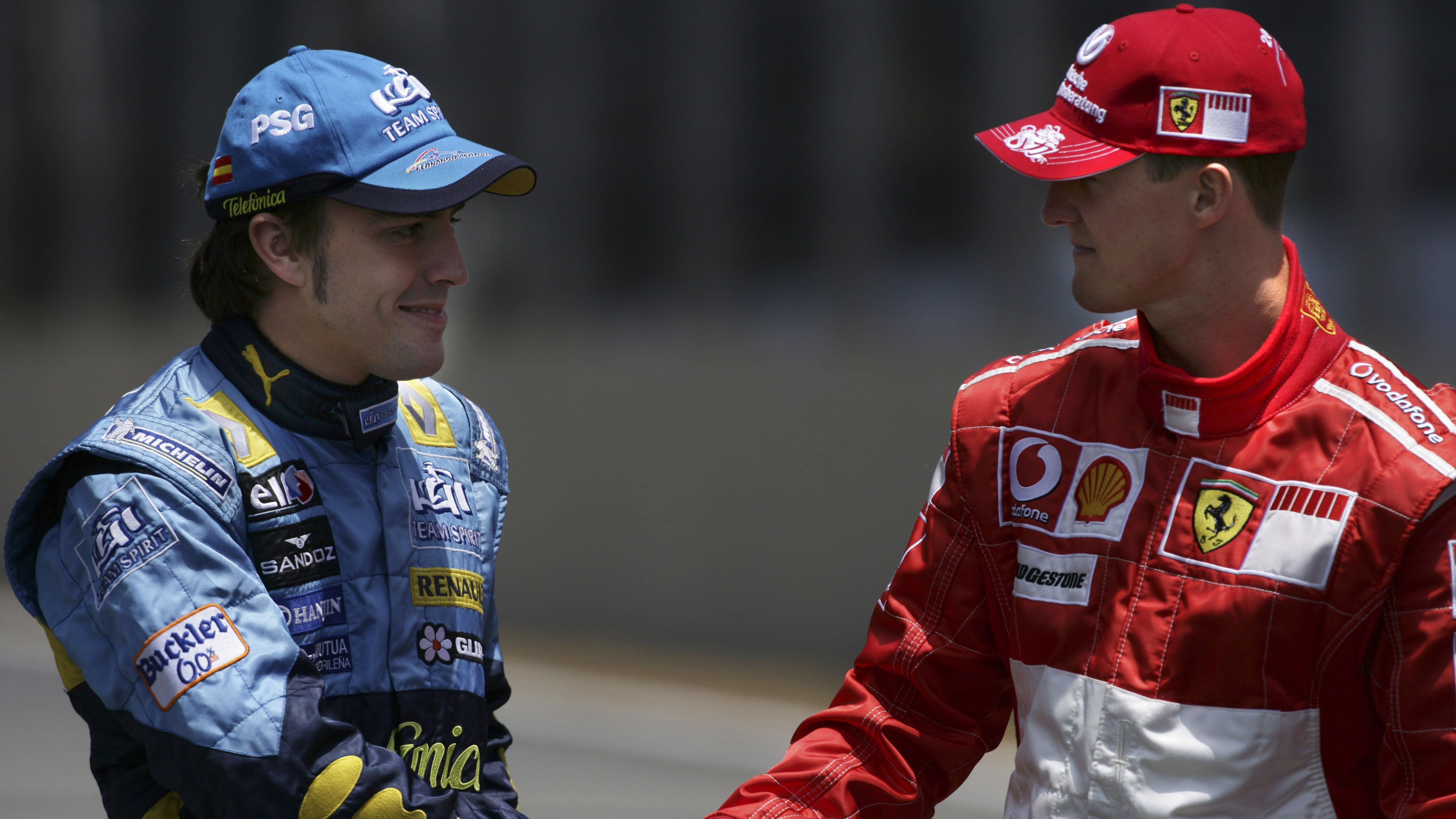
Alonso and Schumacher shake hands before the Brazilian Grand Prix that would decide the both the Drivers’ and Constructors’ Championships in 2006.
Image credit: Getty ImagesSchumacher’s hopes were quickly dashed, first in qualifying when fuel pressure problems thwarted him, then via a puncture following slight contact into Turn 1 with Fisichella early in the race. But boy, did he bow out in style. Schumacher charged back up the order, passing his replacement Räikkönen along the way, to finish just off the podium in fourth. This didn’t look like a man ready for retirement.
Meanwhile, Alonso finished a safe second behind delirious home winner Massa to secure his second consecutive World Championship. It seemed inconceivable he’d never win another.
The following year, Schumacher was gone (only to return with Mercedes three years later), and Alonso was lining up in Melbourne in a chrome McLaren with a new rookie team-mate who looked like trouble. Lewis Hamilton would offer a test at least equal to that of Schumacher — but that’s a whole other story…
Tickets for the Festival of Speed are now sold out, with a limited number of hospitality packages still available.
If you’re not already part of the GRRC, joining the Fellowship means you can save ten per cent on your tickets and grandstand passes, as well as enjoy a whole host of other on-event perks.
Main image courtesy of Getty Images.
formula 1
f1
fos 2026
the rivals
fernando alonso
michael schumacher

Subscribe to Goodwood Road & Racing
Thank you, you’re now subscribed

How many hay bales are used at FOS?
For the last two years, 5,800 bales have been recylced into the biomass energy centre to be used for energy generation