

The top 10 best Super Touring cars
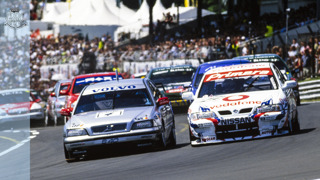
Remember the British Touring Car Championship? The 1990s was a golden time for the UK’s top motor racing series, as the world’s biggest car manufacturers and a cast of star drivers flocked to bask in its glow.
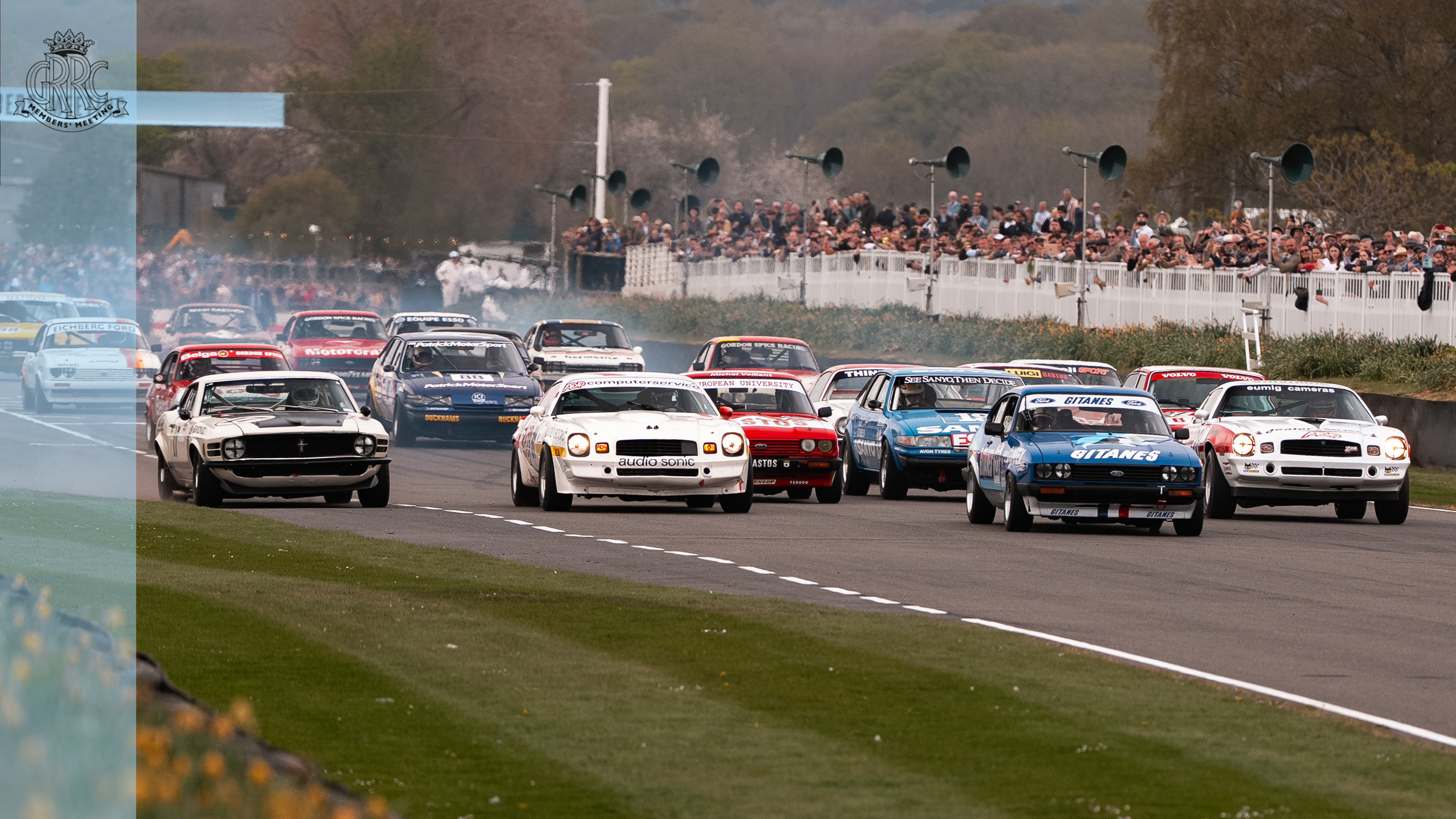
That’s why the 83rd Members’ Meeting presented by Audrain Motorsport will celebrate that era with a promise to gather the largest collection of Super Tourers seen in one place since those heady days, for an on-track demonstration and competitive Shoot-Out. It promises to be quite a spectacle.

To help whet the appetite, let’s draw up a top ten of the BTCC’s greatest Super Touring cars. All purely subjective, of course. We’d be disappointed if you agreed with our choices and the order in which we’ve put them.
But before we get properly stuck in, a quick clarification. The term ‘Super Touring’ wasn’t adopted until the middle of the decade, yet for the purposes of completeness we’re including here cars that were introduced from 1991, when the BTCC dropped its old and confusing multi-class format for the single 2-litre category known as Class 2.
The sweeping change controversially and at a stroke rendered obsolete the glorious Class A Sierra Cosworth RS500s — in favour of apparently uninspiring fleet cars and rep-mobiles.
The outrage quickly subsided, of course, as the competitiveness and variety of the new-look BTCC caught the imagination of fans around British tracks and those watching at home via BBC Grandstand’s TV coverage, voiced by the inimitable Murray Walker. Despite the initial fears, these turned out to be the best of times.
OK, now to our top ten...

10. Toyota Carina
The sight of BTCC legend Andy Rouse lining up in a mere Toyota Carina just months after stepping out from a flame-spitting RS500 precisely summed up why tin-top fans were doubtful about the new era. But that 1991 season set the tone as Class 2 caught the ‘everyman’ zeitgeist of motorsport that was relatable to the wider public.
Rouse won three races to finish third in the Championship, then the following year ex-Formula 1 driver Julian Bailey showed which way the wind was blowing by joining the team. Did he really want to race a humble front-wheel-drive family saloon? Well, yes… if there was an audience and money to be earnt. The BTCC was now the place to be.
The following year, Bailey created the Carina’s signature BTCC moment when he bungled a move on team-mate Will Hoy in the 1993 British Grand Prix support race at Silverstone, tipping ‘Ship-a’ on to his roof and throwing away a Toyota 1-2 at the highest-profile race of the year. Oops.

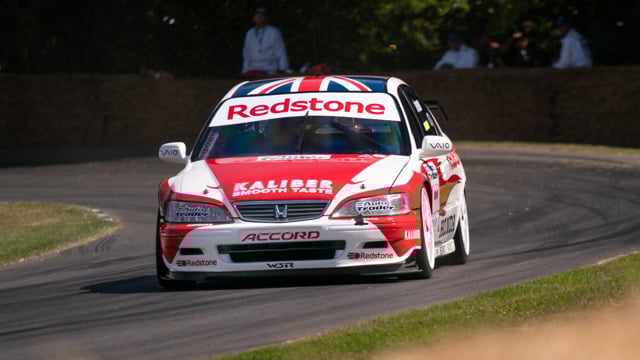
9. Honda Accord
The Accord was a BTCC mainstay in the 1990s, via cars built by MSD, Prodrive, West Surrey Racing and JAS Motorsport. But it was only in the final Super Touring year, 2000, when the Honda really made its mark.
History shows the Accord won the final three races of the series’ finest era, via Gabriele Tarquini at Oulton Park and a Silverstone double for the great Tom Kristensen, who relished his single-season cameo in the BTCC. The man who also claimed the second of his eventual record nine Le Mans wins that year closed the era in fitting fashion, his Honda’s lights ablaze as he raced into darkness.
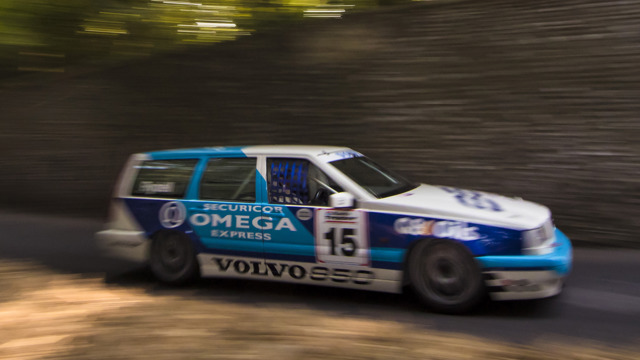
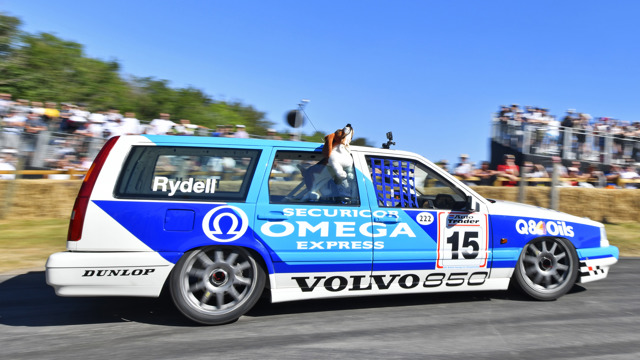
8. Volvo 850 SE/GLT Estate
By rights and on merit, we really should be listing Rickard Rydell’s 1998 BTCC-winning S40 in this space — but let’s face it, Volvo’s audacious and plain cheeky decision to race an estate in 1994 was the Swedish marque’s landmark statement we all remember first.
Tom Walkinshaw Racing, which had won Volvo’s business for the BTCC, insisted the estate wasn’t some ruse or joke, but the first time Le Mans winner and F1 veteran Jan Lammers drove the car admitted to himself: “Thank God I only signed for a year!”
After toiling through 1994, TWR took a sensible pill and reverted to an 850 saloon for 1995, rebooting an effort that would culminate in Rydell’s 1998 crown. But the unlikely estate racer remains among the BTCC’s best-celebrated oddities.
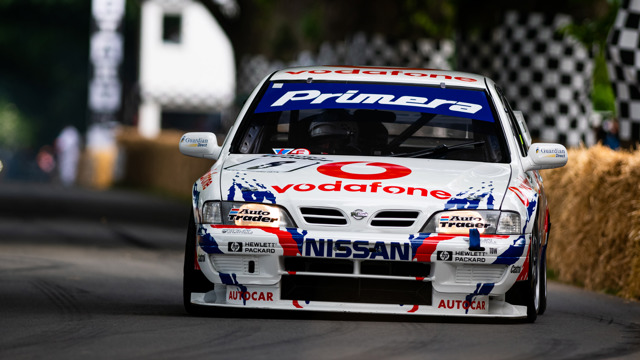
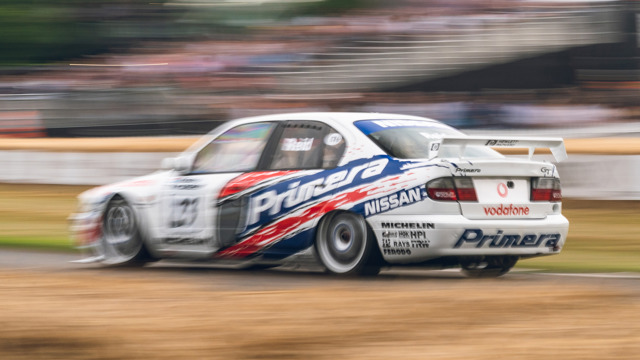
7. Nissan Primera
When Bailey torpedoed Hoy at Silverstone in 1993, Kieth O’dor picked up the Nissan Primera’s first BTCC win. Killed racing at AVUS in Germany in 1995, O’dor remains a BTCC cult hero.
The Primera often looked the part — remember Tiff Needell’s fabulous Old Spice Nissan from 1994? But it might have been written off as a BTCC also-ran were it not for the late-era RML-run versions that tore a swathe through the Championship.
RML took over the Nissan campaign in 1997. The following year, Anthony Reid and David Leslie carved up nine wins between them, only for consistent Rydell to pip them to the title in his Volvo. But 1999 was all about the Primera.
As Reid moved over to the Prodrive-run Fords, 1998 Le Mans winner Laurent Aiello became the latest big-name international star to grace the BTCC — and the Frenchman scorched to the title with ten pole positions and ten wins. Leslie won three times to make it a Nissan Primera 1-2 at the top of the standings.
The Japanese manufacturer withdrew ahead of the final Super Touring season, but its Primera remained a force courtesy of privateer Matt Neal. It was in his Nissan that he’d claimed the BTCC’s biggest one-off prize, £250,000 at Donington Park in 1998 for becoming the first privateer in years to win a round overall.


6. Vauxhall Cavalier
Derided by some as a fleet car, the humble Cavalier always attracted a loyal following amongst BTCC aficionados, especially in the hands of spiky Scot John Cleland.
The Cavalier first took its bow in the final multi-class season of 1990 and then became a mainstay of the new Class 2 era, with the works cars built by Dave Cook Racing. And who can forget the RML-built Ecurie Ecosse cars running in their Saltire livery, with David Leslie taking notable race wins at Thruxton and the 1993 TOCA shootout?
But it was Cleland who was the true Vauxhall hero. Controversially taken out by Steve Soper at Silverstone in 1992, which allowed Tim Harvey to become Champion, Cleland was always in the thick of the action — and liked nothing more than getting one over the supposed star names who were drawn to the series.
That was most emphatically the case in 1995, when in RML’s by-now bewinged Cavalier he took six wins and beat Alain Menu and Rydell to the crown in what many consider to be the BTCC’s peak season. The Cavalier was replaced by the Vectra for 1996, but it’s the older model that delivered Vauxhall its biggest British motorsport title success.
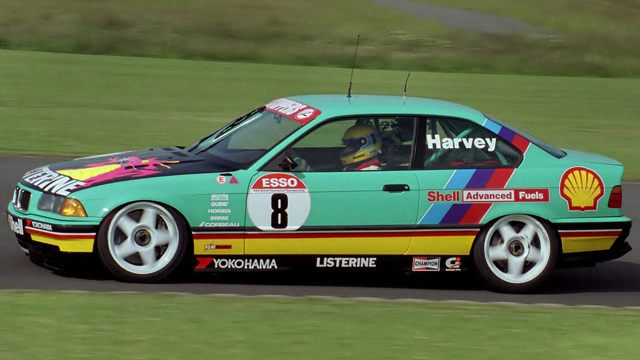
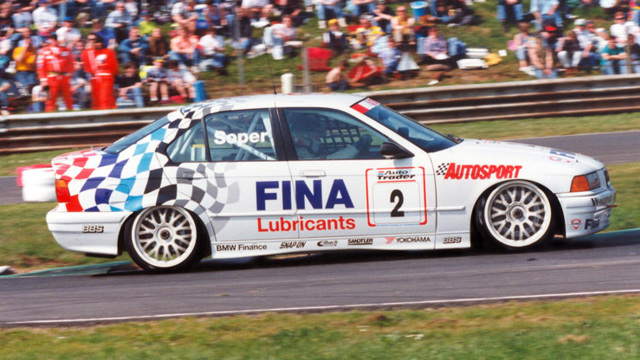
5. BMW E36 3 Series
The only rear-wheel-drive car in our list was ubiquitous in tin-top racing around the globe during the 1990s, notching up 30 titles and major overall victories at the Spa and Nürburgring 24 Hours, plus Bathurst and Macau.
The classic three-box E30 was always a hard act to follow, but in BTCC terms the updated model got off to a perfect start. Harvey won that controversial crown in Vic Lee’s Listerine-backed BMW in 1992, then Charly Lamm’s crack Schnitzer team swept in from Germany, adding a touch of European class to the British national series. Jo Winkelhock and Steve Soper took a 1-2 with eight wins between them in 1993.
Often penalised by extra weight to nullify its rear-driven advantage, the BMWs were never quite as successful in the BTCC through the rest of the decade. But in the pre-wing era, the E36 was the car to beat.
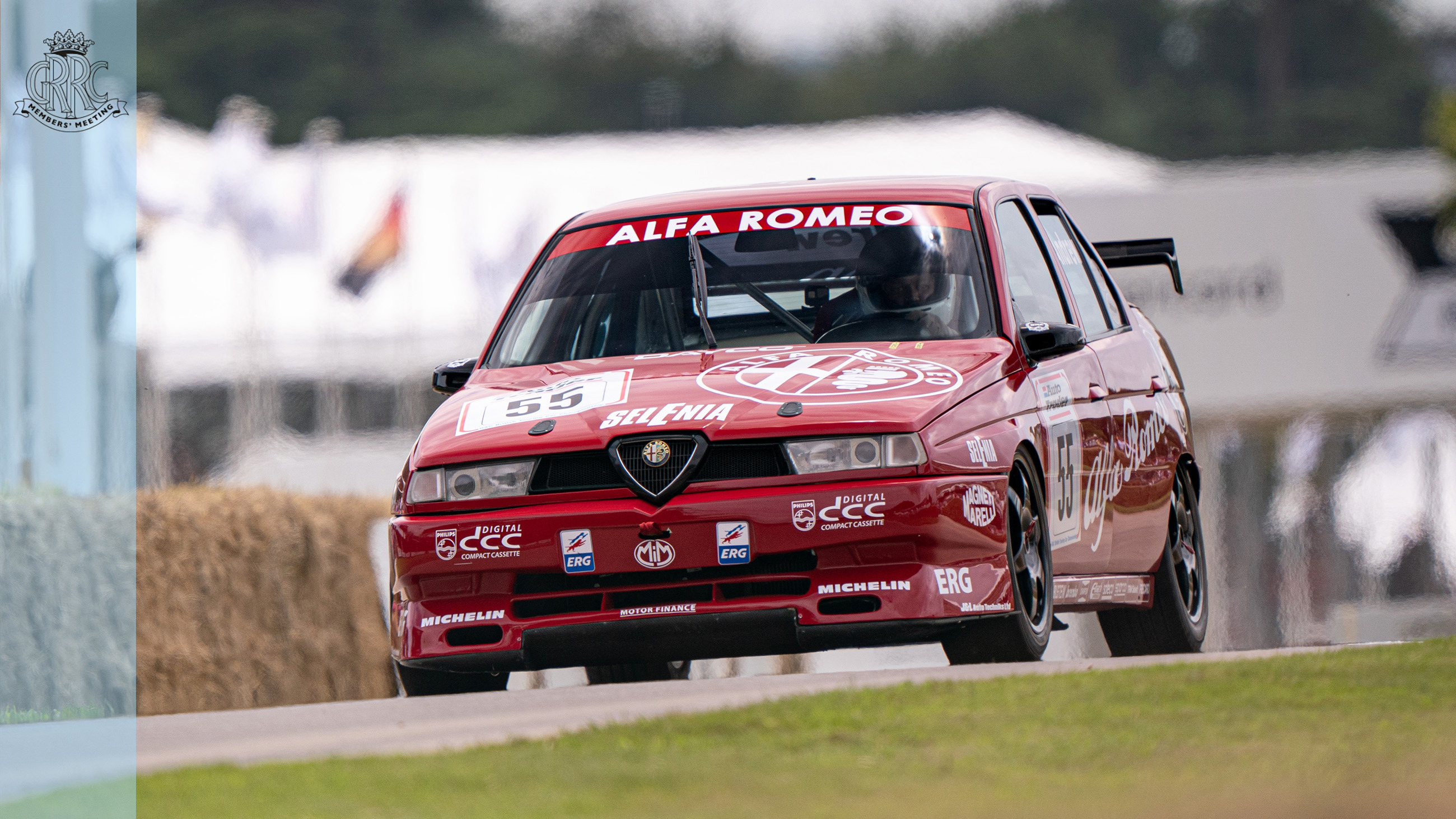
4. Alfa Romeo 155
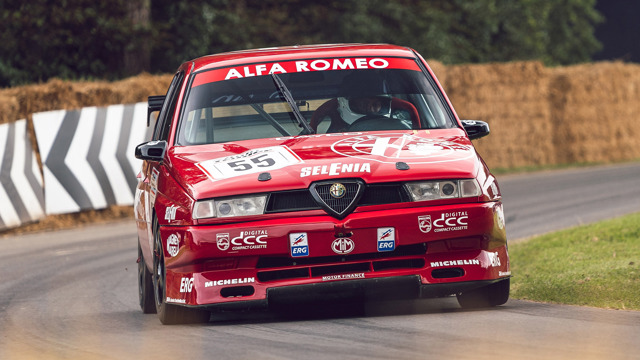
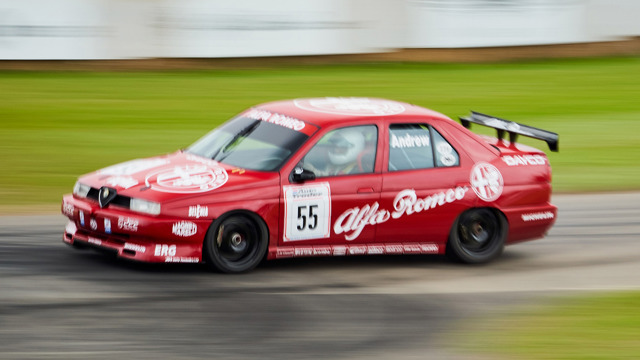
Schnitzer in 1993, then the illustrious Alfa Corse invading in 1994… this was the rising power of the BTCC in full flow. And the blood-red Alfa Romeo 155s proved to be gamechangers in more ways than one.
The canny homologation of rear wings and front splitters caught the home teams on the hop and fanned a firestorm of controversy. But F1 refugee Gabriele Tarquini charmed the fans as he swept to victories in the first five races. Even when the BMWs were allowed to lose weight to even up the score, Tarquini still won three more races to easily claim a title he still rates among his career highlights.
Prodrive took over prepping the Alfas from 1995 and the 155s in Britain were never as competitive again. But the cat was out of the bag on aerodynamics thanks to the Italian cars, and budgets started to climb as manufacturers threw money at their campaigns to conquer a series that was now considered among the biggest in the world.

3. Audi A4 Quattro
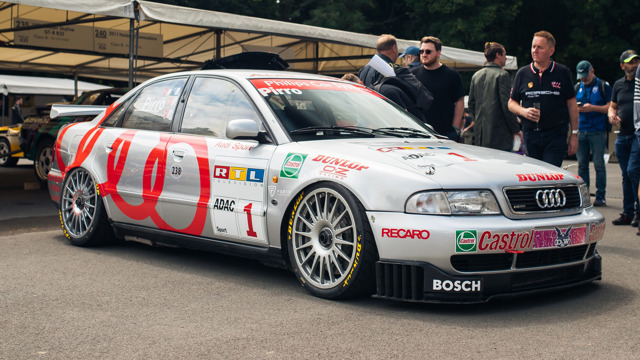
Following Cleland and Vauxhall’s victory for the traditional tin-toppers in 1995, mighty Audi landed in 1996 — and with four-wheel-drive, Vorsprung durch Technik proved irresistible. The silver A4 Quattro in the hands of Frank Biela and run by British motorsport mainstay Richard Lloyd swept to a comfortable title. Biela won five of the first eight races and even with an extra 30kg added mid-season, scored three more in the second half to easily outscore Alain Menu’s Renault.
In all, the Audi A4 Quattro claimed an impressive roster of national titles around the world in 1996, in Australia, Belgium, Spain, Italy, South Africa and Germany to go with the British crown. Another gamechanger car.
But the domination didn’t continue. The top two were reversed in 1997 as Menu won his first title, then Audi switched to front-wheel drive for 1998. It was never as good.

2. Renault Laguna
For those of us tuned in to motor racing, the BTCC entirely changed our perception of what was otherwise a bland family car. Think of the Renault Laguna, and swashbuckling Alain Menu springs to mind. Or cocky, in-your-face Jason Plato. Or the might of the 1990s-era Williams F1 team. In BTCC terms, these cars were almost exotic.
The Laguna first arrived in 1994 as a replacement for the truly bland Renault 19. The new model at least had something fresh about it and was a contender from the start in the hands of Menu and Tim Harvey, but when Williams took over the programme in 1995 that’s when the profile of the Renault attack really took off.
Here was the dominant F1 team of the decade investing in a second-string programme, for mere saloon car racing on behalf of its F1 engine supplier. It was unheard of. Imagine McLaren running a team of Mercedes in the modern BTCC today.

As we’ve already covered, Menu was a distant second to Frank Biela’s Audi in 1996, but then hit a purple patch in 1997, setting a record of winning 12 of the 14 races and clinching the title super-early. Plato also won twice, but missed out on the runner-up spot in the Championship by one point, to Biela.
The Laguna raced on in the BTCC until 1999 and racked up a total of 36 race wins. That’s comfortably a record for the series’ Super Touring era.

1. Ford Mondeo
The ultimate rep-mobile, our number one? Really? Yes, really. Because the Ford Mondeo enjoyed two peak periods in the BTCC, created star moments with one of British motorsport’s best-known racing drivers, and offered longevity of success despite a slump in form in the middle of its racing life.
It was fitting that Ford should hand responsibility for its entry into Class 2 to Andy Rouse, the man who did so much to put the RS500 on the racing map during the 1980s. Immediately, the Mondeo was a frontrunner when it appeared in mid-1993. Talented Kiwi Paul Radisich became touring car racing’s bright new star with three wins from the final five races, then claimed the illustrious FIA Touring Car World Cup at Monza, against a strong field boasting the best of all Europe’s national series.
But what really stole the thunder, and unarguably adds to the Mondeo’s legacy, was Nigel Mansell’s cameo in the TOCA shootout at Donington. How Red Five returned home from a glorious first IndyCar season to draw a predictably large crowd was pure theatre — especially when he smashed himself up with a heavy side-on crash at Starkey’s Bridge. Mansell still blames Tiff Needell…

Third in the BTCC points in 1994, Radisich again won the World Cup, this time at Donington, plus the TOCA shootout. Thereafter, the Mondeo lost its way and slipped into also-ran territory mid-decade, although Mansell again caused a sensation with more cameo BTCC appearances in 1998. His starring drive to a podium again at Donington that year is recalled as perhaps the greatest BTCC race of them all. Drama, histrionics and thrills just followed him wherever, and in whatever, he appeared.
But the best for the Mondeo was saved until last. Prodrive took over the Ford programme for 1999 and revived its fortunes. The Prodrive Mondeo proved unstoppable in the final year of the Super Touring regs in 2000, as Alain Menu, Anthony Reid and Rickard Rydell swept to a Ford 1-2-3, winning 11 of the 24 races.
That blue and yellow Mondeo was the ultimate expression of the Super Touring breed. What a shame then that the period’s huge advances in technology had to be matched to equally overblown budgets. From originally humble origins, Super Touring had become an unsustainable monster. But boy, was it great while it lasted.
The 83rd Members' Meeting presented by Audrain Motorsport takes place on the 18th & 19th April 2026. Tickets are on sale now for GRRC Members and Fellows
You can sign up for the Fellowship now. Click here to find out more.
Goodwood photography by Drew Gibson, Jochen Van Cauwenberge, Jordan Butters, James Lynch, Joe Harding, Rob Cooper, Lou Johnson, Nick Dungan and Toby Whales.
members' meeting
83rd members' meeting
83mm
event coverage
super touring
Super Touring Shoot-Out
btcc


Subscribe to Goodwood Road & Racing
Thank you, you’re now subscribed

How many hay bales are used at FOS?
For the last two years, 5,800 bales have been recylced into the biomass energy centre to be used for energy generation