

Goodwood Revival will celebrate Maserati in 2026
Maserati, one of the great Italian marques, will form the epicentre of the historic motorsport celebrations at the 2026 Goodwood Revival, 100 years on from its first success at the Targa Florio.
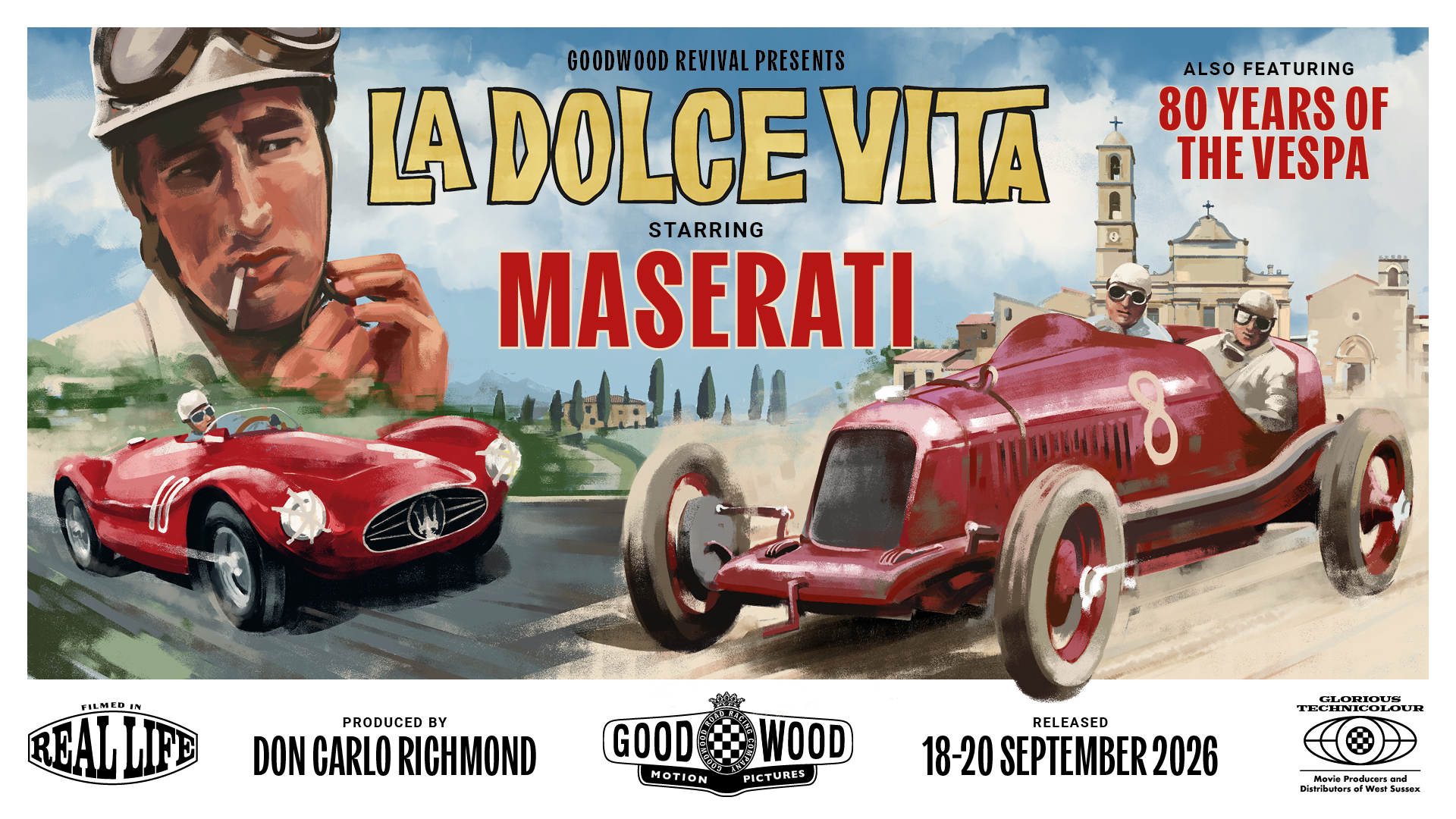
In a year when the Goodwood Motor Circuit will embrace ‘La Dolce Vita’, it’s appropriate that the Italian theme extends throughout the Revival programme, and that includes the central automotive celebration.
A vast collection of Maseratis will help to tell the story of an Italian marque integral to the pioneering years of motorsport. Its famous red cars were at the forefront of Grand Prix and sportscar racing, the machinery of choice for many of the greatest racing drivers of the 1930s, ‘40s and ‘50s.
Those in attendance at the Revival will get within touching distance of that remarkable history and enjoy the many pleasures of the traditional Italian lifestyle, an experience that will be punctuated by a journey to Sicily, the setting for one of history’s greatest motor racing spectacles.
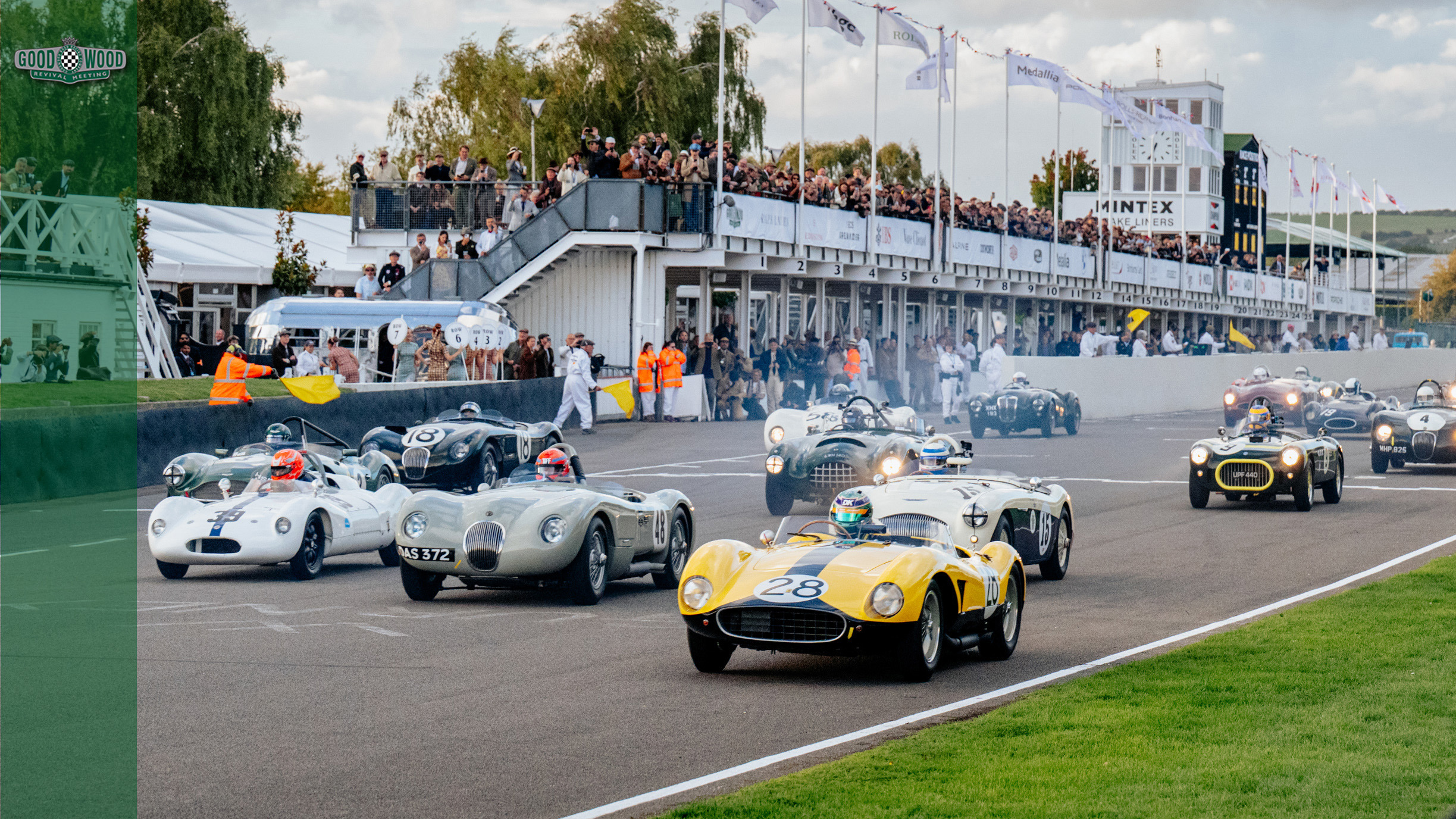
The Targa Florio, an Italian institution from 1906 to 1977, grew to become one of the most famous and prestigious prizes in global motorsport.
In 1926 an unknown entrant by the name of Alfieri Maserati arrived in Sicily with a car of his own making, the Maserati Tipo 26, and caused quite the stir when he took victory in the 1,500cc class. That result 100 years ago laid the foundation for what would become one of the most illustrious car manufacturers in the world.
In the wake of that initial success, Alfieri, along with his four brothers, Bindo, Carlo, Ettore and Ernesto, began work on the development of the Tipo 26 and its successors. Amongst other groundbreaking ideas, the 1929 Tipo V4 was the first recorded racing car to be powered by a V16 engine.
That car claimed Maserati’s first Grand Prix victory at the 1930 Gran Premio di Tripoli, as the upstart Italian team courted the likes of Achille Varzi and Luigi Fagioli, both established names, to race for them in direct competition against automotive giants Bugatti and Alfa Romeo.
The Maserati Tipo 26M was developed simultaneously with the V16 car and claimed five more victories throughout the rest of that 1930 Grand Prix season.
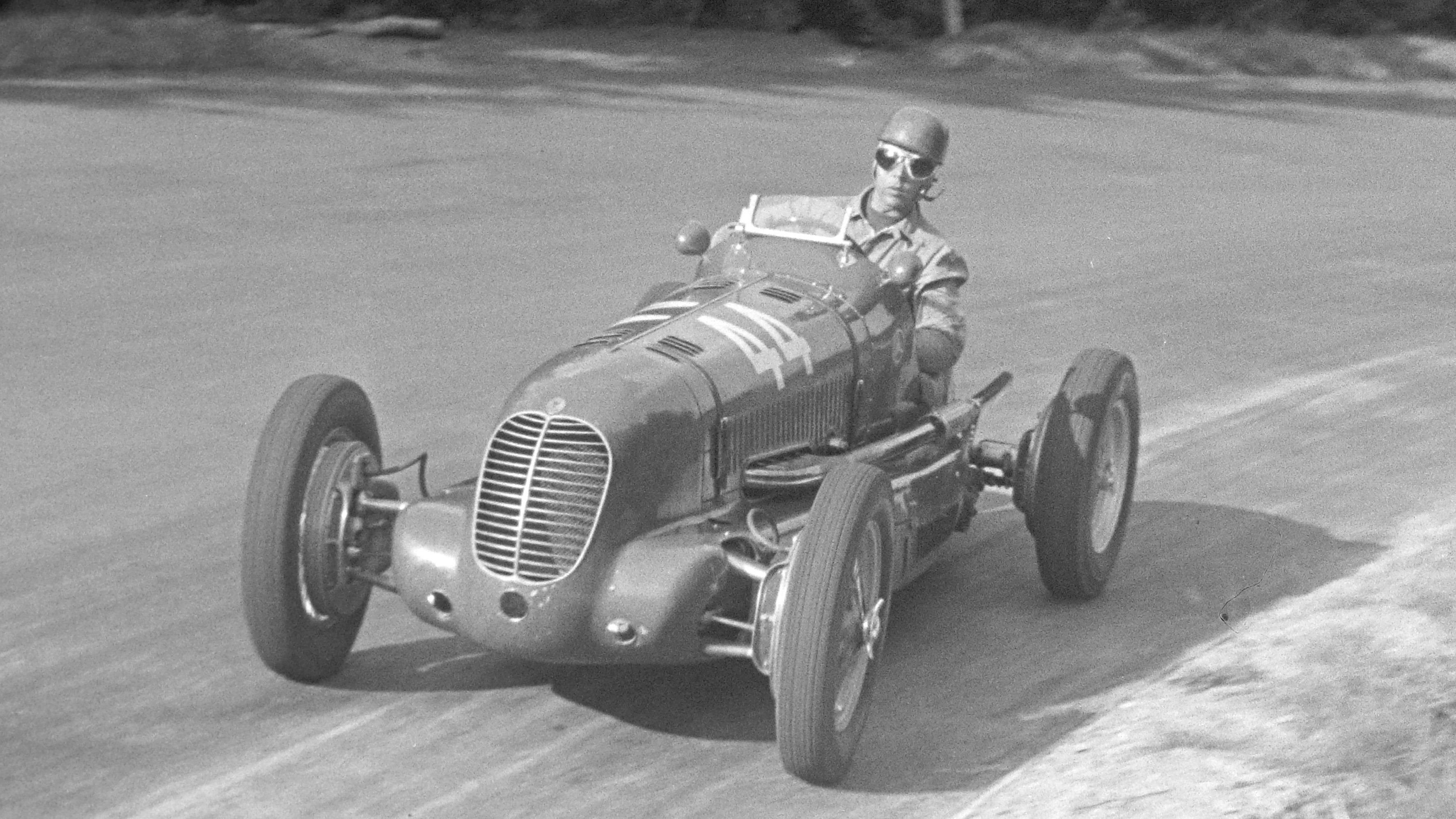
Franco Cortese drives a Maserati 6CM at the German Grand Prix at the Nürburgring, July 1938.
Image credit: Getty ImagesMaserati continued to build momentum throughout the 1930s, claiming more Grand Prix victories despite struggling to compete against the financial might of Alfa Romeo, Mercedes-Benz and Auto Union.
More success followed at the Targa Florio, where Maserati enjoyed a four-year period of dominance from 1937-40 with the 6CM and 4CL. By now, this esteemed Italian family had become a potent producer of single-seater racing cars, with an engineering pedigree that astonished many of the most established names of the time. But the Maserati name was about to garner global acclaim.
The family sold the company to Adolfo Orsi in the hope that additional financial support would allow them to compete consistently on the world stage. Their continuous development of single-seater machinery combined with the loosening of budgetary restrictions allowed the production of Maserati’s most extreme creation to date.
The 8CTF featured a new 3.0-litre straight-eight engine capable of producing upwards of 350PS (260kW) and was immediately competitive in Grands Prix, but it was on American soil that the 8CTF became a legend. Wilbur Shaw drove the same chassis, the ‘Boyle Special’, to consecutive victories at the Indianapolis 500 in 1939 and ’40, but that remarkable achievement proved to be Maserati’s final success before the outbreak of World War II.
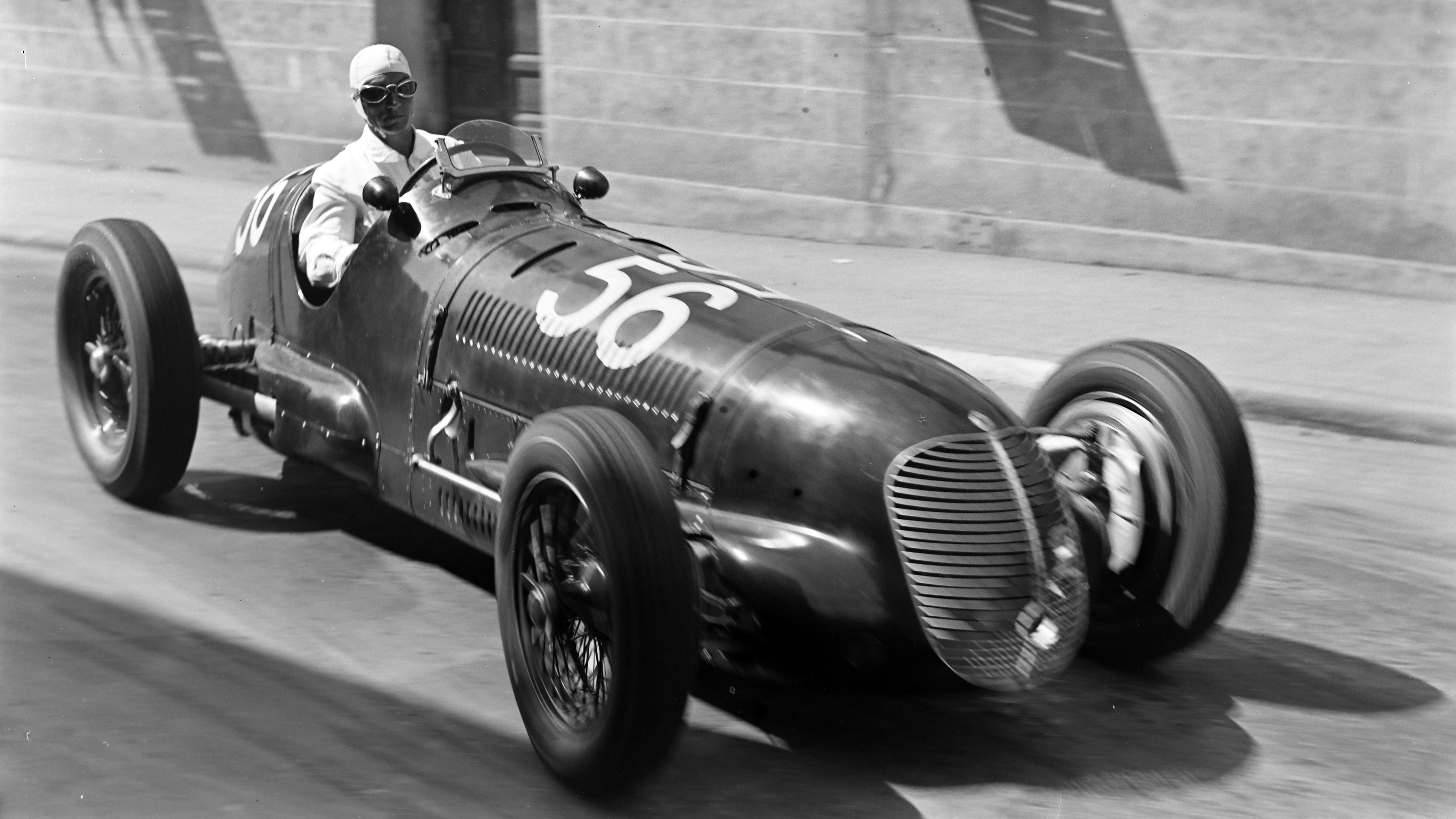
A Maserati 8CTF is driven by Carlo Felice Trossi during the Coppa Ciano at Livomo, August 1938.
Image credit: Getty ImagesIn peacetime it didn’t take long for things get back going again. A race meeting to celebrate the return of motorsport in France saw a privately entered Maserati 6CM claim victory in the Liberation Cup at the Bois de Boulogne in Paris on 9th September 1945.
The late 1940s were a period of recovery for Maserati and the wider automotive community, but the formation of a new World Championship was the logical target for one of Italy’s great motorsport names to return to competition.
Making use of recovered pre-war machinery, Maserati immediately returned to winning ways with Luigi Villoresi — who had earned two of the marque’s Targa Florio victories in 1939 and ’40 — at the opening Grand Prix of the 1946 season in Nice.
Throughout the rest of that year Maserati cars claimed nine Grand Prix victories with the all-conquering 4CL. Its superiority made it a popular choice for privateers, and that year’s leading driver, Raymond Sommer, helped to solidify the Maserati name as a force to be reckoned with.
That dominance continued throughout the rest of the decade. Maserati cars claimed 33 Grand Prix victories across the 1947, ‘48 and ‘49 seasons, including a particularly notable victory for Reg Parnell during Goodwood’s inaugural race meeting on 18th September 1948.
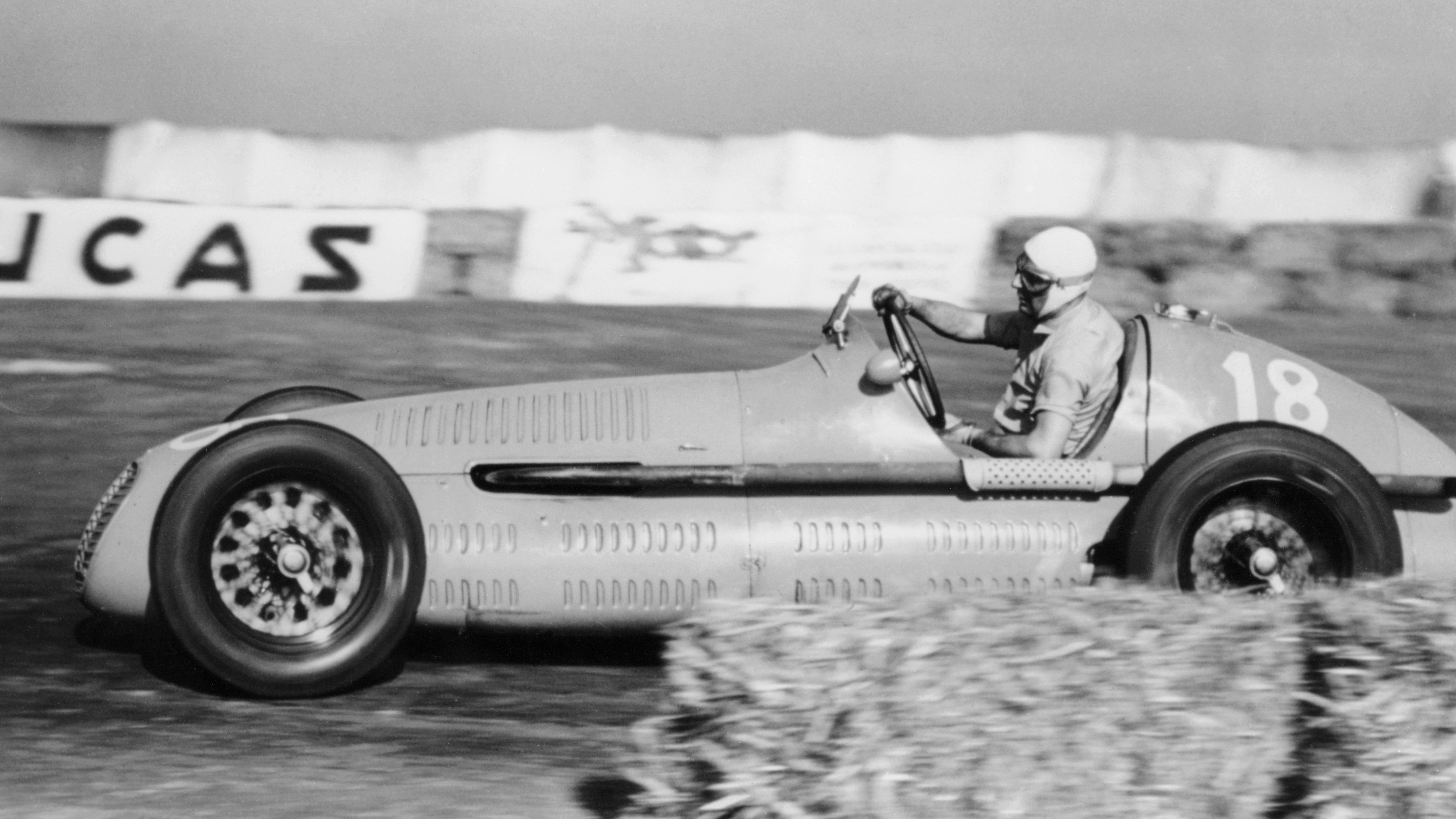
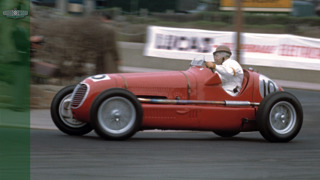
Luigi Villoresi won the 1948 British Grand Prix at Silverstone driving a Maserati 4CLT/48.
Image credit: Getty ImagesVilloresi’s contribution of 14 Grand Prix wins during that period, helped in no small part by the introduction of the new and improved 4CLT, caught the attention of the world’s very best drivers. By 1949 the likes of Alberto Ascari, Juan Manuel Fangio, Reg Parnell and Guiseppe Farina were all queuing up to get their hands on Italy’s finest racing car.
The dawn of the Formula 1 World Championship in 1950 signalled a changing of the guard in Grand Prix racing, as Alfa Romeo returned to the fold with a vastly updated and improved version of the 158. Even the great Maserati 4CLT was powerless to stop the charging Alfas from dominating the year.
That 1950 season did however see Maserati return to Grand Prix racing as a works team for the first time since 1939, and although the 4CLT was clearly tired, famous marque was committed to achieving substantial motorsport success.
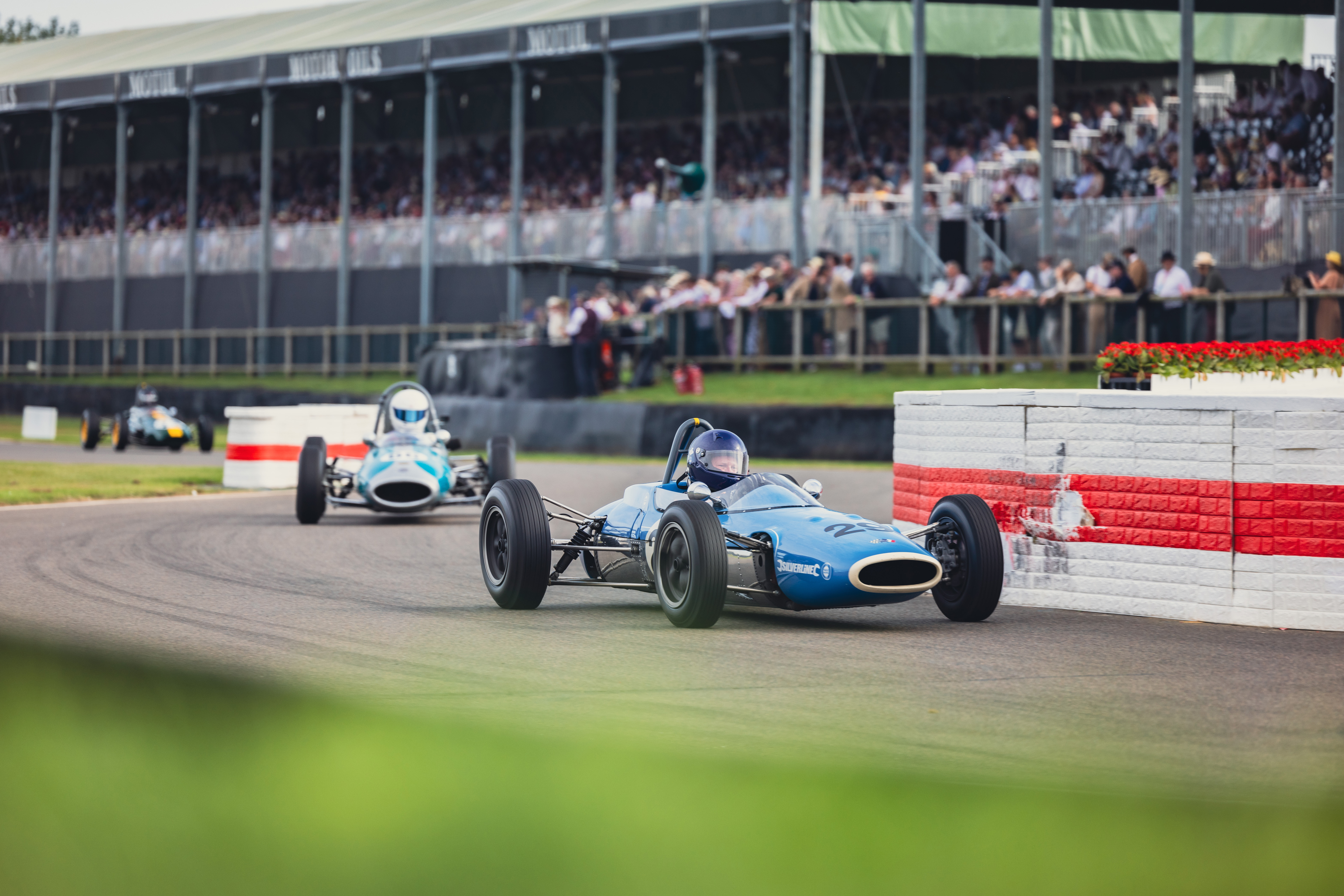
So, the factory got to work on a new car built to Formula 2 specifications that could compete across F2 and F1 Championships. Powered by a new 2.0-litre six-cylinder engine, the new Maserati A6GCM became one of the most prolific competitors of the early 1950s.
After a year out, Maserati returned to competition towards the end of the 1952 season and immediately got up to speed with its new machine. José Froilán González finished in second on his first outing in the new car at the Italian Grand Prix.
Fangio, who had suffered a terrible accident while driving for Alfa Romeo in 1951, had chosen to return to Maserati machinery in 1953, and led the charge as the A6GCM finished every single race it entered on the podium.
The great Argentinian claimed an emotional first F1 World Championship victory for Maserati at the final round of the season in Monza, kickstarting the marque’s golden era of Grand Prix racing.
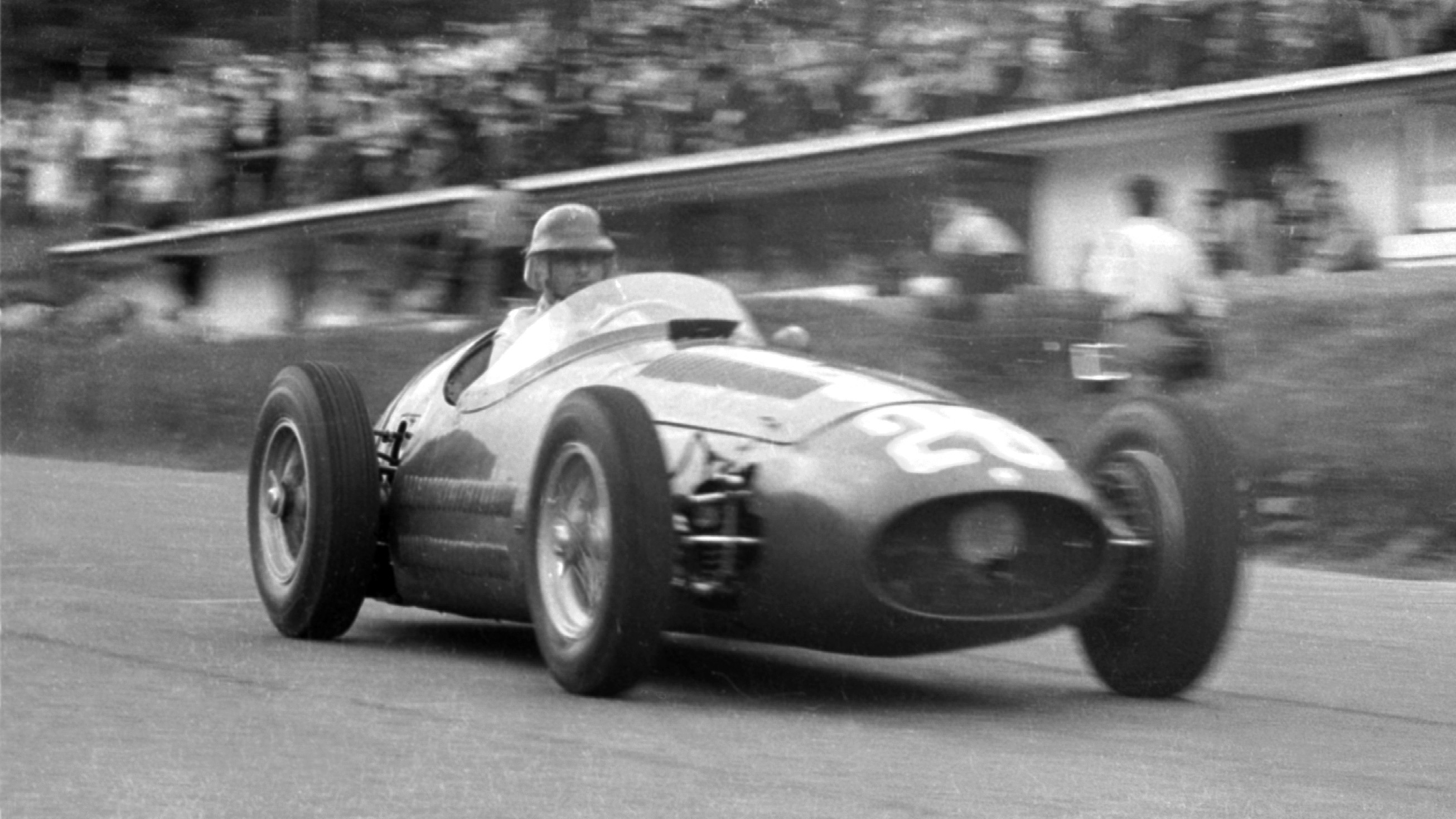
Juan Manuel Fangio races past the pits at Spa-Francorchamps in the Maserati 250F, June 1954.
Image credit: Getty Images1954 saw the introduction of a car that’s still heralded to this day as one of the greatest Grand Prix cars ever built. The Maserati 250F, in the hands of Fangio, won first time out at the Argentinian Grand Prix, and then again at the Belgian Grand Prix at Spa-Francorchamps.
Fangio decided to switch allegiances to the new Mercedes-Benz team halfway through the 1954 season, but his departure made way for a young Stirling Moss to showcase his talents at the wheel of a factory 250F.
Despite Fangio’s departure, his triumph in the World Championship meant that Maserati was officially recognised as a title-winning team for the first time. The dream of the five brothers was finally realised.
Moss joined Fangio at Mercedes for 1955, which left Maserati without a world class driver, but after the German marque walked away from motorsport in the wake of that year’s Le Mans disaster, Moss returned to the Maserati fold for 1956.
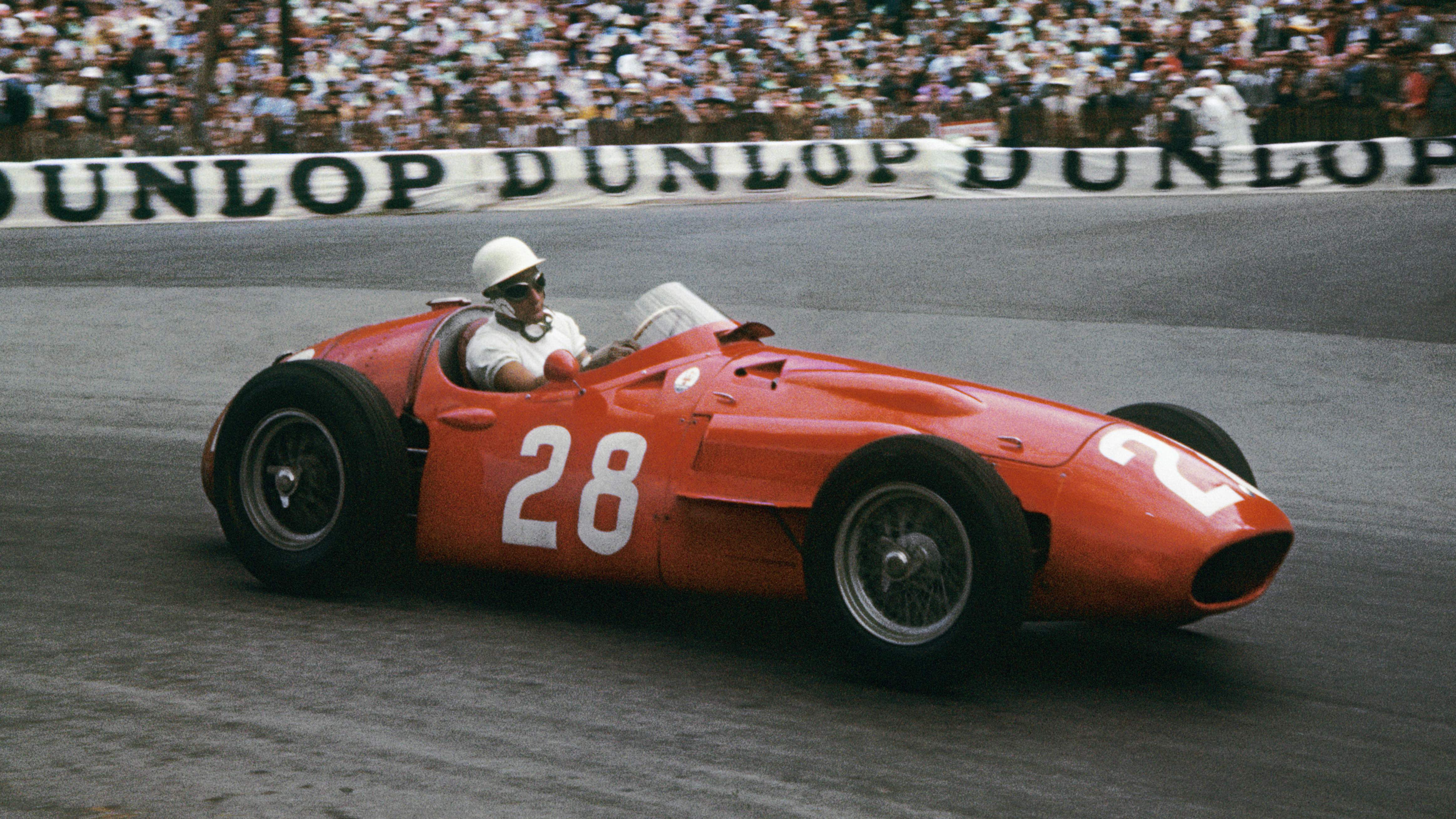
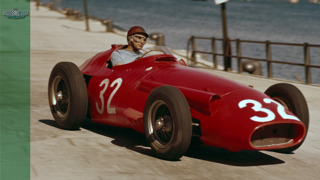
The 250F of Stirling Moss leads the 1956 Monaco Grand Prix.
Image credit: Getty ImagesHe claimed two more victories for the team as he and Jean Behra engaged in a fierce battle with Ferrari and Fangio. The Argentinian claimed his fourth World Championship as Moss fell painfully short, but the two were united at last under the Maserati banner in 1957, the year when no-one could stop the Italian team from taking it all.
Their union lasted only one race; Moss’ desire to race for a British team led him to the newly formed Vanwall outfit. But Fangio, comfortable at the wheel of the venerable 250F, was ultimately unstoppable.
He claimed four Grand Prix victories and two second places to walk away with the Championship and finally confirm Maserati as the undisputed best in the world. The 250F was immortalised as one of the great cars of 1950s F1, and Maserati was etched into motorsport legend.
In all, the 250F scored eight World Championship victories and 27 non-Championship triumphs. The car accounted for 277 entries across 46 Championship Grands Prix spanning seven seasons, its lifespan finally ended at the end of the 1960 season, by which time it had become antiquated courtesy of the new rear-engine era.
Amidst increasing financial difficulties, Maserati made the decision in 1957 to end its efforts as a works team in motorsport, not only calling time on a wonderful era of racing in F1, but also its impressive efforts in sportscars.
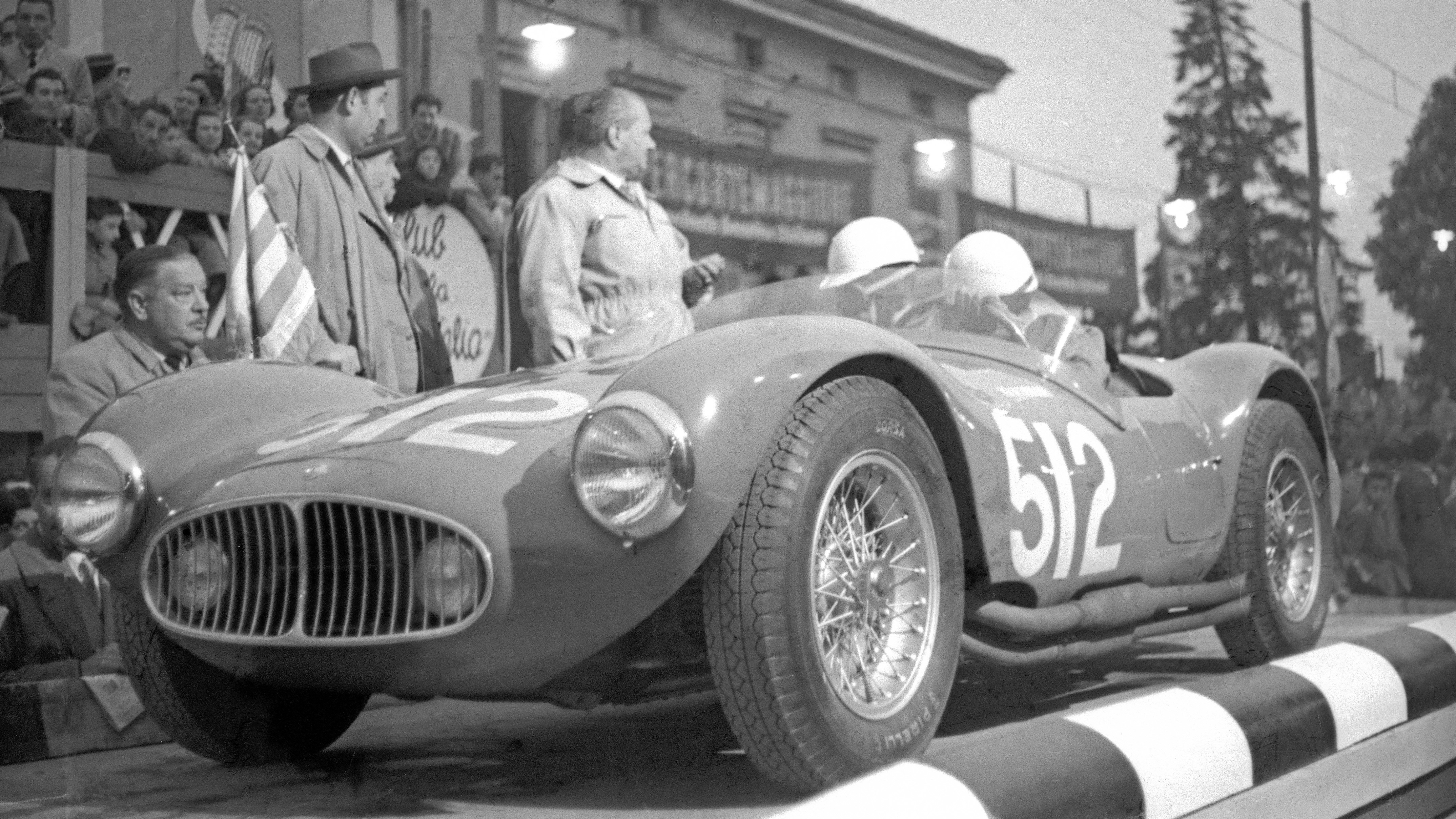
A Maserati A6GCS waits on the starting ramp for the 1953 Mille Miglia.
Image credit: Getty ImagesThe marque was an entrant during the very first season of the World Sportscar Championship in 1953 when the Mille Miglia was included as a Championship round. Emilio Giletti and Guerino Bertocchi won the Sports 2000 class at the wheel of a Fantuzzi-bodied Maserati A6GCS/53.
Another A6GCS/53 in the hands of Luigi Musso and Augusto Zocca claimed third in the in 1955 Mille Miglia, as Maserati expanded its involvement to two further races — one in Argentina, the other the RAC TT at Dundrod in the UK.
In a strange twist of fate, the Maserati name found itself in direct competition with O.S.C.A, the company the Maserati brothers had gone on to found after leaving their namesake marque.
Despite consistent development, the A6GCS/53 was never quite able to compete against the strength of established sportscar makers Ferrari, Mercedes and Jaguar. A new challenger was needed, and the 300S was introduced during 1955 season with relatively little fanfare.
Mercedes’ motorsport departure during ‘55 left the door open for Maserati to finally compete for sportscar wins on the world stage, and the 300S wasted little time, scoring victory at the first round of the 1956 season in Buenos Aires. Ferrari remained the class of the field, though.
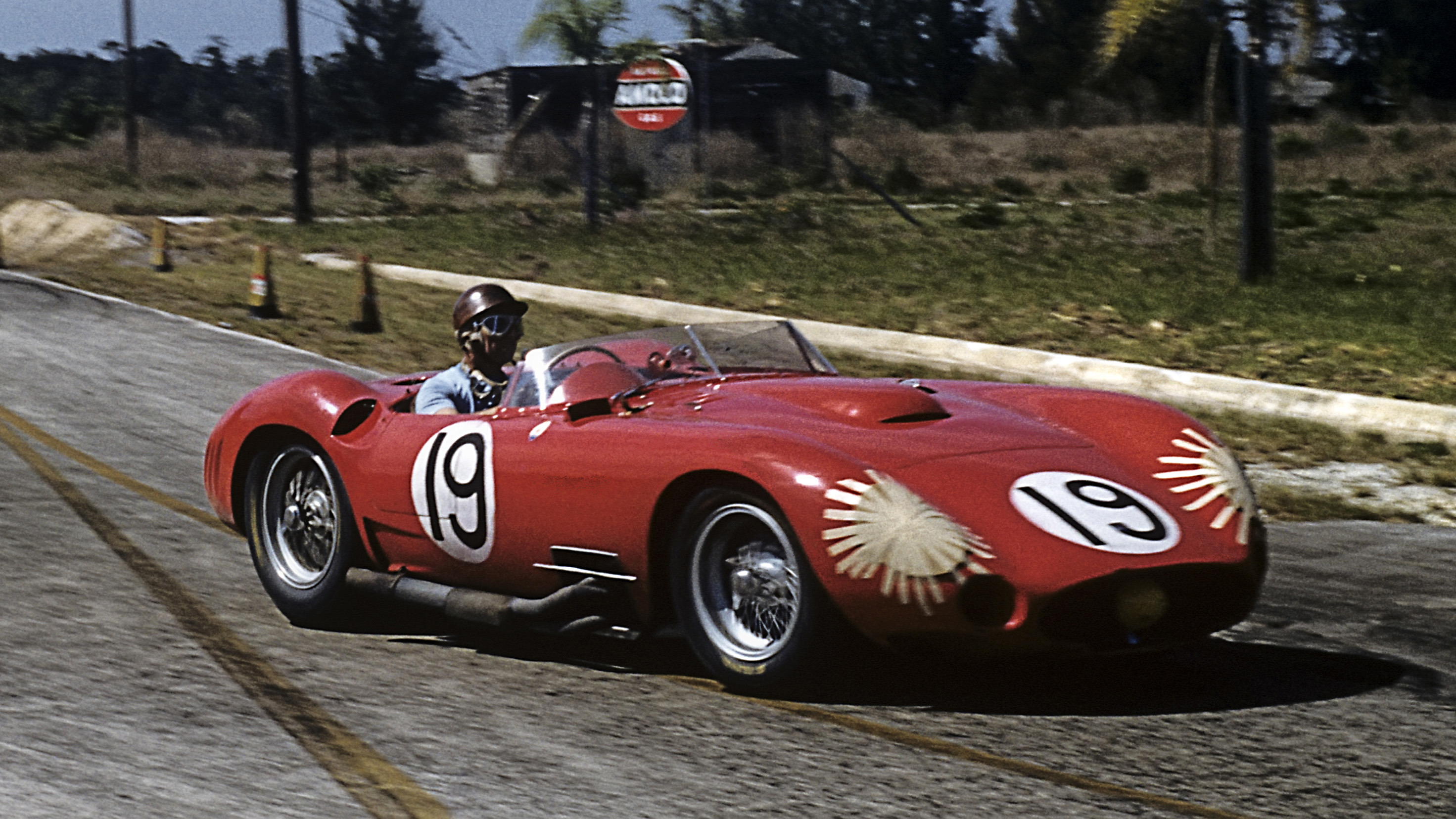
Fangio drives a Maserati 450S at the 12 Hours of Sebring, March 1957.
Image credit: Getty ImagesNevertheless, the beautiful racing cars kept on coming, and the continued development of the 350S and 450S, driven by Fangio and Moss, yielded several race victories at venues like the Nürburgring and Sebring.
Even after winding up its efforts as a factory team, Maserati made one last attempt to conquer the world of sportscars and gave technical director Giulio Alfieri free reign to develop an innovative new concept.
That process birthed what would become known as the Birdcage, an intricate steel tube frame chassis that formed a strong and stiff cage-like structure around which the Tipo 60 was built in 1959.
In the hands of Moss, Maserati’s new car was immediately quick and won at its first attempt at Rouen. Demand for the Birdcage was immediate, and they were soon shipped off to privateers all over the world.
Development continued, and the Tipo 61 was quickly introduced with an enlarged 2.9-litre engine to give it the best possible chance in the sub-3.0-litre category.
Tipo 61’s speed was showcased during a remarkable run at the Le Mans 24 Hours in 1960, when in the hands of Masten Gregory it blitzed the field during the opening laps to lead by 70 seconds at the end of the first hour. This golden chance for Maserati to claim victory was undone by a starter motor issue following a pitstop.
Even with the success of this exciting new sportscar, however, the World Sportscar Championship continued to elude the legendary Italian marque.
Further developments of the Birdcage were followed by Maserati’s final sportscar of the era, the Tipo 151, of which only three were built in 1962. But despite plenty of success, including two more victories at the Nürburgring, Maserati’s presence in sportscar racing came to an end in 1965.
The story of one of history’s great marques will be at the centre of the festivities at the 2026 Goodwood Revival. Expect all the greatest Maserati cars to be on display around the Motor Circuit paddocks, with many of them firing up their engines to feature in a series of awe-inspiring moments on track.
Tickets for the 2026 Goodwood Revival are now on sale. If you’re not already part of the GRRC, you can sign up to the Fellowship today and save ten per cent on your 2026 tickets and grandstand passes, as well as enjoying a whole host of other on-event perks.
revival
revival 2026
event coverage
maserati
Maserati Celebration
Subscribe to Goodwood Road & Racing
Thank you, you’re now subscribed

How many hay bales are used at FOS?
For the last two years, 5,800 bales have been recylced into the biomass energy centre to be used for energy generation