

The truth about careers in space — why you don't need to be an astronaut
Careers in space do not necessarily mean becoming an astronaut. Heartbreaking, I know, but the industry also employs designers, coders, animators and salespeople — and that, say three exhibitors at FOS Future Lab presented by Randox, is the most misunderstood thing about it.
It is also bigger than most people realise. The UK space sector takes in £18.6bn a year, employs more than 55,000 people and three in five firms expect to keep growing.
Christian Teir runs Dark Star Labs, a 3D animation and gaming studio that builds mini-games and animations for space companies trying to explain their engineering.
Dr Will Roper is a computational astrophysicist at the University of Sussex and chief technical officer at Syzygy Labs. He simulates galaxies and smashes planets together, in code. “I'm not creating rockets,” he says. “I'm creating universes.”
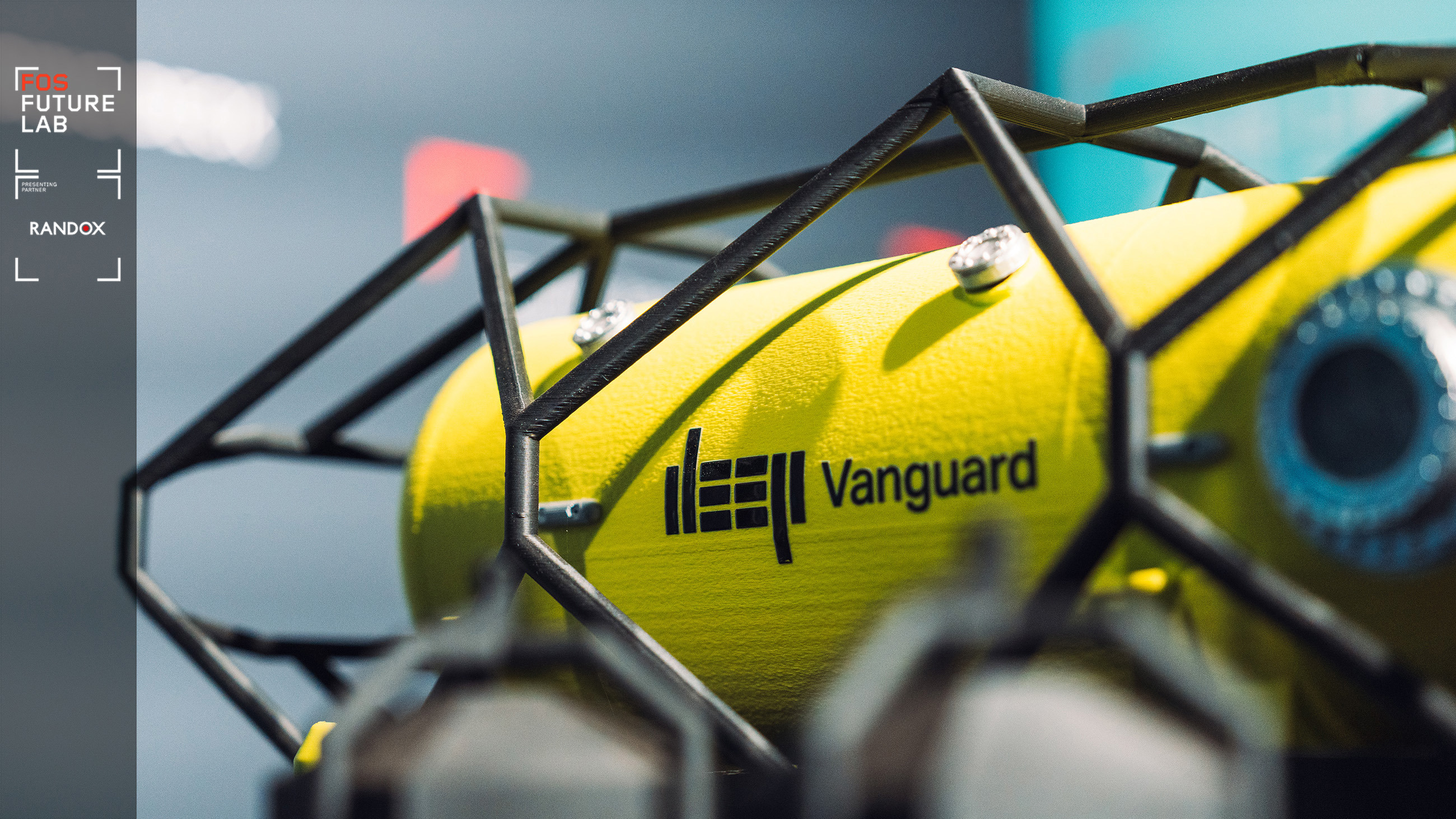
Bruce Poston leads the New Space initiative at engineering design firm TECHNIA, which recently completed a greenhouse for the International Space Station — a fridge-freezer-sized unit growing 150 to 200 plants at a time, built because "it costs about £20,000 a day to feed an astronaut in space" and the food they eat "is typically about three years old".
None took a route a careers adviser would recognise. Roper toured in a band and worked as a chef before starting a degree at 23. "I flipped burgers. That didn't work out. And I watched one too many documentaries and decided actually space is what I want to do." Teir studied games design in Australia and shelved it to travel, working in a kitchen, as a maître d', and even as a hospital theatre technician before joining an engineering company that found a use for his 3D animations.
Poston got in on what amounts to a clerical accident. After years in aviation operations, a recruiter rang him about the aerospace sector because he had a "very relevant background". "The short answer, it was a spelling mistake, or a misinterpretation of my CV,” he says.
Teir's conclusion is "all skill sets are recyclable.” None of his previous jobs looked like preparation for running an animation studio, but all of them taught him to explain complicated things under pressure, which is what the business now sells.
Imposter syndrome
The barrier, Teir argues, is a false picture of who the industry needs. “If it wasn't for all of the people manning the maintenance services and everything like that, you wouldn't get to space,” he says. "So down to the levels across the board of maintenance and janitorial work, all the way up to the mission command, there is an opportunity for every single person within their capabilities." Poston puts it more bluntly: “It's not all shiny suits and magnetic boots. It's not Dan Dare. Anybody can get into space.”
Roper identifies something harder to fix. “The biggest barrier, and the one I see around me every day, is the 'Oh, well, I don't look like an astrophysicist.' So we've got a diversity problem. It's majorly male-dominated, even now.” Decades of “old white men showing off, talking about their academic stuff” have left the field looking closed to anyone who does not already resemble the people in it.

Galaxy stars
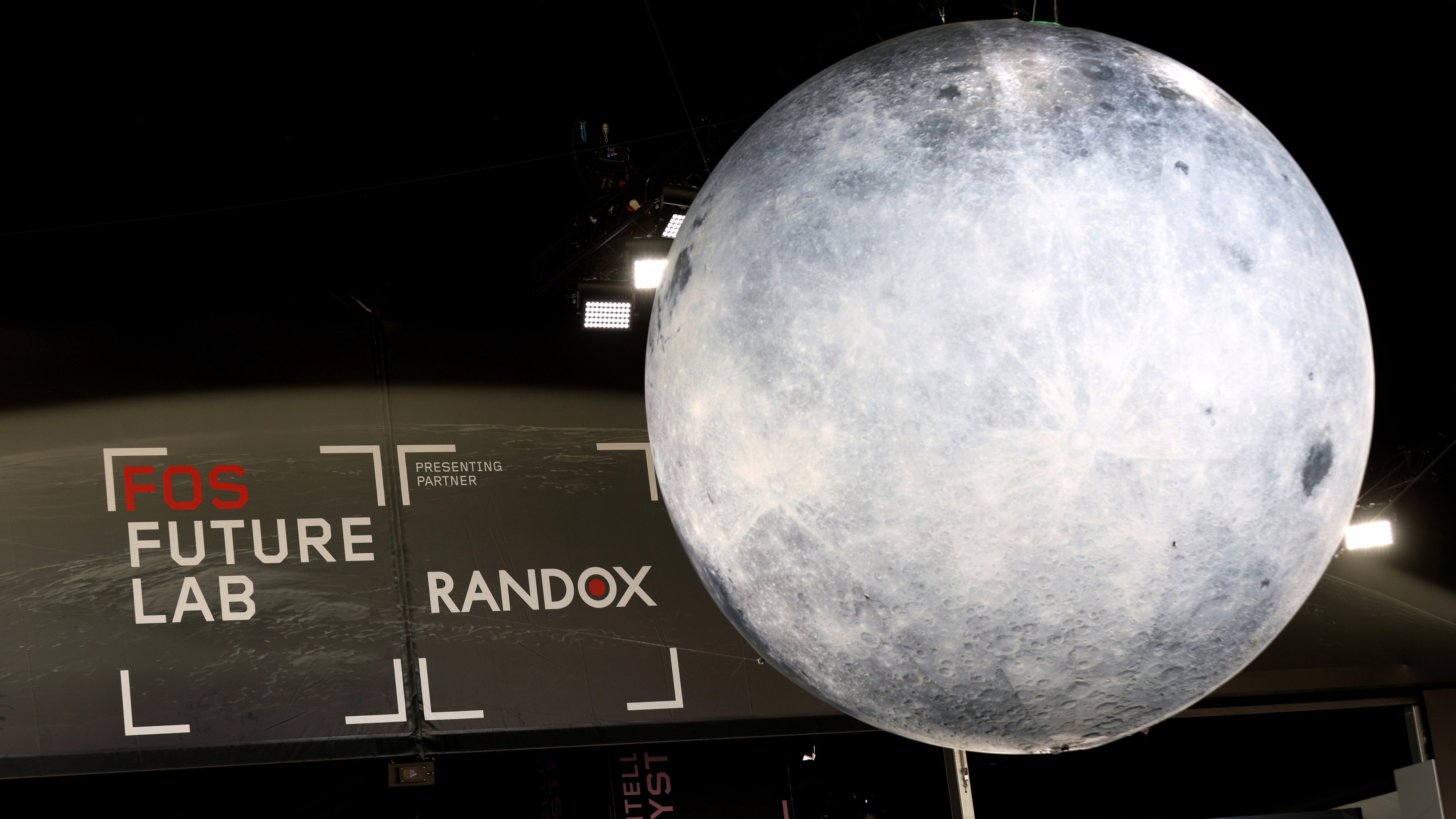
Dark Star Labs brought its mini-game Moon to FOS Future Lab — three cartoonised rovers, modelled on real machines in development, driven across the lunar surface against the clock — alongside a touchscreen simulation of Artemis II. This, the studio argues, is how younger visitors now take in information.
At Space-Comm in Glasgow, a graduating astrophysics student played it, then turned round and asked Teir: "Are you guys hiring?" His first instinct was that an animation studio had no role for her — "but then it made me think, why not?" She knew JavaScript, which is what the studio builds in. Dark Star Labs has since taken on another Glasgow contact part-time: a rocket designer with a sideline in animation.
Keeping up with the Musks
On whether British universities are keeping pace with a sector reshaped by startups, mega-constellations and AI, Roper does not hedge. “Some of my senior colleagues may not like me saying this, but no.” He blames a lag in the syllabus endemic to how universities work, and is warmer on the direction of travel than the speed. “It just needs to happen faster for the UK as a whole.”
Poston's advice is to work out what you are good at, get it onto one sheet of paper, and talk to everyone. “You will get pushback, but somebody will listen to you at some point.” Roper adds, “It's never too late to change what you want to do. You can always pivot.”
Teir's cautionary tale is his brother, who was good at chemistry but ruled it out because “he just couldn't picture himself in a lab coat”, and went into catering, only to discover years later that breweries keep resident chemists to measure pH and balance hops.
For anyone at Goodwood weighing how far apart the automotive and space industries sit, "the vast majority of the designers who work in the space sector nowadays come from the car industry," says Roper.

Randox is a global leader in diagnostics, revolutionising patient outcomes through innovative technologies, including its patented biochip technology. This pioneering diagnostic platform allows for the simultaneous detection of multiple biomarkers from a single sample, delivering faster, more accurate, and comprehensive results. Operating in over 145 countries, Randox develops advanced laboratory instruments, high-quality reagents, and innovative testing solutions to improve global healthcare.
Randox Health brings this cutting-edge technology directly to individuals, offering bespoke, preventative health testing programs. With world-class laboratories and personalised health insights, Randox Health enables early detection of a wide range of conditions, helping individuals take control of their health.
Together, Randox and Randox Health are redefining diagnostics and preventative healthcare. For more information, visit www.randox.com and www.randoxhealth.com.
Main image photography by Charlie Brenninkmeijer.
The 2027 Festival of Speed will take place on 15th-18th July 2027, sign up for ticket alerts to make sure you don't miss out. Tickets are available for GRRC Members and Fellows, you can join the Fellowship today.
festival of speed
fos
fos 2026
event coverage
future lab
fos future lab


Subscribe to Goodwood Road & Racing
Thank you, you’re now subscribed

How many hay bales are used at FOS?
For the last two years, 5,800 bales have been recylced into the biomass energy centre to be used for energy generation