

Osmotic Power: Japan’s quiet energy gamble
At the edge of Japan’s Fukuoka Bay, where the city’s concrete ends and the estuary begins, something unusual is happening. No vast turbine blades are carving the skyline, no solar fields stretching over the horizon. Instead, inside an unobtrusive corner of a desalination plant, Japan is quietly testing what could become one of the world’s most reliable forms of clean power.
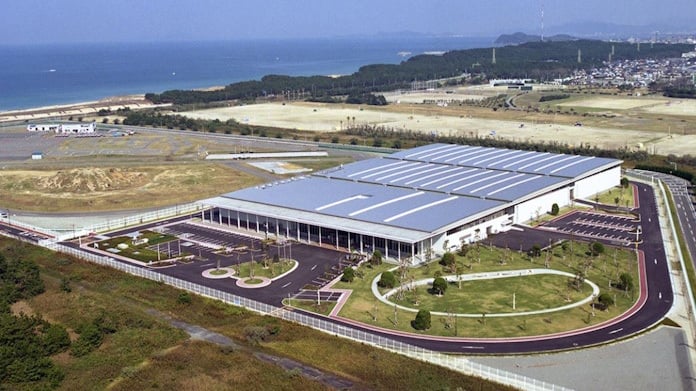
The machinery hums, the pipes glisten, and the entire system appears almost too modest for the claims attached to it. But here, where freshwater meets salt, Japan believes it has found a way to produce electricity that never sleeps. Osmotic power has been discussed in renewable-energy circles for decades — a physics student’s dream of turning a natural pressure difference into unlimited, weather-proof electricity.
When fresh river water meets seawater, the difference in salinity creates osmotic pressure theoretically strong enough to drive turbines. The idea has existed long enough to become a footnote, dismissed as something that would always remain in the laboratory. Yet Japan’s new plant, small but commercial, and built with the seriousness of a nation searching for dependable clean energy, has shifted the conversation.
Unlike solar or wind energy, osmotic power can run at a constant pace every hour of the day, provided a river still flows. For a country balancing energy security with geography, it is a tempting proposition. The new Fukuoka installation is hardly a megaproject. Its output is enough to power a few hundred homes, but symbolism matters. For the first time, osmotic power is stepping into the real world.
The plant, connected to Fukuoka’s desalination facility and making use of its brine and treated water streams, is expected to generate around 880,000 kilowatt-hours a year. That makes it only the second commercial-scale osmotic plant in operation globally, the first being in Denmark.
Engineers will now learn whether the membranes clog as predicted, whether maintenance is manageable, and whether the economics can move in the right direction. In energy terms, it is early days, but the very existence of the plant signals a change in mood. The global industry has stopped rolling its eyes.
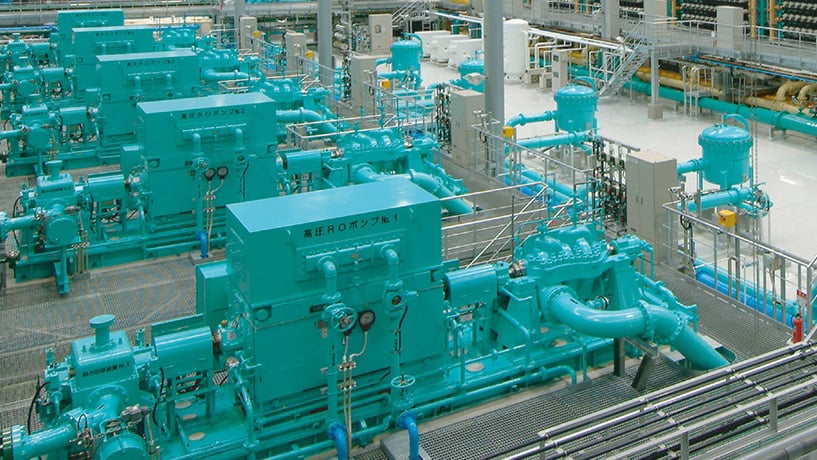
That does not mean the technology is free of problems. Far from it. Membranes remain expensive, prone to fouling and in constant need of improvement. The physics is beautiful; the engineering is not. Efficiency losses add up, and even the best systems struggle to convert osmotic pressure into meaningful amounts of electricity.
The geography is picky too: osmotic power works only where the right kind of river meets the right kind of sea, with the right kind of infrastructure close enough to help. Environmental regulators are understandably cautious about disrupting sensitive estuary ecosystems for the sake of another renewable-energy line item.
Still, despite these limitations, the technology has begun to attract serious attention. Part of it is timing. As nations sprint towards the electrification of cars, heating systems, and industrial processes, demand for renewable baseload power is intensifying. Part of it is progress: membrane costs are coming down, materials have improved, and efficiencies are creeping upward. But the biggest factor is probably Japan itself. When a nation with a long record of cautious, methodical engineering commits to something, the world takes note.
Which brings us to Britain, a country blessed with estuaries, engineering know-how and a renewables sector rewriting the national energy map. In theory, the UK could become a natural home for osmotic power. The Thames, the Humber, the Severn — all offer the kind of mixing zones where fresh and saltwater dance in predictable ways.
Britain also has the advantage of a growing interest in hybrid infrastructure, where wastewater treatment, desalination and power generation intersect. For FOS Future Lab presented by Randox — which champions innovative environmental technologies — osmotic power fits neatly into the vision of a diversified, resilient, next-generation energy system.
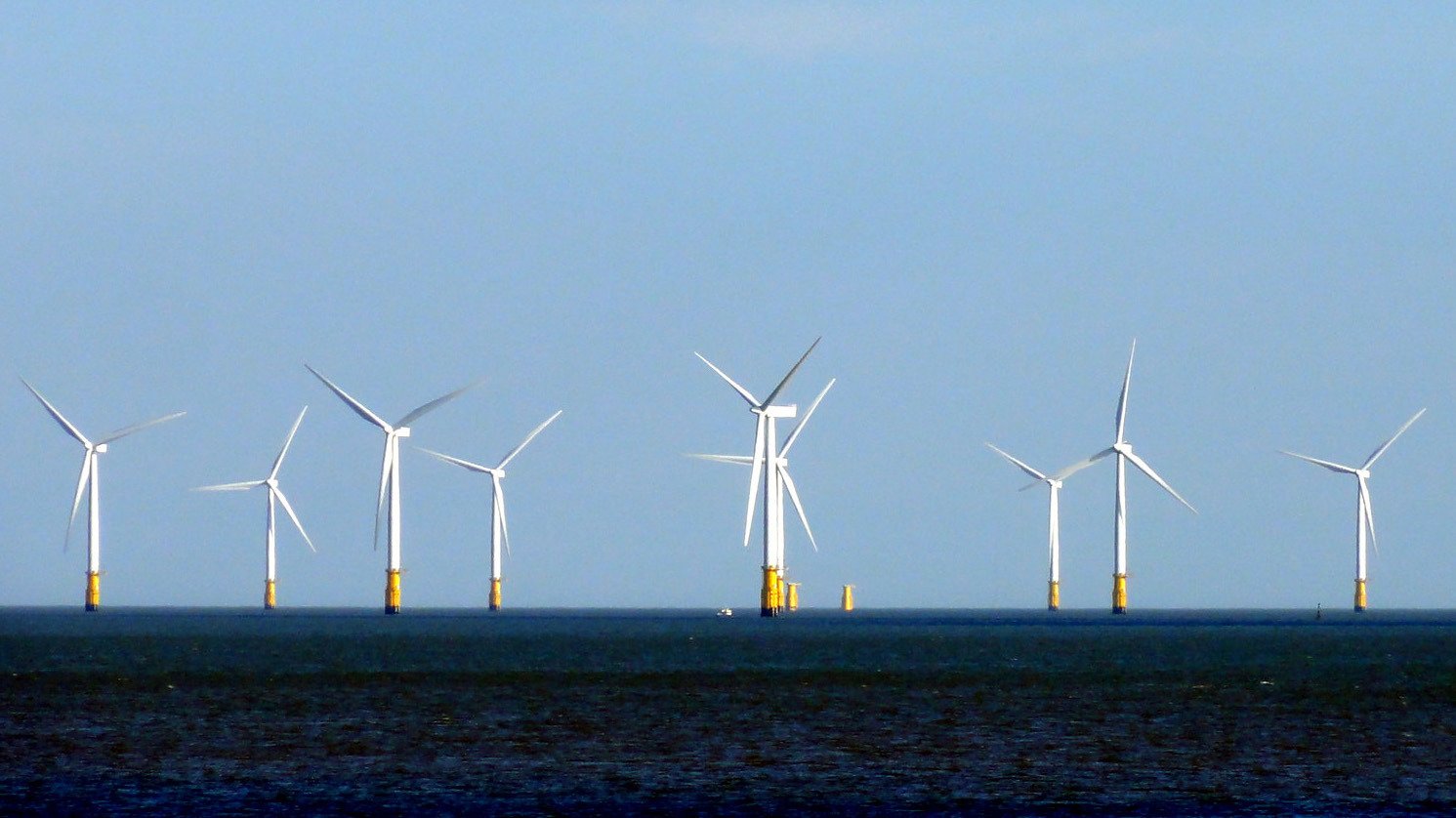
In practice, however, the UK is not rushing. Offshore wind has become the backbone of Britain’s renewable strategy, while solar and grid-scale storage have surged in the last five years.
These are proven, bankable technologies. Osmotic power, by contrast, remains a curiosity: promising, elegant, but still waiting for a plant that proves it can compete on price and reliability. British energy planners suspect osmotic systems may eventually find their place, perhaps embedded within desalination facilities, wastewater plants or tidal-range projects, but the moment has not yet arrived.
Japan’s experiment may well be the deciding factor. If the Fukuoka plant settles into a reliable rhythm, if the maintenance teams report fewer headaches than expected, if the economics fall into line, Britain’s strategists will have a compelling new data point. And if Japan starts to build more, the UK’s cautious position may shift quickly.
There is also, increasingly, a sense that the world is entering a phase where every form of dependable clean energy will matter. Britain knows this better than most. The country that pioneered commercial offshore wind is now confronting the limits of intermittency, storage and grid balancing. If osmotic power can deliver even modest amounts of stable electricity in the right locations, it could slot neatly into a future British system built on diversity rather than dominance.
And for visitors to FOS Future Lab — those who look to the Festival of Speed presented by Mastercard for glimpses of the technologies steering us toward tomorrow — osmotic power embodies the appeal of innovation hidden in plain sight. Freshwater meets saltwater every day along Britain’s coasts. For the first time, that meeting point may hold the key to a new chapter in clean-energy capability.

Randox is a global leader in diagnostics, revolutionising patient outcomes through innovative technologies, including its patented biochip technology. This pioneering diagnostic platform allows for the simultaneous detection of multiple biomarkers from a single sample, delivering faster, more accurate, and comprehensive results. Operating in over 145 countries, Randox develops advanced laboratory instruments, high-quality reagents, and innovative testing solutions to improve global healthcare.
Randox Health brings this cutting-edge technology directly to individuals, offering bespoke, preventative health testing programs. With world-class laboratories and personalised health insights, Randox Health enables early detection of a wide range of conditions, helping individuals take control of their health.
Together, Randox and Randox Health are redefining diagnostics and preventative healthcare. For more information, visit www.randox.com and www.randoxhealth.com.
Main image courtesy of Obayashi.
festival of speed
fos
event coverage
future lab
fos future lab





Subscribe to Goodwood Road & Racing
Thank you, you’re now subscribed

How many hay bales are used at FOS?
For the last two years, 5,800 bales have been recylced into the biomass energy centre to be used for energy generation