

Robotic exosuit trousers could give astronauts their ‘space legs’ back
When humans go to space, they don’t just leave Earth’s gravity behind, but also the very force their bodies are built around. Muscles shrink, joints stiffen and even simple tasks like climbing a ladder become a full-body workout. Now, a robotic exosuit created at the University of Bristol is taking aim at that problem, one pair of trousers at a time.
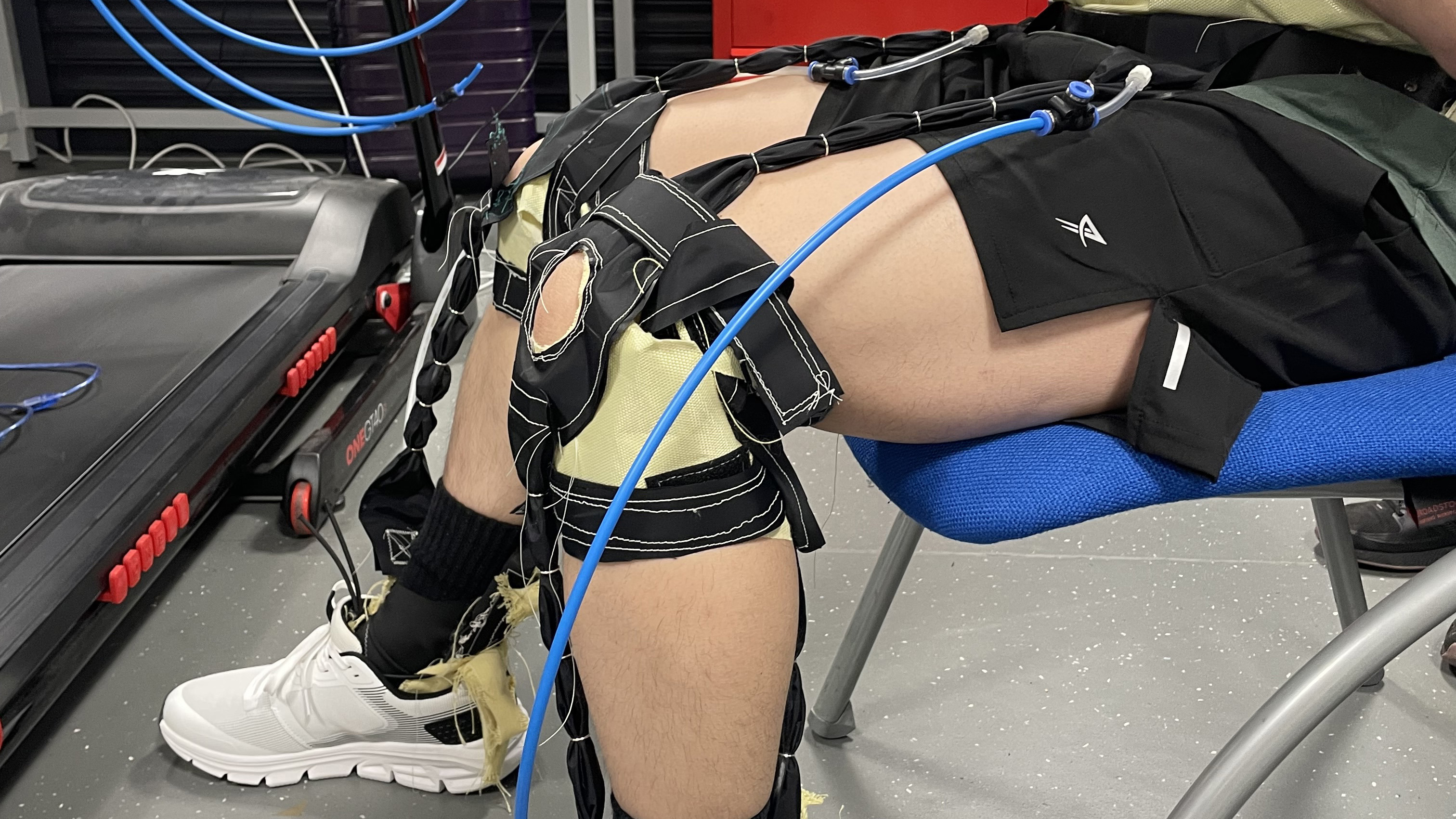
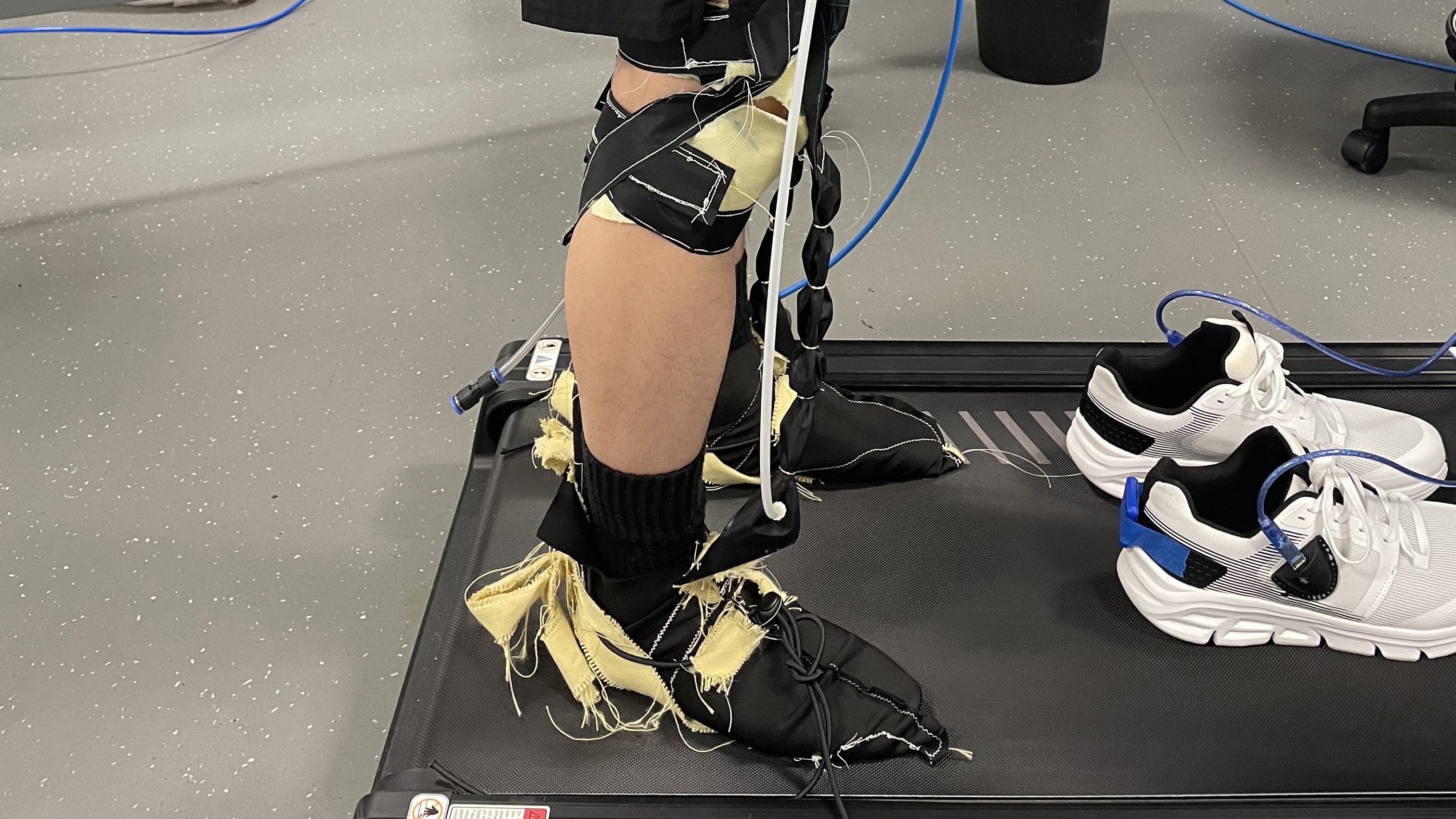
Unlike the rigid metal exoskeleton in Wallace and Gromit’s The Wrong Trousers, these look and feel much more like clothing. The lightweight garment is mostly fabric and designed to be worn beneath a conventional spacesuit. Running through it are artificial muscles: two-layer structures with an outer nylon shell and an inner thermoplastic layer that inflates to provide carefully controlled assistance. Kevlar elements at the waistband and knees act as strong anchor points to handle tension without adding bulk.
Crucially, the suit doesn’t just help astronauts; it can also push back. By adding resistive forces in the right places at the right moments, the exosuit can simulate some of the loading gravity would normally provide. The goal is to keep muscles working hard enough to stay healthy, while still allowing natural, fluid movement rather than the stiff, mechanical gait often seen with traditional exoskeletons.
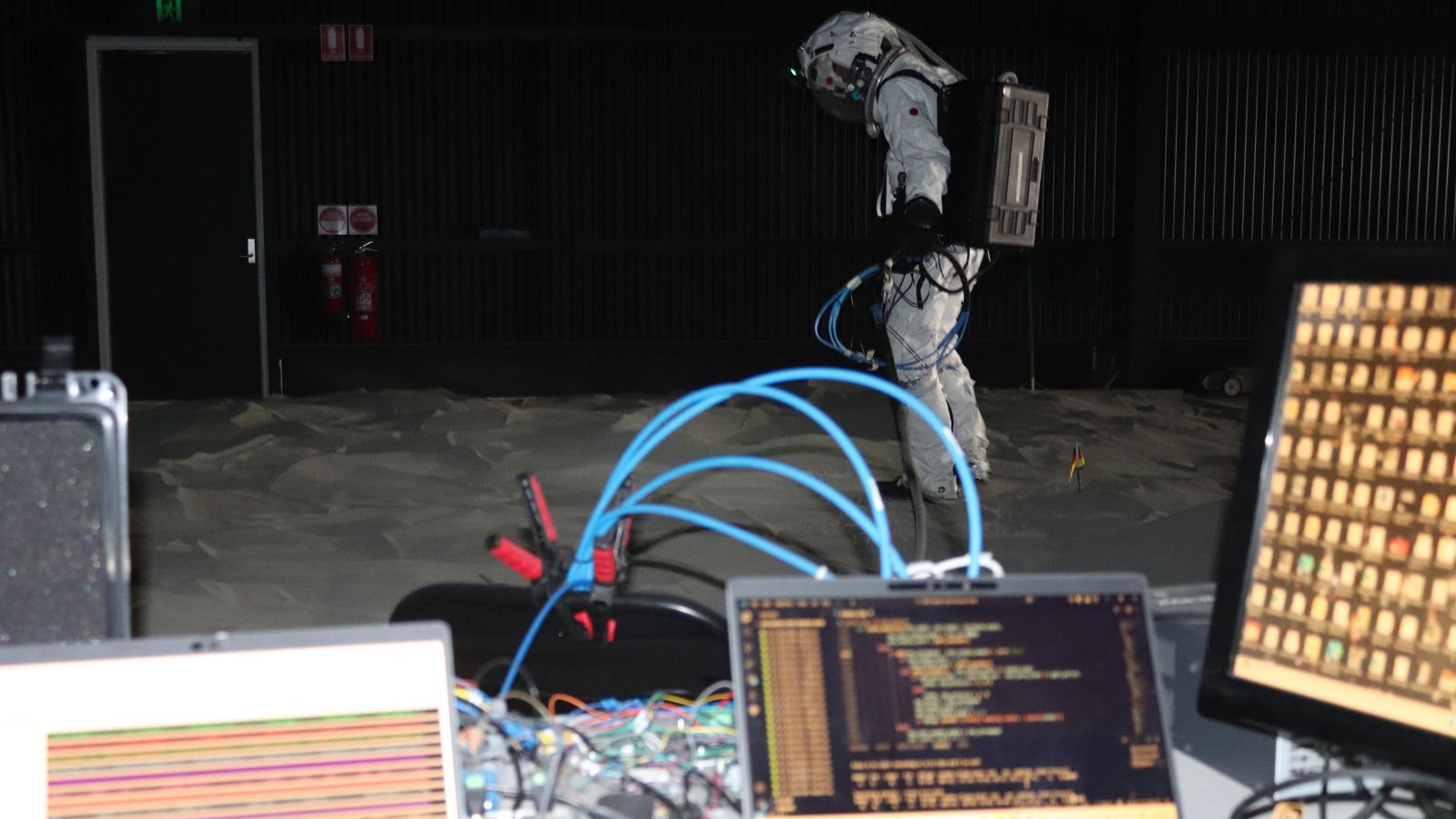
To find out how the design behaves in something closer to a real mission, the team took the exosuit to the Exterres CRATER facility at the University of Adelaide — the largest simulated lunar environment in the Southern Hemisphere. There, the suit was integrated into a spacesuit and worn by astronauts performing surface tasks on loose, Moon-like terrain.
It’s the first time a soft robotic exosuit has been field-tested inside a spacesuit, and the experiments looked at comfort, mobility and biomechanics while participants walked, climbed and carried loads. Early findings suggest the exosuit can reduce muscular fatigue while maintaining a more natural gait — a promising sign for future lunar and Martian explorers who will have to work for hours in reduced gravity.
The story behind the hardware is as human as the tech itself. Lead researcher Dr Emanuele Pulvirenti hand-built the prototype, even teaching himself to sew, with advice from his grandmother, a former tailor, so he could perfect the fit and feel of the garment. That level of craftsmanship matters when what you’re building has to be comfortable enough to wear all day in one of the harshest environments imaginable.
Although the trousers are designed with astronauts in mind, the same approach could support anyone who struggles with mobility, from stroke survivors to older adults who need a little help to stay active and independent. Soft exosuits have already shown promise in rehabilitation and gait assistance studies; the Bristol project extends that thinking towards hypogravity, where the challenge is not just to move but to load muscles in healthy, controlled ways.
The ambition is clear: develop a new class of wearable robotics that can be tuned for both rehabilitation clinics and lunar bases. For space agencies planning longer missions and permanent habitats, technology like this could sit alongside exercise machines and nutrition programmes as part of a complete human-performance toolkit.
At FOS Future Lab presented by Randox, the focus is always on technology for a better world, and that very much includes the world beyond ours. It’s part of the reason our ambassador is astronaut Sir Tim Peake, while intergalactic exhibits in 2025 included Space Forge, the Welsh company building reusable satellites to manufacture high-performance semiconductors in orbit, to the ESA Euclid mission, which is mapping billions of galaxies to probe dark matter and dark energy.
Visitors were also able to step into Cosmos in Focus on Apple Vision Pro, an immersive journey through James Webb Space Telescope imagery, and take a virtual flight over the Moon’s surface with Somniacs x Cesium’s Birdly VR lunar flight experience. Together, these experiences show how space is shifting from remote science to an everyday arena for manufacturing, data and human presence — precisely the future technologies like the exosuit trousers are preparing us for.
Goodwood’s role is to bring these stories down to Earth. FOS Future Lab is where you can stand a few feet from the kind of hardware that will shape the next wave of exploration, talk directly to the engineers and scientists behind it and see how data from orbit or the Moon feeds back into cleaner, smarter life on the ground.

Randox is a global leader in diagnostics, revolutionising patient outcomes through innovative technologies, including its patented biochip technology. This pioneering diagnostic platform allows for the simultaneous detection of multiple biomarkers from a single sample, delivering faster, more accurate, and comprehensive results. Operating in over 145 countries, Randox develops advanced laboratory instruments, high-quality reagents, and innovative testing solutions to improve global healthcare.
Randox Health brings this cutting-edge technology directly to individuals, offering bespoke, preventative health testing programs. With world-class laboratories and personalised health insights, Randox Health enables early detection of a wide range of conditions, helping individuals take control of their health.
Together, Randox and Randox Health are redefining diagnostics and preventative healthcare. For more information, visit www.randox.com and www.randoxhealth.com.
festival of speed
fos
event coverage
future lab
fos future lab



Subscribe to Goodwood Road & Racing
Thank you, you’re now subscribed

How many hay bales are used at FOS?
For the last two years, 5,800 bales have been recylced into the biomass energy centre to be used for energy generation