

Barry Sheene’s incredible career will be remembered at the Festival of Speed
In 2026, Goodwood will commemorate the 50th anniversary of Barry Sheene’s first 500cc World Championship victory across all three motorsport events. This is the first time a single celebration will span the entire Goodwood calendar, and following what’s sure to be a memorable weekend at the 83rd Members’ Meeting presented by Audrain Motorsport, the tributes will continue at the 2026 Festival of Speed presented by Mastercard.
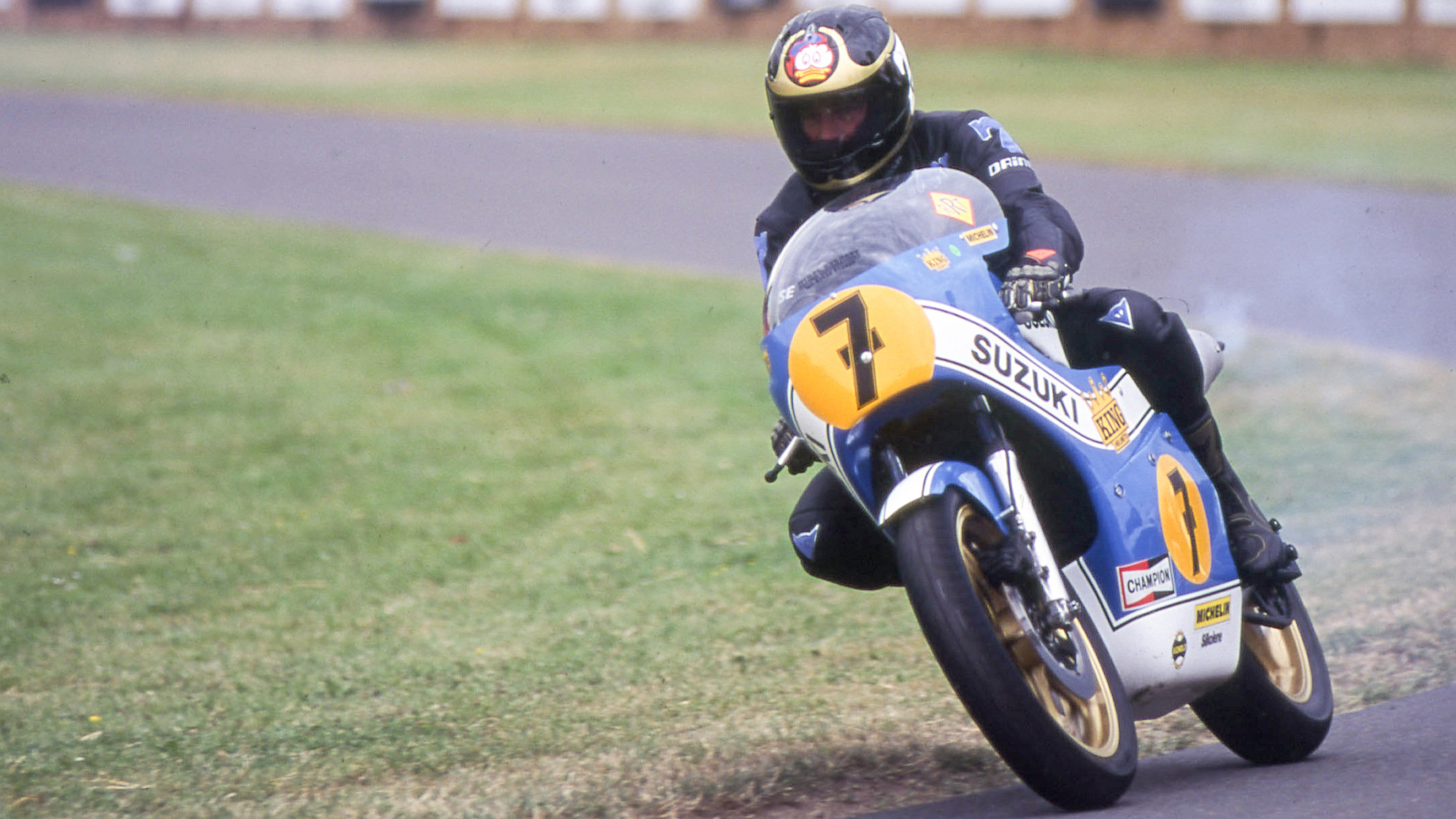
The famous Goodwood Hill, that Sheene himself traversed in 2000, will become the stage for a carefully curated selection of Sheene’s greatest Championship and race-winning motorcycles from his remarkable career, showcasing the full breadth of his accomplishments across multiple categories of racing.
After making a name for himself in the 125cc British Championship, Sheene moved into international Grand Prix racing in 1970. After finishing second on his debut in Spain riding his own 125cc Suzuki, he took his first victory ten months later at the 1971 Belgian Grand Prix at Spa-Francorchamps.
Two further wins followed in Sweden and Finland as he took second place in that year’s 125cc Championship. Injuries curtailed his progress in 1972, but when he returned he climbed almost immediately back on to the top step of the podium, winning the French round of the 1973 Formula 750 season on his way to his first international title.
Now signed officially as a factory Suzuk rider, Sheene endured two more gruelling injury layoffs through 1974 and much of ‘75, but again he returned at the very top of his game to win at the first time of asking in both 500cc and Formula 750.
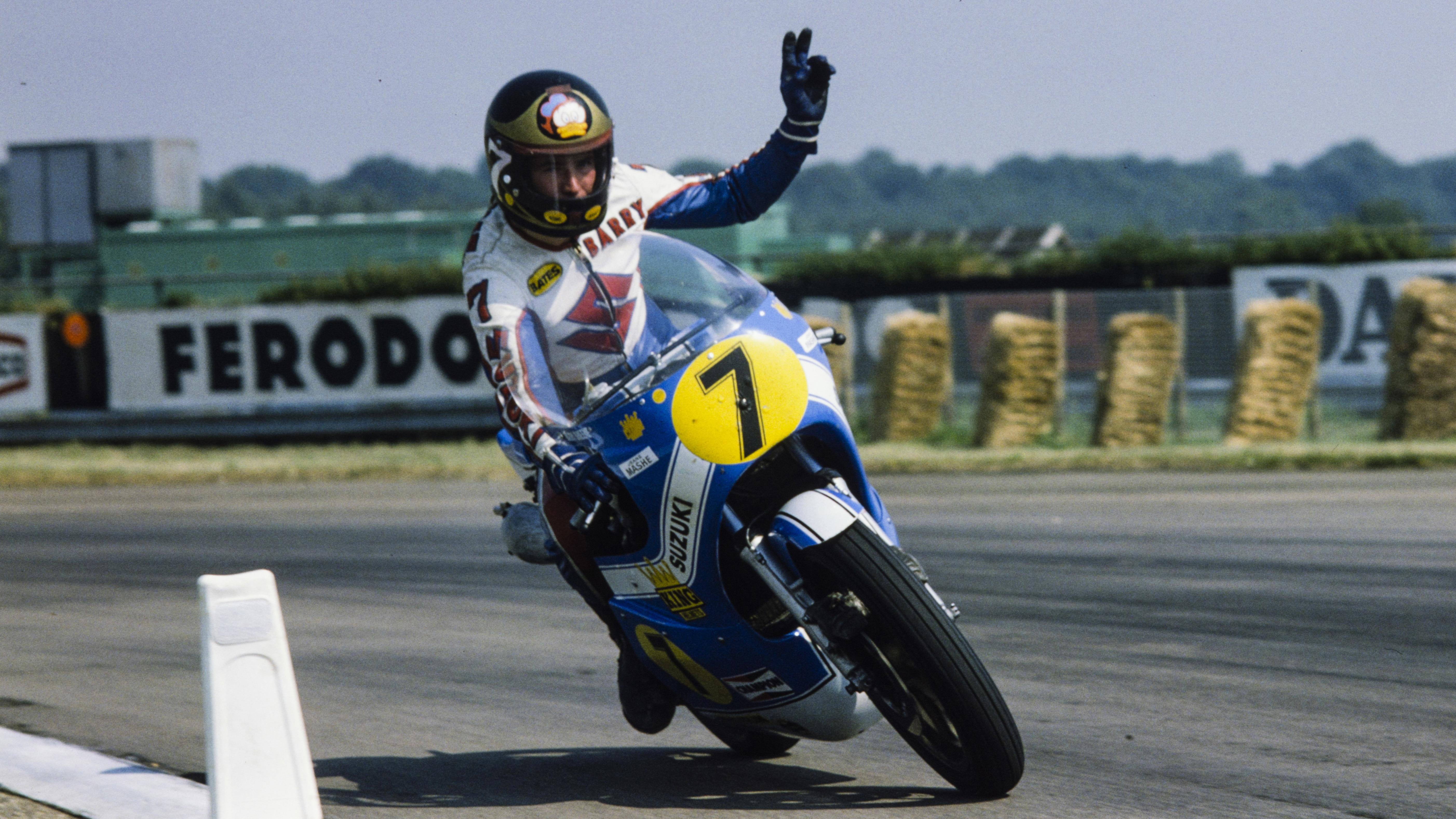
Sheene waves to his home crowd at the 1975 British Grand Prix at Silverstone.
Image credit: Getty Images.Still only 25 years old, his performances at the 1975 Dutch TT and Swedish Grand Prix put the entire field on notice, while his dominance on 750cc machinery remained unchallenged.
By now Sheene had made a name for himself atop his favoured Suzuki bikes, and by the end of 1975, nine of his ten major race wins had been claimed with Suzuki machinery — the outlier a single 50cc triumph back in 1971. But the partnership between bike and rider was yet to reach its full potential, when it did in 1976, no-one had an answer.
Now riding exclusively in the 500cc category, Sheene stormed to five Grand Prix victories as he dominated the ‘76 Championship with the Suzuki RG500, a bike that had been developed over the past three years and had now overthrown MV Agusta and Yamaha as the class of the field.
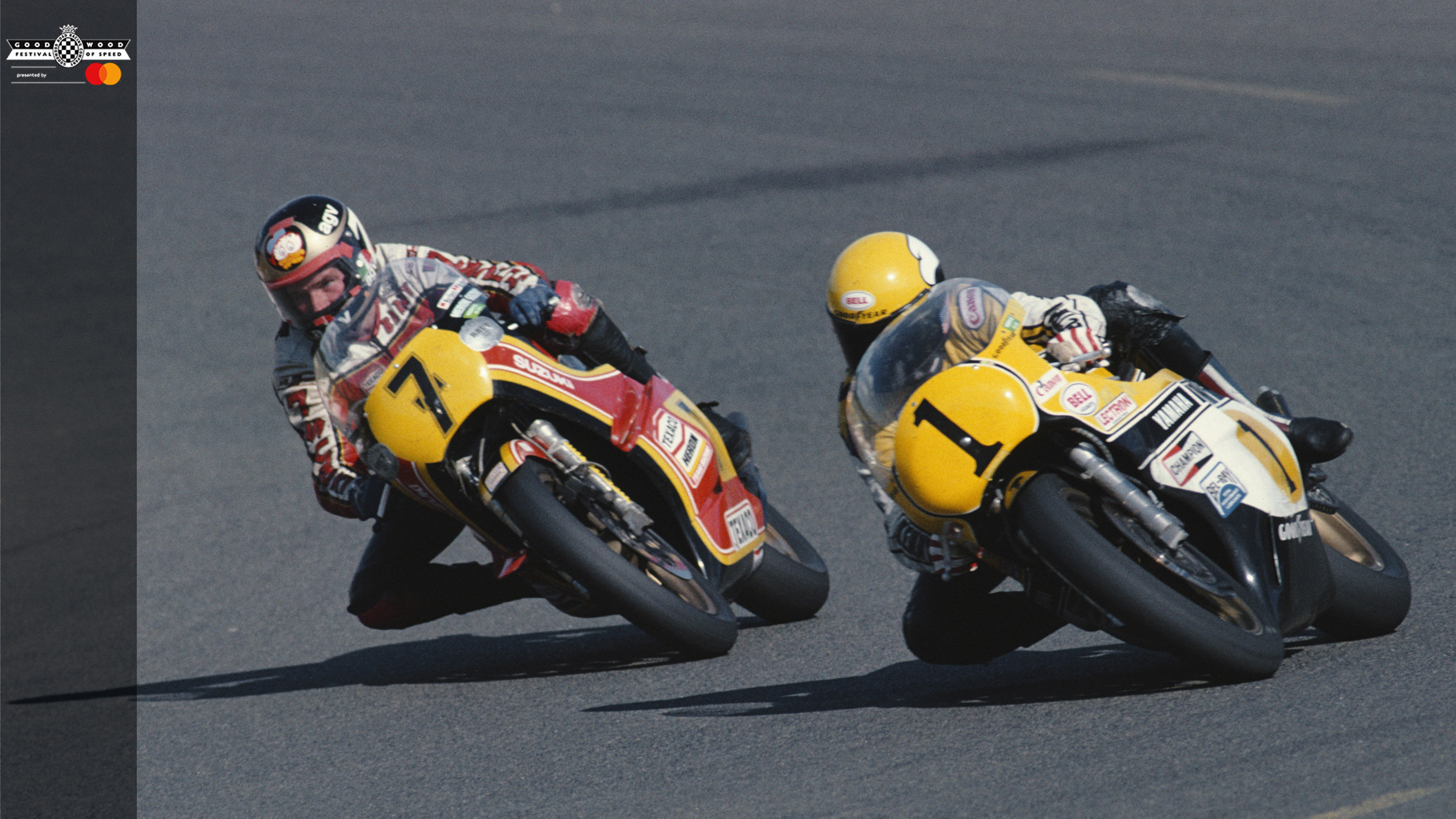
He retained the title a year later with an even more accomplished display, as he reeled off six victories and confirmed himself as one of the greatest riders of his generation.
By 1978, Sheene had established himself as the best in the world. His years of crashing and inexperience behind him, he was a relentlessly fast and consistent campaigner who had dominated the previous two 500cc World Championships. But now his crown was coming under threat from his American rival, Kenny Roberts.
His title defence got off to the perfect start with a comfortable victory in Venezuela, but then illness stifled his charge and he suffered his longest winless run since he stopped an eight-race rot in 1975. He could manage only one more win in ‘78 at the Swedish Grand Prix, and missed out on the title at the final race of the season.
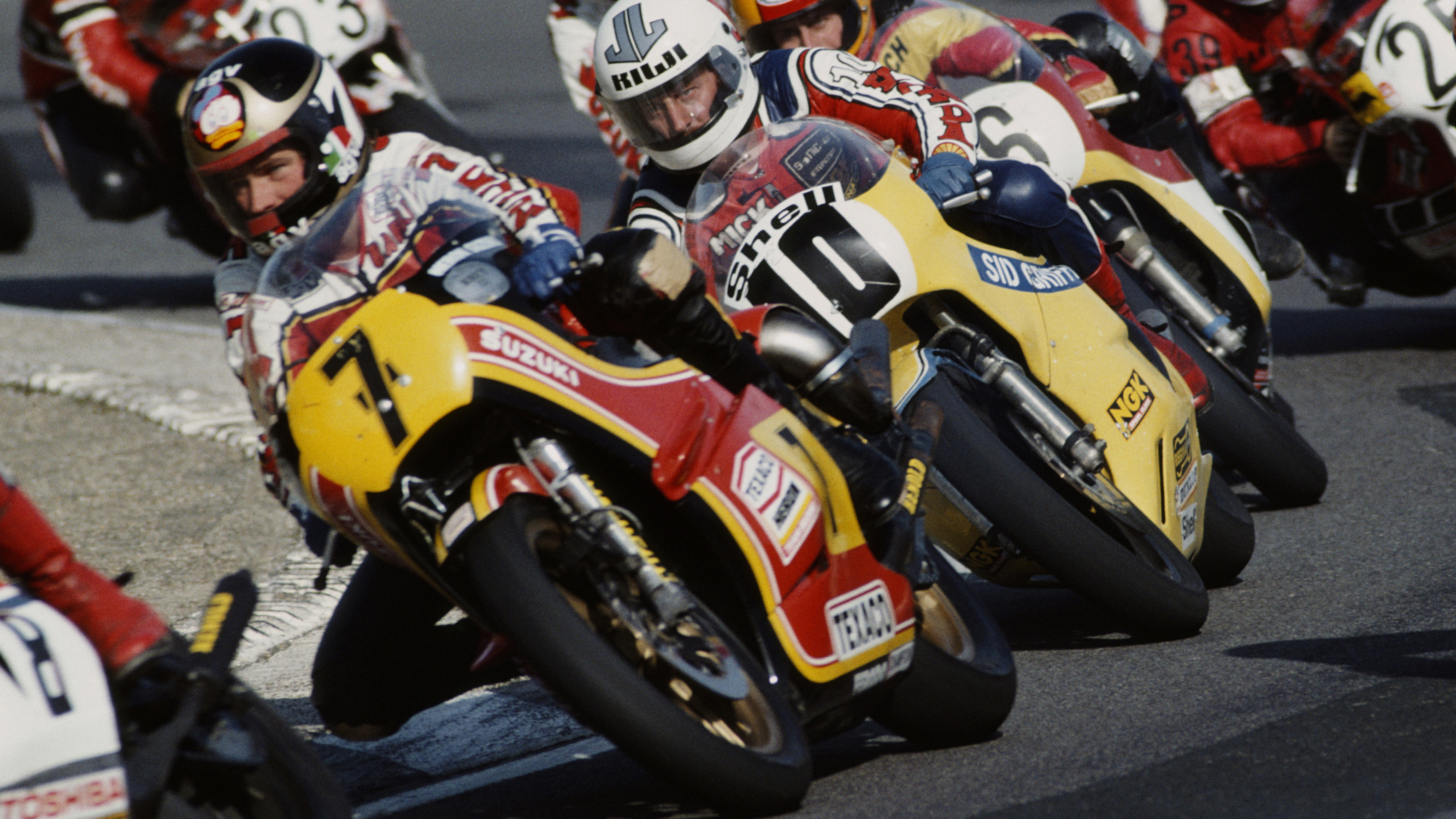
Sheene rides the Heron-Suzuki during the 1979 TransAtlantic Challenge Trophy race at Brands Hatch.
Image credit: Getty ImagesSheene’s rivalry with Roberts had grown to become the biggest story in motorcycle racing, but his relationship with long-time partner Suzuki was also beginning to come under serious strain.
A series of disagreements culminated in an acrimonious retirement at the Finnish Grand Prix. Sheene had requested his team replace a crankshaft he believed on the verge of failure, the mechanics refused, and when the engine did indeed expire during the race, Sheene voiced his frustration for all to hear.
The Suzuki remained a hugely capable machine through 1979, but Sheene suffered a horrendous run of mechanical failures to scupper any hopes at the Championship, further deepening his displeasure. Despite starting off the season with another dominant victory in the opening race, he had to wait until the ninth round in Sweden to triumph again, and a third win at the final round in France was enough only for third in the standings.
Sheene decided to step away from what had become a toxic relationship, and chose to race a privateer Yamaha in 1980. The move did little to improve his fortunes, however, because his previous criticism of the Yamaha team led the manufacturer to withhold its best equipment for his rivals.
He endured a torrid run of results through much of the next two seasons and, quite astonishingly, Sheene scored only one more Grand Prix victory at the final round of the 1981 season in Sweden.
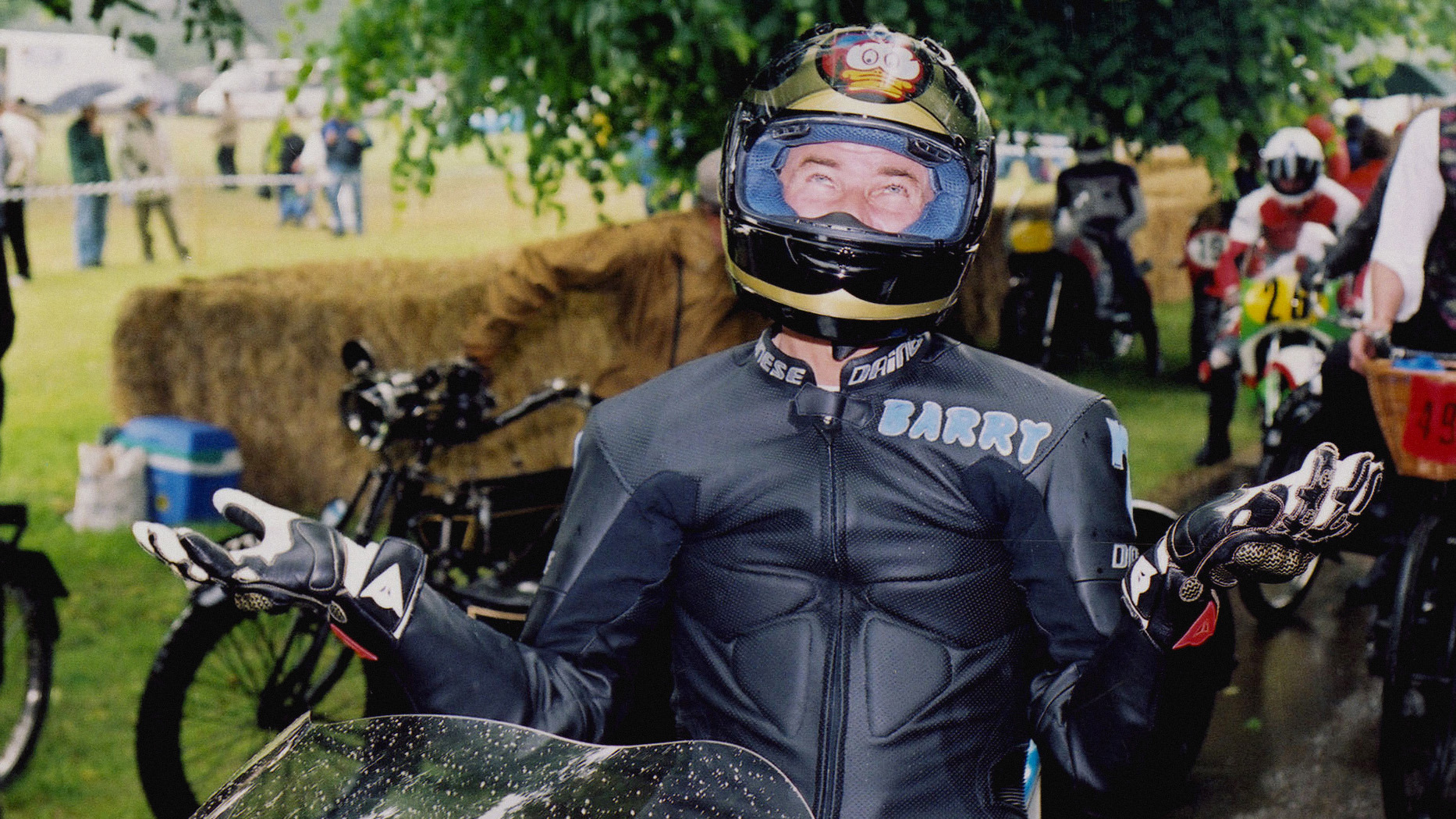
Sheene laments the rain at the 2000 Festival of Speed.
Image credit: John DavidsonAlthough he came close to adding to his tally of 23 Grand Prix wins on several occasions throughout 1982, a horrific accident during practice for that season’s British Grand Prix effectively ended his competitive career.
Sheene returned to race in 1983 and ’84, but never regained the form that made him almost unbeatable at his peak.
Goodwood will be celebrating the memory of Barry Sheene’s two World Championships and 23 Grand Prix victories at the 2026 Festival of Speed. The timeline of one of motorcycling’s most explosive careers, encapsulated in a collection of around ten of Sheene's most significant bikes, will be showcased on the Hill across all four days of the event.
Tickets for the Festival of Speed are now on sale. Saturday and four-day passes are now limited and Friday tickets are selling fast. If you’re not already part of the GRRC, joining the Fellowship means you can save ten per cent on your 2026 tickets and grandstand passes, as well as enjoy a whole host of other on-event perks.
Main image courtesy of Getty Images.
festival of speed
fos
fos 2026
event coverage
barry sheene

Subscribe to Goodwood Road & Racing
Thank you, you’re now subscribed

How many hay bales are used at FOS?
For the last two years, 5,800 bales have been recylced into the biomass energy centre to be used for energy generation